A note about links: If we include links to retail sites like Amazon or Bass Pro Shops, it's because they're relevant to the topic and, as anglers ourselves, we believe they're worth checking out. As an Amazon Associate we earn from qualifying purchases.
Tilapia are not native to North America, but in the warm canals, ponds, and lakes of Florida, Texas, Arizona, and Southern California they have become a permanent, hard-fighting, surprisingly fun fish to chase. Most anglers know tilapia as a grocery-store fillet, and many do not realize you can catch them on rod and reel at all. You can — but they have a reputation for being maddening, because they are largely vegetarians that filter algae and graze plants rather than chase a lure. Crack the code, though, and you have an abundant, scrappy, excellent-eating fish that nobody minds you keeping a limit of.
How to identify one
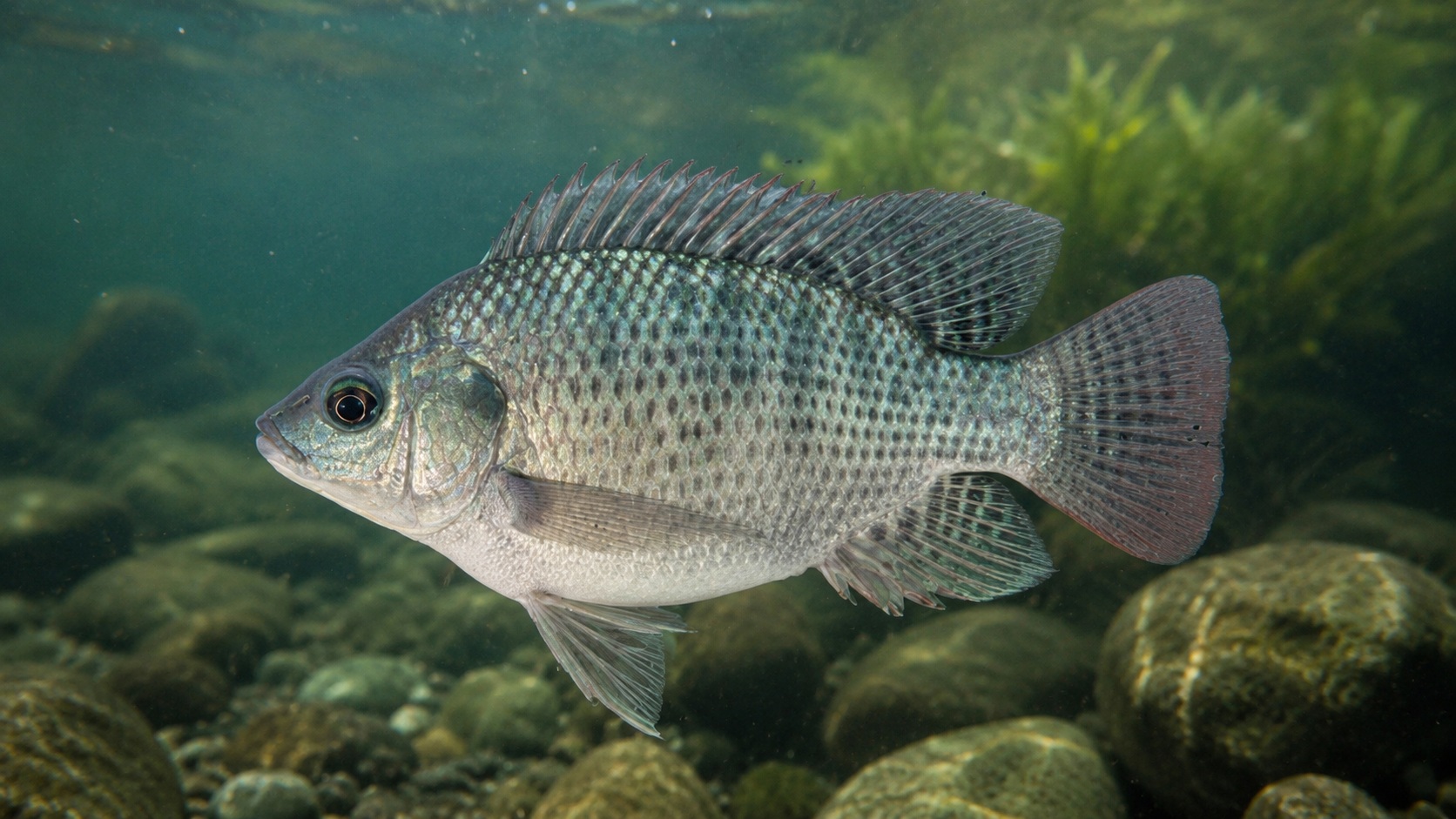
Tilapia are deep-bodied, laterally compressed cichlids — think of an oversized, sturdier bluegill or a freshwater porgy shape. The two species you will encounter most in the U.S. are the blue tilapia (Oreochromis aureus) and the Nile tilapia (Oreochromis niloticus), with the blue being the most widespread and cold-tolerant.
Coloration ranges from gray to olive to bluish, often with faint vertical bars and a pinkish or reddish edge on the tail and dorsal fin (especially on spawning males). They have a single long dorsal fin with both spiny and soft sections, typical of cichlids. The mouth is small. During the spawn, males darken and dig dish-shaped craters in the bottom — those round, swept beds in the shallows are a dead giveaway that tilapia are present. Most fish run 8 to 14 inches and a pound or two; well-fed fish in rich water reach 4 to 5 pounds or more.
Where to find them
Tilapia are tropical fish held in check only by cold water — they die off below roughly 50 to 55°F, which limits them to the warmest parts of the country and to thermally stable water. Their strongholds are:
- Canals, drainage ditches, and urban ponds in Florida, Texas, and the desert Southwest. The Florida peninsula and the canals of South Florida are tilapia central.
- Warm-water lakes and reservoirs, particularly those with power-plant discharges or spring inflows that stay warm year-round.
- Brackish coastal canals — blue tilapia tolerate salt better than most freshwater fish.
- Shallow flats and shorelines during the spawn, where males fan out the round nests in sand or mud, often in colonies you can spot from the bank.
They feed by grazing algae, plant matter, and detritus, so they relate to weed edges, hard algae-covered bottoms, and shallow, sun-warmed water.
When to go
Tilapia are warm-season fish and most catchable when the water is warm and they are spawning.
- Spring (as water warms past ~65°F): The spawn begins. Males on beds become territorial and far more willing to strike at things invading their nest — the single best window to catch them on hook and line or by sight fishing.
- Summer: Peak activity. Spawning continues in waves, fish graze the shallows, and warm water keeps them feeding. Early morning and evening are most comfortable and productive.
- Fall: Still good in warm regions until water cools.
- Winter: In all but the warmest water they shut down or die off; target only thermally stable spots (springs, power-plant outflows).
What to throw
This is the hard part, and the fun part. Tilapia are not predators, so a standard lure approach usually fails. The productive approaches are:
Bait (grazers’ menu):
- Tiny pieces of bread, balled-up white bread, peas, corn, or dough on a small (size 8 to 12) hook under a light float is the classic tilapia tactic. Chum a little bread to bring them up.
- Bits of worm or algae-imitating soft bait can work where tilapia are used to grazing.
Sight fishing the beds:
- During the spawn, a small jig, fly, or soft plastic dropped into a bedding male’s nest draws a reaction/defensive strike. A tiny chartreuse or red jig, a small nymph or wooly bugger on fly gear, or a 1-inch soft plastic on a light jighead all work.
- Approach quietly and present to the fish you can see — this is sight fishing, like bedding bluegill or bass.
Bowfishing:
- In many states tilapia are a legal and popular bowfishing target precisely because they are nonnative and abundant in clear shallow water.
Tackle: Light spinning gear — an ultralight to light rod, 4 to 8 lb line, and small hooks or jigs — is ideal. The bite is subtle and the mouth is small, so watch your float or line closely and set on the lightest tick.
Regulations
Tilapia are a nonnative, introduced species in the United States, and the rules reflect that — they are usually about limiting their spread, not protecting them. Regulations vary widely by state and water body, so always verify with your state wildlife agency before fishing.
Common themes:
- No size limits and liberal (often unlimited) bag limits — agencies generally encourage harvest of nonnative tilapia.
- Restrictions on transporting them alive and on releasing them — in Florida and many states it is illegal to transport live tilapia or to release them into new waters. If you catch one, you typically may not move it alive or stock it elsewhere.
- Bowfishing is legal for tilapia in many states, sometimes with specific rules.
A valid state freshwater fishing license is required where applicable. Because tilapia are an invasive-species management concern, the specifics (especially live-transport and release rules) really do vary — check your state’s nonnative-fish regulations.
Handling and release
Because tilapia are nonnative, the responsible default in most places is to harvest the ones you catch rather than release them — and in some states releasing or moving them alive is actually prohibited. Know your local rules.
- If you are keeping fish, dispatch and ice them promptly for the best table quality.
- Do not move live tilapia between waters, ever — that is how they spread, and it is illegal in many states.
- Handle with care: like other cichlids they have spiny dorsal rays.
On the Table
Tilapia is one of the most-eaten fish in the world for good reason: mild, flaky, clean white flesh that takes any seasoning. Wild-caught tilapia from clean water is excellent — often better than the farmed fillets at the store.
Taste and texture: Very mild, slightly sweet, with tender, flaky white flesh. The flavor reflects the water: fish from clean, flowing, or sandy-bottom water taste clean, while fish from stagnant, muddy canals can pick up an earthy or muddy note.
Best preparation methods:
- Pan-fried or breaded: The default — light flour or breadcrumb coating, hot oil, and a squeeze of lemon. The mild flesh is a blank canvas.
- Grilled or baked whole or in fillets: Holds together well; great with bold seasonings, blackening spice, or a citrus marinade.
- Tacos and ceviche: The clean, flaky meat is excellent in fish tacos and cures well for ceviche.
Handling for table quality: Bleed and ice fish immediately. The single biggest factor in how a wild tilapia tastes is the water it came from — target clean, moving, or sandy-bottom water, and soak fillets briefly in cold water if you suspect a muddy note. Skin and trim the dark lateral line/bloodline for the mildest flavor.
Eating caveats: Follow local fish-consumption advisories for the specific canal, pond, or lake — urban and agricultural waters can carry contaminants regardless of the species. Otherwise tilapia is a clean, safe, low-mercury panfish.