A note about links: If we include links to retail sites like Amazon or Bass Pro Shops, it's because they're relevant to the topic and, as anglers ourselves, we believe they're worth checking out. As an Amazon Associate we earn from qualifying purchases.
There is a reason Southern California anglers talk about white seabass the way hunters talk about elk. A legitimate 40-pounder crashing a slow-sinking swimbait through a kelp bed at midnight is a full-body experience: the hit feels like someone grabbed the line and ran, the fish sounds off with that deep, drumming croak, and the fight in open water tests tackle and nerves equally. These are not beginner fish by accident, but they are not out of reach either. The right night, the right squid spawn, and even a first-season angler can find themselves standing on the deck of a partyboat with 30 pounds of chrome-silver croaker going nuts at their feet.
How to identify one
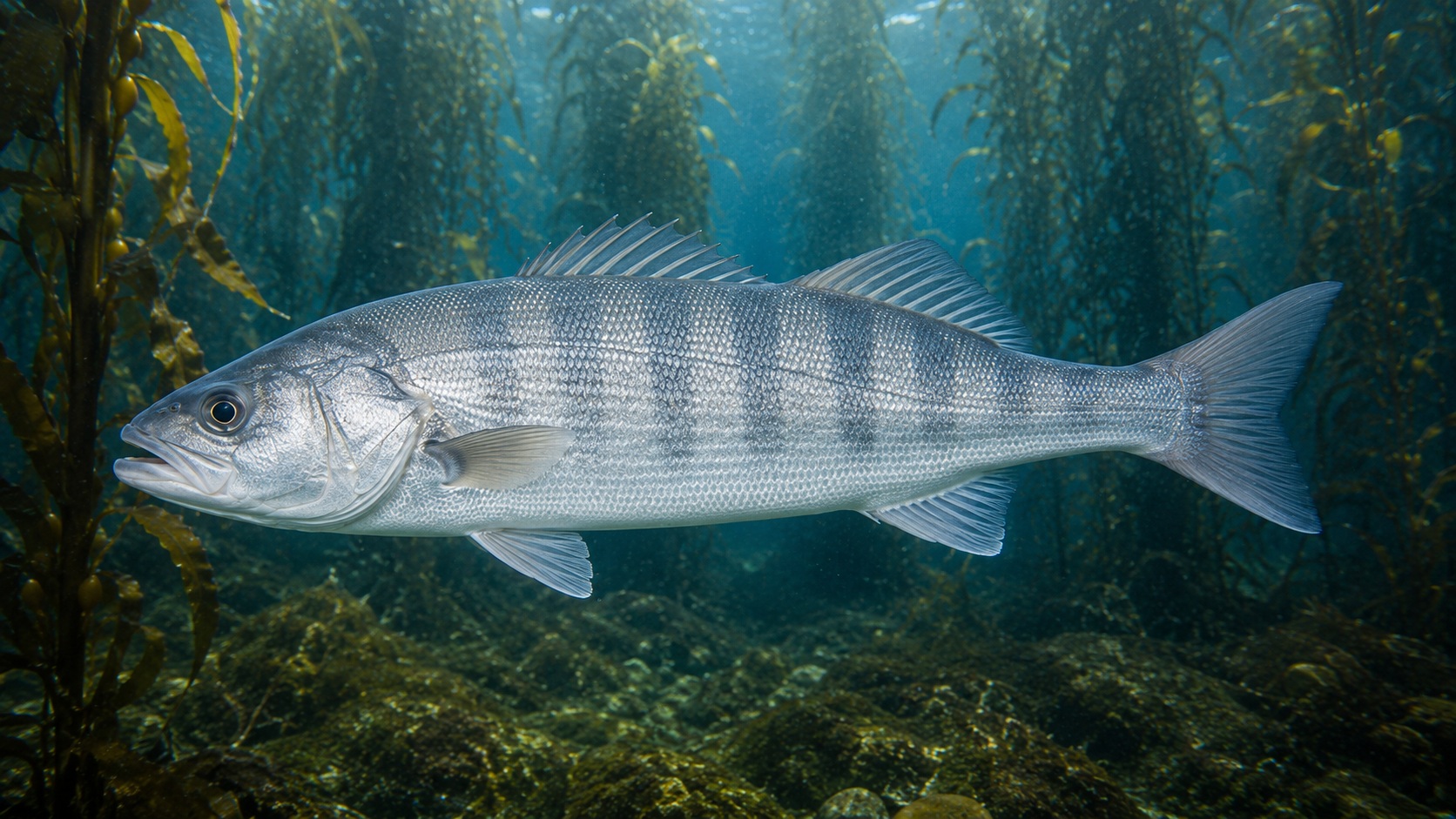
White seabass are the largest member of the drum and croaker family (Sciaenidae) on the West Coast, and once you have seen a big one, nothing else looks like it. The body is elongated and slightly compressed, with a blue-gray back fading to silver sides and a white belly. A distinctive raised ridge runs along the midline of the belly from the pelvic fins to the tail. The mouth is large and slightly oblique, lined with small teeth. Look for a black spot at the base of the pectoral fin, present on most fish. The tail is slightly forked. Juveniles show three to six dark vertical bars on the sides that fade as the fish matures.
The most common confusion is with yellowfin croaker or corbina, but both are much smaller and lack the ridge. Farther south in Baja, totuava (Totoaba macdonaldi) are superficially similar but are critically endangered and fully protected. If you are fishing Mexican waters, learn the difference before you pick up a fish.
Where to find them
White seabass live along the Eastern Pacific coast from Magdalena Bay in Baja California north to the San Francisco Bay area, with the heaviest concentrations between San Diego and Point Conception. The Channel Islands, including Catalina, San Clemente, Santa Cruz, and Santa Barbara, are the premier addresses for trophy fish in U.S. waters. The kelp forests around these islands provide the ambush structure adults depend on for feeding.
On the mainland coast, rocky reefs from Malibu to La Jolla consistently hold fish. Inshore bays and estuaries matter more for juveniles, which use eelgrass beds for cover during their first few years before graduating to open reef habitat. In Baja, the stretch between Ensenada and Punta Banda is a classic surf fishing zone, and the Pacific coast south of La Paz has produced the largest fish on record.
Adult fish are not strict structure-huggers. On squid spawn nights they suspend in mid-water and at the surface, sometimes schooling in open water far from any visible structure. Water temperature is a meaningful predictor: fish become most active between 60 and 72 degrees Fahrenheit.
When to go
Spring and early summer are the money window. White seabass move shallower and closer to shore from February through July as water temperatures rise and the Pacific market squid begin their annual spawn. The squid spawn itself is the single most reliable white seabass trigger on the California coast, concentrating fish from Santa Barbara to San Diego. Some of the best bites happen at night during full and new moon phases when squid light up the surface in dense aggregations and seabass stack beneath them.
Fall can produce good fishing as fish feed heavily before moving offshore, but the spring-summer combination of warming water, spawning activity, and predictable squid is unmatched. Winter fishing is possible but spotty. South of Point Conception, expect the regulations to tighten between mid-March and mid-June, which coincides with peak spawning activity.
What to throw
Live squid is the undisputed top bait when squid are spawning. Hook a squid through the mantle with a 4/0 to 6/0 circle hook and let it swim free on a light fluorocarbon leader of 25 to 30 pounds. Freeline the bait or use a split shot to get it into the zone, typically 20 to 40 feet down. Resist the urge to set the hook hard on a circle; just come tight and let the hook do its job.
Live anchovies and sardines produce year-round when squid are not present. Hook them lightly through the nose or behind the dorsal fin and fish them on a Carolina-style rig or freeline in current. Fresh or frozen market squid is the backup when live bait is unavailable.
For artificial presentations, white swimbaits in the 6 to 9 inch range are the go-to. Hogy, Tackle Industries, and Humdinger swimbait heads in the 1 to 2 ounce range work well. Slow, erratic retrieves through kelp edges at night outperform speed. The bite tends to be subtle: often just a slight increase in weight before the fish turns and burns. Soft plastic jerkbaits on 1/2 to 1 ounce jig heads cover more water and can draw strikes from fish feeding actively at the surface during a squid spawn.
Sound discipline matters. White seabass are notoriously sensitive to noise. Cut the engine well before reaching the spot, anchor quietly, and keep movement on deck to a minimum. Anglers who treat the boat like a library consistently out-fish those who do not.
Regulations
White seabass in California are managed by the California Department of Fish and Wildlife (CDFW). Current regulations as of 2026 require a minimum total length of 28 inches, and the daily bag limit is three fish. An exception applies south of Point Conception between March 15 and June 15, when the limit drops to one fish per day to protect spawning aggregations.
California also requires anglers to possess and fill out a White Seabass Reporting Card when targeting or retaining white seabass. This mandatory reporting card is separate from your standard fishing license and helps CDFW track population health across the fishery. If you fillet your catch, each fillet must be at least 19 inches long and retain a one-inch square patch of silver skin for identification purposes.
In Mexican waters, regulations differ by state and season. Verify current limits with CONAPESCA before fishing Baja waters.
Always confirm current rules directly with CDFW at wildlife.ca.gov before your trip, as regulations can change.
Handling and release
White seabass are excellent table fish, with firm white flesh that holds up well to grilling, baking, and ceviche. Legal fish are worth keeping for the table. Wet your hands before handling any fish you plan to release and support the body horizontally rather than hanging it vertically by the jaw. These fish are physically tough and revive quickly in well-oxygenated water. If the fish is lethargic after a long fight, hold it upright in the water and move it gently forward and back until it kicks away on its own.
The species went through a serious population decline in the mid-twentieth century from overfishing. The recovery you are benefiting from today was driven largely by hatchery supplementation programs run by the Hubbs-SeaWorld Research Institute and by the current size and bag limits. Releasing undersized fish immediately and filling out your reporting card are both direct contributions to keeping this fishery healthy for the next generation of anglers.
On the Table
White seabass is one of the finest eating fish on the Pacific Coast, and it is actively targeted by California anglers as much for the plate as for the fight. The flesh is mild, clean, and slightly sweet with no trace of fishiness when handled properly — putting it firmly in the top tier of West Coast table fare.
Taste and texture: The meat is white to off-white, firm yet tender, and fine-grained. It flakes cleanly after cooking but holds together well enough for most techniques. The flavor is mild and subtly sweet, comparable to Pacific halibut but with slightly more body. There is no strong oiliness, and the flesh does not turn mushy if cooked promptly after the catch.
Best preparation methods:
- Grilling or pan-searing: The firm flesh holds up beautifully over direct heat. A simple preparation with olive oil, lemon, and garlic lets the natural sweetness come through without masking it.
- Ceviche: White seabass is one of the premier Southern California ceviche fish. The firm texture resists becoming rubbery during the acid cure, and the mild flavor absorbs citrus and aromatics cleanly.
- Light pan-fry or saute: A dusting of flour or panko in a hot pan with butter or oil produces a golden crust while keeping the interior moist. This method works especially well for smaller fillets from legal-minimum fish.
- Baking en papillote: Wrapping portions in parchment with aromatics steams the fish gently, preserving moisture and showcasing the delicate texture without added fat.
Handling for table quality: White seabass flesh degrades quickly if not cared for immediately. Bleed the fish as soon as it is landed by cutting the gills or making a shallow cut behind the pectoral fin, then place it on ice immediately. Avoid freshwater rinses, which can soften the texture. Fillet the fish the same day if possible. The lateral line runs through a strip of darker, stronger-flavored meat — trim this out for the mildest result. Skin-on fillets hold together better on the grill.
Eating caveats: California imposes a minimum size limit of 28 inches total length and a bag limit of three fish per day (subject to change — verify current regulations with CDFW before keeping fish). These rules mean most legal keepers are quality-sized fish in the 5-10 pound range, which actually benefits table quality: mid-sized fish have the best texture and flavor. Very large specimens over 30 pounds can develop slightly coarser flesh but remain excellent eating.