A note about links: If we include links to retail sites like Amazon or Bass Pro Shops, it's because they're relevant to the topic and, as anglers ourselves, we believe they're worth checking out. As an Amazon Associate we earn from qualifying purchases.
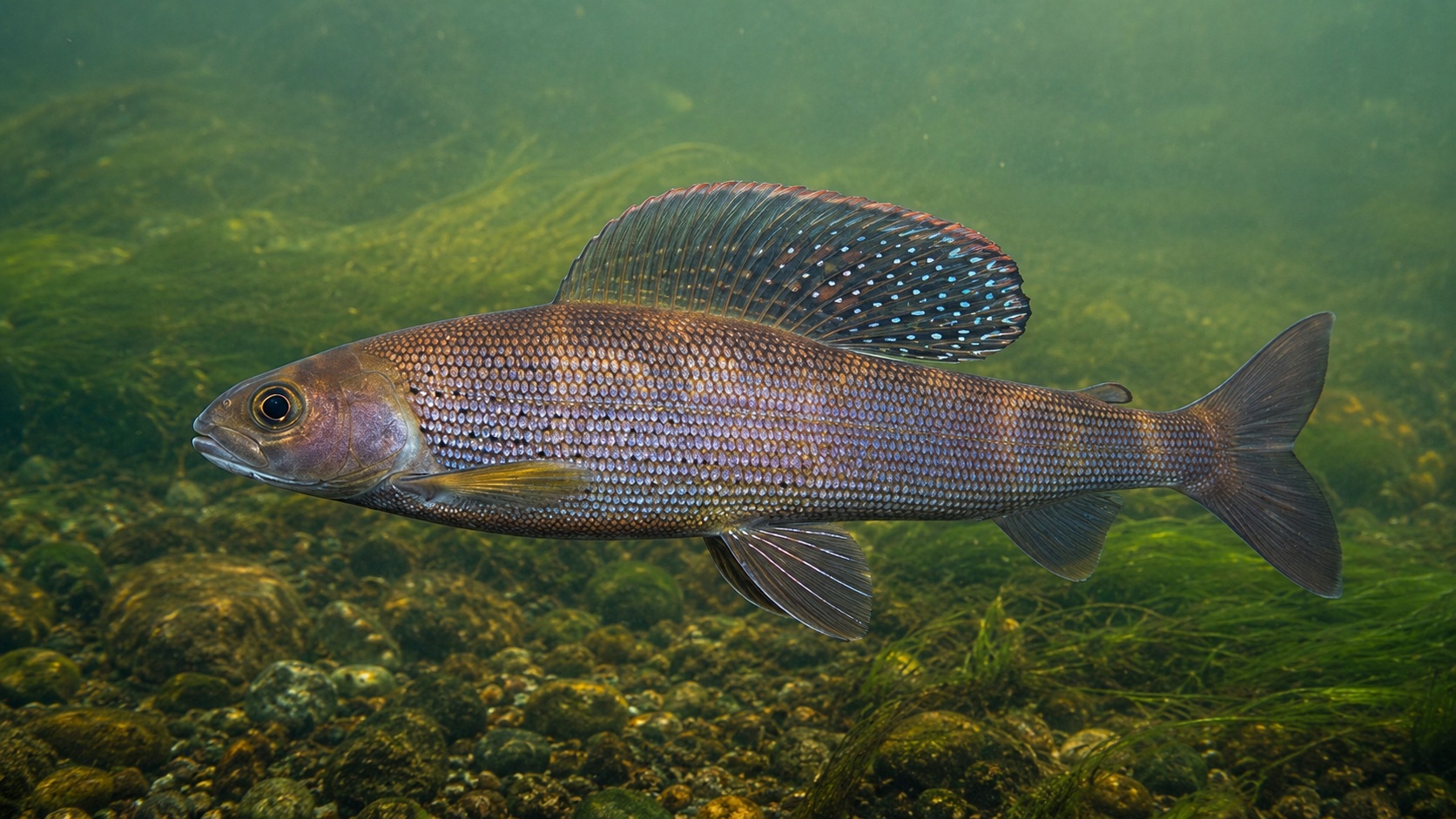
There are fish you catch for the story you will tell, and Arctic Grayling are near the top of that list. Picture a gin-clear river threading through boreal spruce somewhere north of Fairbanks, a size 14 elk-hair caddis riding the current, and then a flash of violet and iridescent blue as a grayling rises and inhales it. The fish itself looks like something out of a dream, its dorsal fin fanning open into a spotted sail trimmed in crimson that no photograph fully captures. Grayling are not the largest freshwater fish, and they will not spool your reel, but the combination of remote water, cold air, and that unmistakable fin breaking the surface has made this species a bucket-list target for fly anglers across North America.
How to identify one
Nothing else in fresh water looks like an Arctic Grayling once that dorsal fin is raised. The fin runs nearly the full length of the fish’s back and stands tall enough to be the first thing you see when a grayling rolls near the surface. The body is silvery to blue-gray with scattered black spots concentrated toward the front, and the flanks catch light in purples and greens depending on angle and breeding condition. Males carry larger, more colorful dorsals than females. The small, slightly downturned mouth is built for picking insects off the surface, and the forked tail and overall shape confirm the family resemblance to trout and whitefish. In Alaska, adults in good habitat typically run 14 to 18 inches; fish pushing 20 inches are trophies worth a photo.
Where to find them
In Alaska, grayling thrive throughout the interior and are accessible from the road system in ways that surprise first-time visitors. The upper Chena River east of Fairbanks, the Chatanika River, Birch Creek, and the drainages flowing out of the Alaska Range near Denali are all dependable. The Nenana River and its tributaries including Fish Creek, Jack River, and Brushkana Creek hold strong populations and are reachable with modest effort. North of the Arctic Circle, river systems like the Koyukuk produce larger grayling in genuinely remote country. In Canada, the Northwest Territories and northern Manitoba offer destination-grade fishing, with lodges on Great Bear Lake, the Hay River drainage, and Lake Athabasca regularly producing fish in the 18-to-22-inch class. In Montana, the upper Big Hole River between Wisdom and Melrose holds the last native fluvial grayling population in the contiguous United States, a small and heavily protected fishery worth treating with exceptional care.
When to go
The window is June through August across most of the range. Ice-out in interior Alaska typically comes in late April to mid-May, and grayling spawn immediately after, gathering in shallow sandy reaches. By mid-June the fish have dispersed to feeding lanes throughout the river systems and are actively rising. Summer days above the Arctic Circle run long, which means you can fish late into the evening when hatches intensify. July and August are peak season for dry fly action as caddis, mayfly, and terrestrial insects are abundant. Water temperatures above 55 degrees Fahrenheit trigger the most aggressive surface feeding. September fishing remains good in many drainages before freeze-up, with grayling stacking in deeper pools as they move toward overwintering areas.
What to throw
A 4- or 5-weight fly rod with a floating line covers nearly every grayling situation. Grayling are opportunistic and not leader-shy, so a standard 5X or 6X tippet with a 9-foot leader is fine. Dry flies are the go-to: elk-hair caddis, Irresistibles, and black ants in sizes 12 to 16 account for fish throughout the season. A Goddard Caddis works well when you want to twitch or skate the fly. When fish are not visibly rising, black or brown nymphs fished under an indicator or swung near the bottom produce consistently. Mosquito patterns are deadly in Alaska from mid-June onward when the real bugs are thick. Spin anglers do well with small inline spinners such as Mepps Aglia No. 2 or No. 3 and Panther Martin patterns in gold or silver, fished across and downstream in moderate current. Keep your presentations small and read the seams and eddies the same way you would for trout.
Regulations
Alaska: Regulations for Arctic Grayling vary by drainage, management area, and emergency order. Interior rivers near Fairbanks such as the Chena River have specific bag limits that differ by river section; portions of the upper Chena above the Chena River Dam are catch-and-release only, while the lower river allows a one-fish daily limit. Many roadside interior streams allow a five-fish daily limit with no size restriction under the general statewide schedule, but you must check the current Northern Region sport fishing regulations summary for the specific drainage you plan to fish, as rules change frequently. Always verify current emergency orders at the Alaska Department of Fish and Game website before your trip: https://www.adfg.alaska.gov/?adfg=fishregulations.sport
Montana: All Arctic Grayling must be released immediately statewide. There is no size or bag limit because no retention is permitted. Montana’s fluvial grayling population in the upper Big Hole River is a Fish of Special Concern and is under active federal listing review; treat every fish caught there as the rare and fragile resource it is. Current regulations are published at: https://fwp.mt.gov/fish/regulations
Canada: Regulations vary by province and territory. Check with the relevant provincial or territorial wildlife agency for the drainage you intend to fish before your trip.
Handling and release
Grayling are cold-water fish and stress quickly in warmer summer conditions. Keep the fish in the water as much as possible, and if you must lift it for a photo, support the body horizontally with both hands and limit air time to under ten seconds. Avoid squeezing the body. In Montana’s Big Hole River, handle every grayling with the same reverence you would give a wild steelhead, because the population is that fragile. Barbless hooks speed release and are mandatory at many Alaska locations and recommended everywhere. In warmer afternoon water, skip the photo entirely and simply twist the hook free while the fish remains in the current. A healthy grayling released properly will rocket back to the bottom immediately; one that rolls or struggles to swim needs to be held upright in moving water until it recovers on its own.
On the Table
Arctic grayling are genuinely excellent table fare, and anglers who keep a meal from clean, cold-water rivers are rarely disappointed. The fish’s reputation as first-class eating is well earned, though it comes with one important condition: freshness is everything.
Taste and texture: The flesh is white, fine-grained, and delicately flaky — closer to trout than to a more robust fish like walleye. Flavor is mild and slightly sweet, with a subtle herbal quality that early naturalists noted resembles fresh thyme (the species name Thymallus arcticus reflects this). Fat content is low to moderate, giving the meat a clean finish without any strong oiliness. Larger fish from warmer or slower water can develop a slightly more pronounced flavor, but grayling from cold, fast rivers are among the mildest and cleanest-tasting freshwater species available.
Best preparation methods:
- Pan-frying whole or filleted: The thin fillets cook quickly over medium-high heat with butter and simple seasoning. The delicate texture holds together well in a hot pan and develops a light golden crust that complements the mild meat.
- Foil packet baking: Wrapping the fish whole or filleted with butter, lemon, and fresh herbs over a camp fire or oven preserves moisture in a species that can dry out quickly. This method is particularly practical in backcountry settings where grayling are most often caught.
- Smoking: Cold-smoked or hot-smoked grayling takes on smoke flavor exceptionally well because the mild, lean flesh absorbs it without competing aromas. A short smoke at low heat produces a clean, firm product.
- Steaming: For anglers who want the purest expression of flavor, steaming over aromatics (lemon, dill, garlic) keeps the texture tender and highlights the natural sweetness without adding fat.
Handling for table quality: Grayling deteriorate faster than most freshwater species. The flesh softens noticeably within an hour at ambient temperature, so the handling window is tight. Kill and gut the fish immediately on the bank. Ice is essential — store on ice or in cold water right away and plan to cook within the same day. Do not freeze if you can avoid it; freezing accelerates the texture softening that makes grayling less pleasant to eat. Rinse the body cavity thoroughly to remove blood, which speeds off-flavors. Thin fillets benefit from a quick pat-dry before cooking to help achieve any browning in the pan.
Caveats: No ciguatera risk (freshwater species). No significant mercury or parasite concerns documented for this species. In many U.S. states and Canadian provinces, bag limits are conservative and some waters are catch-and-release only — check local regulations before keeping fish, as grayling populations are sensitive to harvest pressure in marginal habitat.