A note about links: If we include links to retail sites like Amazon or Bass Pro Shops, it's because they're relevant to the topic and, as anglers ourselves, we believe they're worth checking out. As an Amazon Associate we earn from qualifying purchases.
Picture it: an August morning on the Kenai River, sockeye finning in the shallows, and a fat Dolly Varden holding just downstream of the redd, waiting for loose eggs to drift its way. You swing an egg-sucking leech through the seam, feel the sharp tap, and the fish cartwheels in the current. Dolly Varden are one of Alaska’s most accessible target species, stacked up behind spawning salmon from July through September in rivers across the state. In the remote northwest, fish like the Wulik River’s world-record 20-pound 14-ounce monster remind you that the ceiling is higher than most anglers ever imagine. You do not need to catch the record to understand why people fly into Bush Alaska just to stand in a cold river and feel a Dolly pull back.
How to identify one
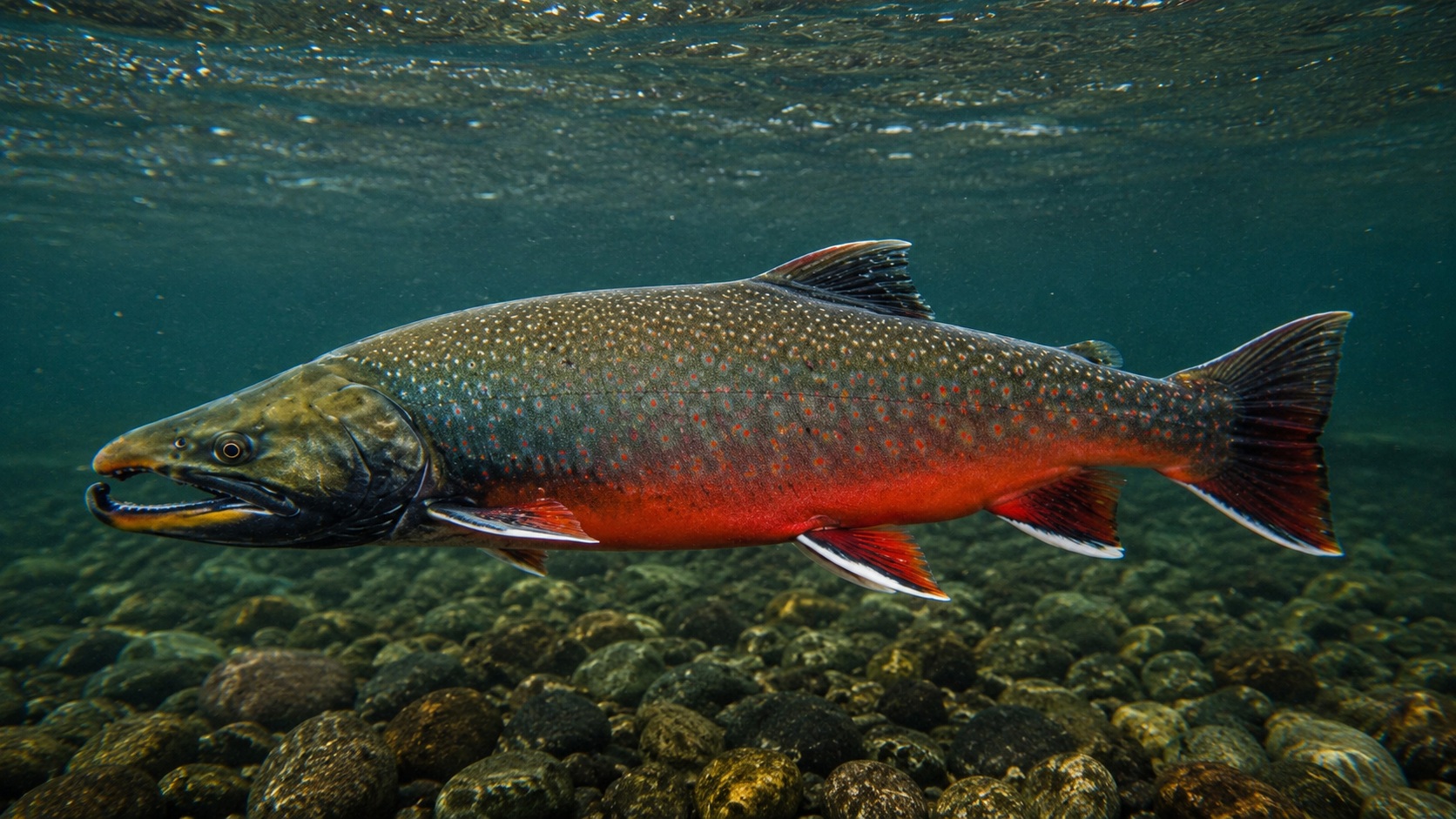
Dolly Varden are char, not true trout, and the key tells are right on the body: pale pink, red, and yellow spots on a dark olive-green or brown background, with no black spots anywhere. The paired lower fins carry white leading edges followed by a black stripe, a feature shared with brook trout. Two distinct subspecies exist in Alaska. The northern form (found from the Alaska Peninsula northward) grows substantially larger and is primarily anadromous. The southern form (Southeast Alaska, Kodiak, and the Aleutians) is smaller and may be resident or sea-run. Both are commonly confused with bull trout, which are not found in Alaska but share the same light-on-dark spot pattern. In spawning season, males light up with vivid red-orange bellies that border on unreal.
Where to find them
In Alaska, Dolly Varden turn up in virtually every coastal drainage from Southeast to the Beaufort Sea, as well as interior rivers of the Brooks Range. The Kenai Peninsula is the most accessible fishery in the state: the Kenai, Kasilof, and Anchor Rivers all hold strong populations that peak when salmon enter the system. The Naknek watershed near King Salmon and the Kuskokwim tributaries produce consistent fish. For trophy-class char, the northwest Arctic rivers including the Noatak, Kivalina, and Wulik are the destination, requiring fly-in access but delivering fish that belong in a different category entirely. Outside Alaska, Washington’s Olympic Peninsula and Puget Sound drainages hold southern-form Dolly Varden, often overlapping with bull trout, in cold coastal streams. Sea-run fish use estuaries and nearshore marine waters extensively, feeding heavily in saltwater before returning to fresh water for fall spawning.
When to go
Late summer and early fall are the prime window across most of Alaska. July through September covers the heart of the season in most drainages, with the best fishing often coinciding with salmon spawning runs. Dollies stack behind pink, sockeye, and silver salmon redds and feed aggressively on drifting eggs. The Kenai River’s fall dolly fishery in late August and September is particularly reliable and beginner-friendly. Sea-run fish move into rivers in spring and early summer as well, providing a secondary early-season bite near river mouths and estuaries before the salmon arrive. Lake-resident populations are accessible throughout open-water season in interior Alaska.
What to throw
Egg patterns are the single most productive category of fly during salmon season. Beads in orange, peach, and pink rigged just above the hook account for a staggering number of fish on rivers like the Kenai. Egg-Sucking Leeches, Glo-Bugs, and single-egg patterns dead-drifted through runs close to the bottom are consistent producers. Earlier in the season before salmon arrive, small streamers like the Chum Baby or Keta Rose work well near river mouths, and flesh flies become effective late in the season as salmon carcasses break down. For spin fishing, small spoons like the Pixie in orange or red-and-white and Mepps spinners in size 1-3 cover the water efficiently. Fish the bottom of deep runs and the soft inside seams downstream of spawning salmon, keeping presentation near the gravel where dollies feed. A sink-tip fly line or added weight for spin rigs is usually necessary in the deeper flows.
Regulations
Alaska Department of Fish and Game (ADF&G) manages Dolly Varden throughout the state, and regulations vary by region and drainage. In Southeast Alaska, the general statewide regulation sets no minimum size limit and a bag and possession limit of 10 Dolly Varden per day. Other regions including Southcentral, Interior, and Southwest Alaska may have different size and bag limits, and individual drainages frequently carry special rules that override the general statewide standard. Always verify current regulations in the specific regional booklet for the area you plan to fish before your trip, since rules change annually and emergency orders can modify seasons or limits in-season. The ADF&G Sport Fishing Regulations page at adfg.alaska.gov is the authoritative source, with downloadable regional booklets updated each year. Washington state anglers should consult the Washington Department of Fish and Wildlife for Dolly Varden regulations on the Olympic Peninsula and Puget Sound drainages, where special protections often apply given overlap with sensitive bull trout populations.
Handling and release
Dolly Varden are hardy fish by salmonid standards but deserve careful handling, particularly on designated catch-and-release waters and wherever late-season spawning fish are present. Keep the fish in the water as much as possible and use barbless hooks or crimp your barbs to speed release. Wet your hands before any handling and support the fish horizontally rather than gripping the body. Avoid fishing to visibly dark, hook-jawed spawners holding directly on redds: these fish are at peak stress and their spawning contribution outweighs any angling reward. In rivers where salmon are present, releasing a healthy dolly quickly means it returns immediately to feeding, and many of the same fish can be caught and released multiple times in a session. Cold, well-oxygenated water is typical Dolly Varden habitat, and most fish revive quickly when held facing upstream in the current until they kick free on their own.
On the Table
Dolly Varden are genuinely excellent table fish, particularly sea-run specimens, which rank among the finest-eating char in North America. Landlocked fish are still good eating but deliver softer flesh and a milder, less complex flavor than their anadromous counterparts.
Taste and texture: The flesh ranges from pale pink to deep red depending on diet, with sea-run fish often displaying richer color. Flavor is mild and sweet, richer than most trout but lighter than coho or king salmon — often compared to brook trout with more body. Texture is firm and flaky when fresh, holding up well to heat without falling apart. Landlocked fish can be slightly softer-fleshed and are best eaten immediately after catch.
Best preparation methods: Pan-frying skin-on over butter and oil is the go-to approach; the skin crisps beautifully and the firm flesh stays intact in the pan. Hot smoking suits Dolly Varden well because the oilier, pink-fleshed sea-run fish absorbs smoke flavor without drying out. Simple roasting or broiling whole over coals — a traditional Alaska preparation — lets the natural sweetness lead without distraction. Baking fillets with light seasoning works for landlocked fish, where keeping the prep simple avoids overwhelming the subtler flavor.
Handling for table quality: Bleed the fish immediately at the gills and put it on ice right away. Dolly Varden lose quality fast at ambient temperature, and the flesh softens noticeably if not chilled promptly. Filleting is straightforward; the pin bones run in a standard line and can be pulled cleanly with pliers. Fresh fish is far superior — freezing degrades both texture and flavor significantly compared to most other salmonids, so plan to eat the same day or the next if possible.
Eating caveats: Like all freshwater and anadromous char, Dolly Varden can carry tapeworm larvae (Diphyllobothrium species). Thorough cooking to an internal temperature of 145 degrees F eliminates the risk completely. Raw preparations such as ceviche or crudo are not recommended unless the fish has been commercially frozen first at approved parasite-kill temperatures. There are no mercury or ciguatera concerns with this species.