A note about links: If we include links to retail sites like Amazon or Bass Pro Shops, it's because they're relevant to the topic and, as anglers ourselves, we believe they're worth checking out. As an Amazon Associate we earn from qualifying purchases.
If you fish anywhere in the Florida peninsula — bass ponds, canal systems, the St. Johns River, the Kissimmee chain, the Everglades fringe — you have almost certainly been in the same water as a Florida gar. They are common, widespread, and perfectly adapted to the slow, warm, heavily vegetated water that defines freshwater Florida. Most people notice them the first time when a long, spotted fish rises to the surface nearby, gulps audibly, and disappears. The second time is usually when one takes a bait meant for bass.
Florida gar are one of only two gar species endemic to the southeastern United States (the other is the spotted gar), and they are the gar you are most likely to encounter if you fish anywhere south of the Florida panhandle. Here is how to identify one, where to find them, and what to do when you catch one.
What You Are Looking At
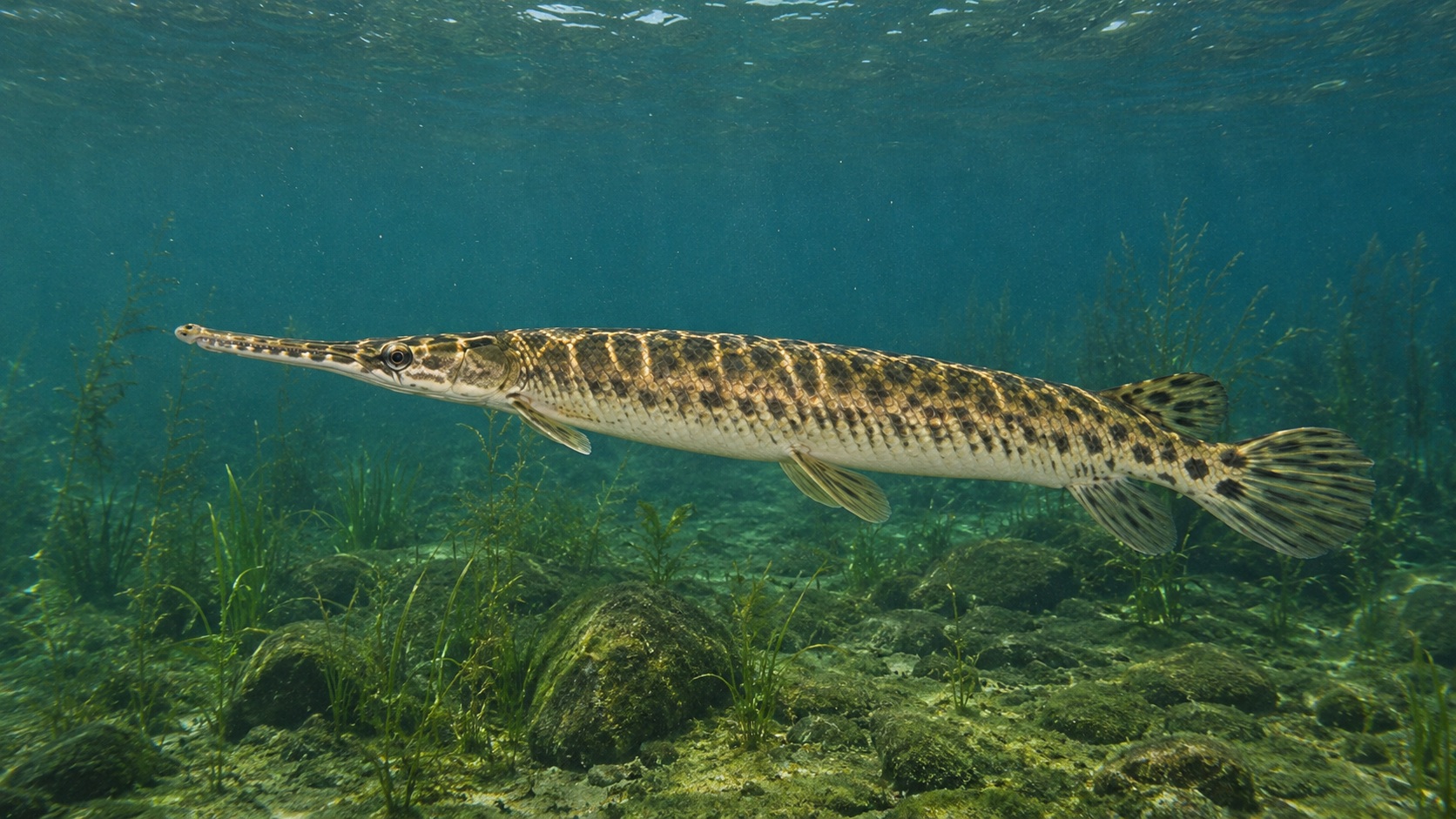
Florida gar look similar to spotted gar and are often confused with longnose gar by people who do not fish for them regularly. The two clearest field marks are the snout length and the spots on the head.
The snout on a Florida gar is noticeably shorter and broader than on a longnose gar. On a longnose, the snout is dramatically elongated — nearly as long as the rest of the head. On a Florida gar, the snout is moderate: still pointed and clearly longer than a bass or crappie, but proportionally stubby by gar standards. A useful rule of thumb: if the snout length is shorter than the distance between the front of the eye and the back of the gill cover, you are likely looking at a Florida gar rather than a longnose.
The spots are the other key feature. Florida gar have dark, round spots on both the body and the top of the head, including on the snout ahead of the eyes. Longnose gar in Florida waters may have some spotting on the body and fins but typically lack the heavy spotting on the head. The combination of shorter snout plus prominent head spots is the reliable ID.
The body is the same basic gar form: cylindrical, armored in hard diamond-shaped ganoid scales, olive to brownish on the back with a pale belly. Florida gar are mid-sized for the family; a 24-inch fish of a couple of pounds is typical, and individuals approaching or exceeding 40 inches are occasional.
Where They Live
Florida gar occupy essentially every slow-water freshwater habitat in peninsular Florida. They are extremely common in the drainage ditches and agricultural canals that cross much of rural Florida. The Kissimmee chain of lakes, Lake Okeechobee’s fringe, the St. Johns River and its tributary lakes, the Withlacoochee, the Peace, and the dozens of smaller rivers in central and south Florida all hold them. They extend into the Everglades water management canals in the southern part of the state and range north into southeastern Georgia.
Within these waterbodies, Florida gar favor shallow water with aquatic vegetation and some sort of structure: grass lines, lily pads, submerged logs, dock pilings, and the vegetated edges of canal banks. They use thick surface and emergent vegetation both for cover and for spawning in spring.
Like all gar, Florida gar can breathe air directly. This means they thrive in the low-oxygen, warm, heavily vegetated water that is common throughout the Florida freshwater system — conditions that reduce competition from less tolerant species and give gar an advantage. The gurgling or snapping sound of a gar surfacing to breathe is a common sound on quiet Florida water.
How to Handle One Safely
Florida gar are not dangerous, but they have teeth. The jaw is lined with small, sharp, inward-pointing teeth designed for gripping slippery fish. They will not attack a hand, but a thrashing gar next to the boat or on the bank will make contact if you are not paying attention.
The safe approach is the same as for any gar: use long-nose pliers or a de-hooking tool to remove the hook. Grip the fish firmly behind the head or around the body, not around the snout or near the jaw. The ganoid scales are rough — bare hands will come away abraded if you grip the fish tightly without protection. Wet your hands before handling if you plan to keep the fish, both for your sake and for the fish’s slime coat.
Florida gar are hardy and tolerate catch-and-release well. Lower the fish back to the water’s surface, support it horizontally until it steadies, and release. Recovery is typically fast.
Roe is toxic. Gar eggs of all species, including Florida gar, contain ichthyotoxin. This protein-based poison causes significant gastrointestinal illness in humans and is harmful or fatal to dogs and cats. Do not eat the eggs. Do not allow pets near discarded eggs or organs from a female gar. The muscle flesh of the fish is safe to eat; the roe is not, under any circumstances.
Can You Eat It?
Florida gar is edible. The flesh is white, mild, and palatable, similar to other gar species. The main challenge is the skeleton: gar are full of small, fine bones that make clean filleting difficult. Most anglers who eat Florida gar score the flesh down to the backbone and fry the sections whole, then pick through the meat at the table like you would with carp or shad.
An alternative approach used by some Florida anglers is to grind or chop the meat coarsely and make gar patties or gar balls — formed like a fish cake and pan-fried. This sidesteps the bone problem entirely and produces a reasonably good result with the mild flesh.
Florida gar in some heavily managed canal systems and agricultural drainage areas may be subject to fish consumption advisories due to pesticide or pollutant accumulation. Before eating gar from any Florida canal, check the FWC’s current consumption advisories for that waterbody.
A Common Fish Worth Understanding
Florida gar are so common in central and south Florida that most bass anglers encounter them regularly without giving them much thought. They are part of the ecosystem in a meaningful way: like all gar, they are ambush predators that help control small rough fish, shad, and other prey species, and their ability to handle low-oxygen conditions makes them residents of water that many sport fish cannot consistently use.
For anglers new to Florida freshwater fishing, the Florida gar is often one of the first “what is that?” moments of a trip. It looks strange, it has alarming teeth, and its scales look like it belongs somewhere in the Cretaceous rather than a retention pond in Orlando. That strangeness is worth appreciating before you send it back.