A note about links: If we include links to retail sites like Amazon or Bass Pro Shops, it's because they're relevant to the topic and, as anglers ourselves, we believe they're worth checking out. As an Amazon Associate we earn from qualifying purchases.
Few fish in Florida saltwater carry the kind of reputation permit do. They haunt shallow flats in clear water where every mistake is visible, they refuse presentations that would fool almost anything else, and they vanish before you realize they were ever there. Hooking one on fly is considered a career achievement in saltwater angling. Even landing one on live bait with conventional gear ranks as a genuine accomplishment. If you want a fish that will challenge your patience, your casting, and your composure all at once, permit are it.
How to identify one
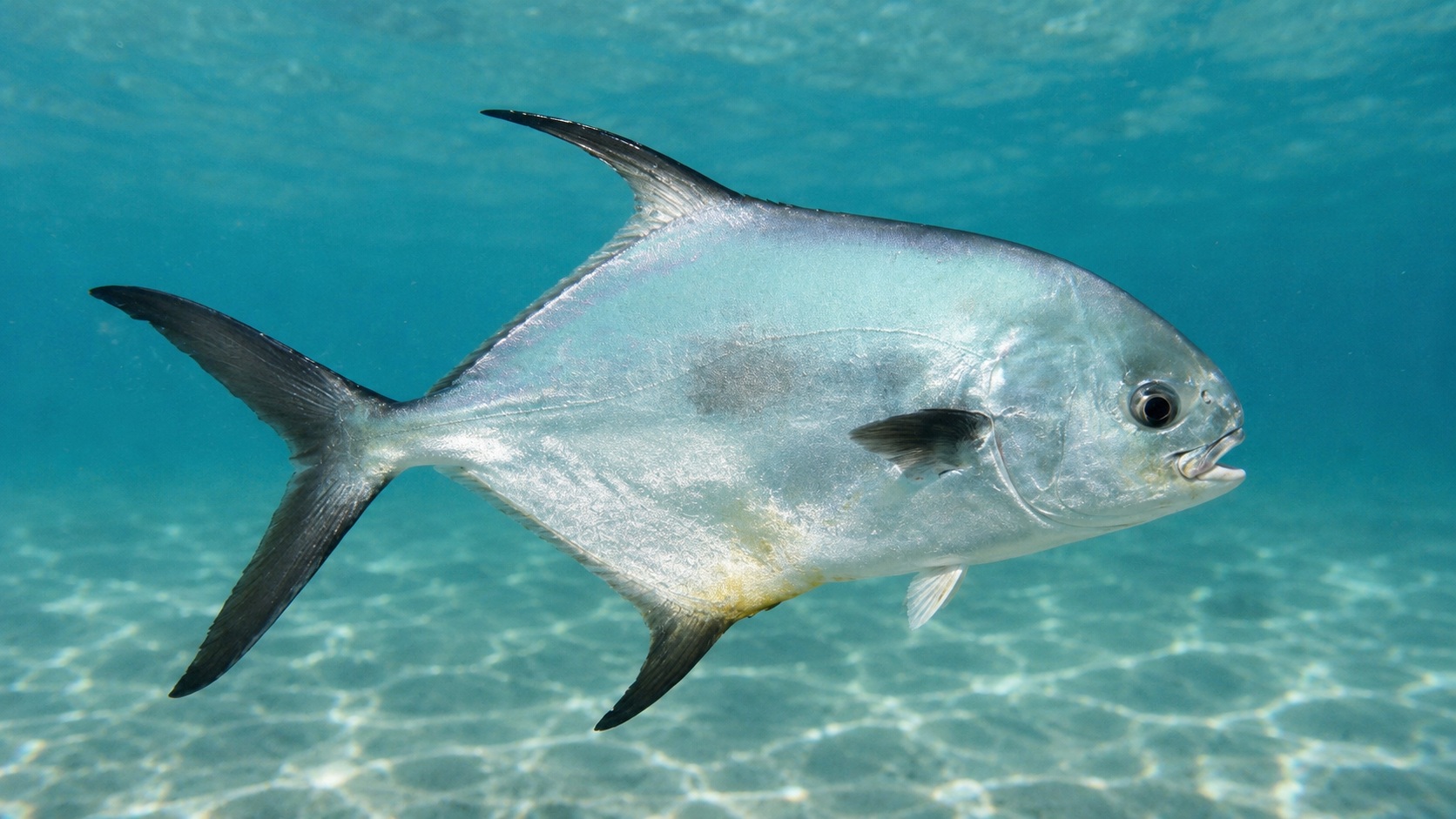
Permit are deep-bodied, laterally compressed fish with a distinctly forked, deeply concave tail and long, sickle-shaped dorsal and anal fins. Their color runs silvery gray to greenish on the back, fading to bright silver on the sides, with a yellowish patch on the belly near the pectoral fins. The mouth is small and positioned low on the head, suited for rooting crabs and mollusks off the bottom. A visible black spot often appears on the body just below and ahead of the dorsal fin.
The closest lookalike in Florida waters is the Florida pompano, but pompano are smaller, rarely exceed 6 pounds, and have a less pronounced body depth. Juvenile permit can cause confusion, but adult permit over 10 pounds are distinctive. The deeply forked tail combined with the high back profile and sickle fins is the reliable field mark.
Where to find them
Permit are a south Florida fish at heart. The Florida Keys, from Key Largo through the Marquesas, hold the most consistent permit population in the United States. Biscayne Bay is another proven flat, accessible from Miami with fish present year-round. Florida Bay and the backcountry of Everglades National Park produce permit as well, particularly around hard-bottom areas and sand patches adjacent to mangroves.
Outside the Keys, permit push into the flats and inlets of southeast Florida during warmer months. Government Cut in Miami and Sebastian Inlet on the Treasure Coast are known winter-to-spring spots where permit stack up in the current around structure. The Indian River Lagoon system can hold occasional fish, but IRL is not a primary permit destination. Productive permit habitat shares a common profile: clean, warm, shallow water over sand or grass with access to deeper channels or cuts nearby.
Offshore, permit are common over wrecks, oil platforms, and artificial reefs throughout the Gulf of Mexico and Atlantic, where they suspend mid-water column or hug the structure. These offshore fish are less pressured and sometimes more willing to eat.
When to go
Spring is the most celebrated permit season in Florida, running from late February through May. Warming water draws fish up onto the flats in numbers, and pre-spawn fish feed actively, making them relatively more catchable than at other times. The period from March through early June, before the summer heat and afternoon thunderstorms dominate, is when most serious permit hunters plan their trips.
Fall, from September through November, offers a second peak as water temperatures ease off and fish feed hard before winter. Summer permits exist on the flats early in the morning, but midday heat pushes them deep or offshore. Winter concentrates fish in inlets, passes, and around heated outflows.
Tides matter as much as season. Incoming and early outgoing tides move permit from deeper channels onto the flats to feed. On a rising tide, fish push into the thinnest water possible, tailing with their fins above the surface. Sight fishing to tailing permit on a clear spring morning is the experience anglers come specifically to Florida to find.
What to throw
Live blue crabs are the single most effective permit bait available. Hook a blue crab the size of a half dollar through the corner of the shell with a 2/0 to 3/0 circle hook, present it on a light fluorocarbon leader of 20 to 25 pounds, and let it crawl naturally on the bottom. The crab should be lively. Permit will reject a dead or sluggish offering. Calico crabs and pass crabs work equally well where available.
Crab-pattern flies are the obsession of permit fly anglers. Classic patterns include the Merkin, the Del’s Merkin (named after legendary Keys guide Del Brown), the EP Spawning Shrimp, the Avalon, and the Bauer Crab. The fly must sink quickly and appear to be fleeing toward the bottom, mimicking a crab escaping a predator. Delivery is everything: the fly should land ahead of the fish, at the right distance, and sink into the fish’s path without spooking it. A 9-weight fast-action rod with an aggressive-taper saltwater fly line and a 12-foot leader tapering to 16-pound fluorocarbon is a standard setup. The window for a proper presentation is often measured in seconds.
Crab-pattern jigs give spin-fishers a middle ground between live bait and fly. Small, heavy crab-imitating jigs in tan, olive, or brown cast well into wind and sink fast enough to reach a moving fish. Work them with slow hops and long pauses on a light jig head of 1/4 to 1/2 ounce.
Shrimp work in certain situations, particularly around inlets and deeper structure in winter, though they are a secondary option compared to crabs. Permit have specialized pharyngeal teeth designed to crush hard-shelled prey, and their preference for crabs is consistent enough to plan around it.
For all approaches, leader diameter and length matter more than almost any other tackle variable. Permit have large eyes and excellent vision. Drop leader diameter in clear, calm water. Go heavier only when fishing rough structure where abrasion is a genuine concern.
Regulations
Permit regulations in Florida vary by location. Outside the Special Permit Zone (SPZ), the statewide rule allows a slot of not less than 11 inches or more than 22 inches fork length, with a bag limit of 2 fish per harvester per day.
Inside the SPZ (waters south of Cape Florida on the Atlantic coast and south of Cape Sable on the Gulf coast, which encompasses Biscayne Bay, the Florida Keys, and Florida Bay), stricter rules apply: the minimum size is 22 inches fork length, the bag limit drops to 1 fish per harvester, and the SPZ is closed to harvest from April 1 through July 31 each year.
Harvest by multiple hooks in conjunction with live or dead natural bait is prohibited statewide. Snatching is prohibited.
Regulations are subject to change. Verify current rules at myfwc.com/fishing/saltwater/recreational/permit/ before fishing.
Handling and release
Most serious permit anglers practice voluntary catch-and-release, and the closed season in the SPZ during spring reflects the species’ spawning vulnerability. If you do keep a fish within the legal slot, permit are good table fare, with firm white meat, though most guides and anglers release them.
For release, keep the fish in the water as much as possible. Permit are powerful and will often require a long fight, leaving them exhausted. Support the fish horizontally, hold it facing into any current, and wait for it to kick free on its own before letting go. Do not hold permit vertically by the jaw for extended periods. In warm water, revive time can be significant. A fish that swims away strongly is one that may be tailing on a flat again within hours.
On the Table
Permit are edible and genuinely good eating, but the vast majority are released — they are one of the most prized flats sport fish in the world, and most serious permit anglers treat them as catch-and-release targets almost without exception. When kept, they reward the table with clean, firm white flesh that reflects their crustacean-heavy diet.
Taste and texture: Permit flesh is firm, white, and mildly sweet, with a flavor profile reminiscent of their close cousin the Florida pompano but noticeably denser and slightly less delicate. The diet of crabs, shrimp, and mollusks gives the meat a clean, shellfish-adjacent sweetness. Larger fish (over 10 pounds) can trend toward a firmer, slightly gamier result than smaller ones, so smaller permit in the 5-8 pound range are often considered better table fare.
Best preparation methods: The firm, dense fillet holds up well to high-heat methods. Grilling works especially well because the sturdy flesh does not fall apart over direct flame. Blackening in a cast-iron skillet suits the mild sweetness, letting bold spice complement without masking it. Ceviche is a standout preparation — the citric acid cure penetrates the firm flesh cleanly and the sweet, neutral flavor shines raw. Pan-frying in butter with a light flour dredge is another reliable option, producing a golden crust against the moist interior.
Handling for table quality: Permit fight hard and burn through energy quickly, so quality can drop fast if fish are not dispatched promptly. Bleed the fish immediately by cutting the gill arches; this removes the blood-rich substrate that accelerates bacterial growth and prevents dark, metallic-tasting flesh. Place the fish directly into a saltwater-ice slurry (not dry ice) for rapid chilling. Fillet within a few hours and keep the exposed meat cold and dry. Rinsing fillets briefly in clean saltwater removes residual blood before the final prep.
Eating caveats: Florida regulations allow a bag limit of only 2 permit per angler per day with a minimum size of 11 inches fork length — one of the more restrictive limits for a non-protected saltwater species, reflecting the fish’s sport fish status. Given this, most guides and experienced anglers strongly favor release. There is no significant ciguatera concern with permit; they feed low on the reef food chain (invertebrates, not apex predators). Mercury is not a notable concern at typical catch sizes.