A note about links: If we include links to retail sites like Amazon or Bass Pro Shops, it's because they're relevant to the topic and, as anglers ourselves, we believe they're worth checking out. As an Amazon Associate we earn from qualifying purchases.
If you have never eaten a pompano fresh off the grill, you are missing one of the best meals the Atlantic coast has to offer. The flesh is sweet, rich, and white with a fat content that keeps it moist no matter how you cook it, which is why Florida Pompano commands some of the highest per-pound prices of any fish on restaurant menus. But table quality is only half the story. Pompano are built for the surf, running in schools tight to the beach face as they root through the sand for crabs and small invertebrates, and finding them in numbers feels less like fishing and more like stumbling into something you were not supposed to see. On the Space Coast, fall through spring is prime time, and a good pompano morning with a strong onshore wind, clean troughs in the sand, and a bucket of fresh-dug sand fleas is the kind of trip that stays with you.
How to identify one
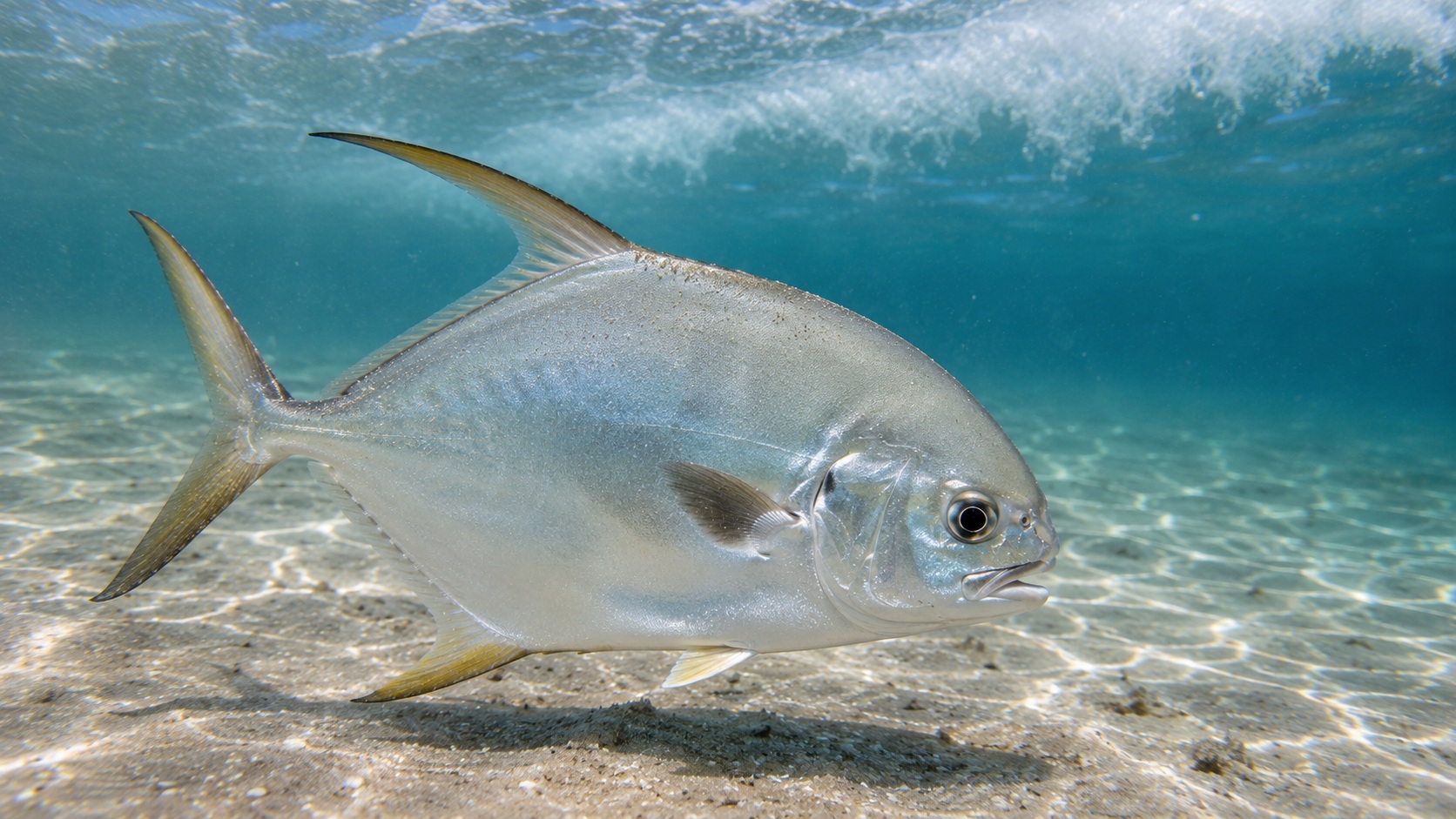
Florida Pompano have a body shape that is hard to confuse once you have seen it: deep and compressed side to side, almost oval from a distance, with a blunt snout and a small mouth. The body is silvery-blue to greenish on the back, fading to bright silver on the sides with a faint golden wash on the belly and lower fins. The tail is deeply forked and powerful.
The one fish that causes confusion is the permit (Trachinotus falcatus), which is a close cousin in the same genus. The permit grows much larger (routinely 20-plus pounds), has longer pointed pectoral fins, and a more pronounced concave forehead. A pompano under a foot long with a golden belly, a small rounded mouth, and a blunt nose is almost certainly what you think it is. Juvenile permit can be harder to distinguish, but if you are pulling a 14-inch fish out of a surf trough on a sand flea rig, odds are very strong it is a pompano.
Where to find them
Pompano live where the sand meets the sea. On the Space Coast, that means the Atlantic beach face from Canaveral National Seashore south through Cocoa Beach and Indialantic. The fish work the troughs: shallow channels that run parallel to the beach, just behind the first or second sandbar. These troughs concentrate the sand fleas, coquina clams, and small crabs that pompano hunt, and a pronounced trough with dark-colored water and active wash is the single best visual cue you have from the beach.
Look at low tide for “mussel lines,” which are darker patches of packed shell and sand visible along the wet-sand face. These mark the same productive feeding zones that hold fish when the tide comes back in. The Patrick Space Force Base beach access points, Playalinda Beach at Canaveral National Seashore, and the groins and piers around Cocoa Beach are all consistent producers. On a Space Coast trip you should also expect whiting, bluefish, and occasionally permit in the same water while targeting pompano, which makes a surf session more interesting even when the pompano bite is slow.
Pompano travel in schools and are residents of the nearshore zone. When one hits, your next cast often connects as well, and moving quickly to keep casting into the same trough matters more than any other adjustment you can make mid-session.
When to go
The pompano fishery on Florida’s Atlantic coast is a migration story. Fish move south along the coast in fall as water temperatures drop, concentrate through winter, and then push north again in spring. On the Space Coast, September through May covers the best fishing. October, November, and the first warm days of March tend to be peak windows, with the fall run often producing larger fish in better numbers than the spring push.
Summer is not a complete wash: smaller resident fish hold in the area through the warmer months, but they are less numerous and less predictable. Water temperature is the key trigger. Pompano prefer water in the 65-75 degree range for active feeding. When the surf dips below 60 degrees in a cold snap, the bite can slow to almost nothing, and when it climbs above 80 in midsummer, the big schools have already pushed north. In fall, an east or northeast wind that has been blowing for 24-plus hours and has stirred up the surf is typically a positive sign: it flushes invertebrates out of the swash zone and gets pompano feeding aggressively.
Morning and evening are reliably better than midday, and high tide pushing into a well-defined trough is a stronger setup than low water.
What to throw
Sand fleas are not just the best pompano bait; they are in a category by themselves. Sand fleas (also called mole crabs, scientific name Emerita talpoida) are the small pale crustaceans that live in the wet-sand swash zone at the surf’s edge. Dig them at low tide by scooping into the sand as a wave retreats: you will see them wriggling as the water drains. A fresh-caught sand flea hooked through the telson (the flat fan-shaped tail) on a No. 1 or 1/0 hook produces more pompano per outing than any other presentation. Pompano can smell them from distance and they are the primary food source in the surf environment.
If you cannot dig fresh sand fleas, or if you want a bait that stays on the hook through a long cast without spinning off, Fishbites sand flea-scented strips are the closest substitute. They are cut from a dense mesh material saturated with attractant, hold on a small hook reliably even through repeated casting, and have saved many otherwise-slow sessions. Fresh shrimp, peeled and cut into thumbnail-sized pieces, is a solid second-tier natural bait, and small strips of squid work as a last resort.
For rigging, two setups cover almost every scenario in the surf. A Carolina rig with a 1- to 2-ounce egg sinker, a swivel, an 18-inch fluorocarbon leader, and a single No. 1 or 1/0 hook keeps things simple and lets you feel bites clearly on a medium-light rod. A two-hook pompano rig using dropper loops spaced 8-10 inches apart above a pyramid sinker lets you present two baits in the water column simultaneously, which is a genuine advantage when fish are competing in the trough. Cast the rig past the breaking wave, let it settle to the bottom, and retrieve it slowly with occasional two-foot sweeps of the rod tip to bounce the bait and stir up sand. Pompano bites are often subtle at first, a light tap before the fish loads up, so keep slack out of your line.
On calm, clear days with good water visibility, watch for pompano flashing their sides near the surface as they turn to pick up food. This is a reliable indicator that fish are feeding actively and close enough to target on the next cast.
Florida regulations
Florida Pompano are managed under FWC rules that apply year-round with no closed season. The current recreational regulations are:
Minimum size: 11 inches fork length Daily bag limit: 6 fish per person Permitted methods: Hook and line, cast net, and beach or haul seine only.
Always verify current rules at myfwc.com before your trip, as regulations can change between seasons. The 11-inch minimum is sized to allow fish to reach sexual maturity before harvest, supporting the long-term health of a species that supports both a highly valuable commercial fishery and one of Florida’s most popular inshore recreational pursuits.
Handling and release
Pompano are strong fighters for their size and recover quickly if kept wet during the unhooking process. Wet your hands before handling, keep the fish horizontal, and have a dehooker or needle-nose pliers ready since the small mouth and hard lips can make hook removal tricky on a deeply swallowed bait. If you are releasing a fish, a quick dip in the surf and a gentle hold facing into the current until it kicks away is all that is needed.
On the Table
Florida pompano is one of the most prized food fish in the southeastern United States, consistently ranking among the top table fare in Atlantic and Gulf Coast markets. Anglers who target pompano almost universally keep their catch, and the fish commands premium prices at seafood counters precisely because the eating quality is so high.
Taste and texture: Pompano has a rich, sweet, buttery flavor that is distinctly more pronounced than most “mild” white fish, yet never crosses into oily or gamey territory. The flesh is off-white to pale, turning white when cooked, with a firm, moist, fine-grained texture that holds together well under heat. The fat content is moderate-to-high for a coastal species, which is the source of both the flavor and the forgiving cooking window.
Best preparation methods:
- Whole roasting or en papillote: Pompano’s compact, round body and intact skin seal in moisture beautifully. Roasting whole at high heat or steaming inside parchment locks the natural fat against the flesh, producing a self-basting effect no fillet technique can fully replicate.
- Pan-frying or sauteing skin-on fillets: The skin crisps without curling because of the fish’s firm structure. A hot cast-iron pan with butter produces a golden, crackling skin against a silky interior — the classic preparation in New Orleans.
- Blackening: The rich fat content means pompano can absorb an aggressive blackening spice crust without the flesh drying out. This technique became closely associated with pompano through Louisiana Cajun cooking.
- Grilling: Firm flesh resists flaking through grill grates. Grilling whole or as thick fillets over direct heat caramelizes the natural sugars in the flesh and complements the buttery flavor without needing much seasoning.
Handling for table quality: Pompano deteriorates faster than leaner fish because the higher fat content turns rancid quickly. Bleed fish immediately at the gill plate as soon as they are landed. Place directly on ice — do not let them sit in warm water or a dry livewell. Fillet promptly once home, rinse briefly, pat dry, and use within one to two days fresh. For longer storage, vacuum-seal before freezing to prevent freezer oxidation of the fat.
Size and bag limit notes: Many states along the Gulf and Atlantic coasts carry a minimum size limit (commonly 11-12 inches fork length) and a bag limit of six fish per angler per day in Florida as of 2024. Check current state regulations before keeping fish, as limits can change seasonally. Fish in the 1-2 pound range yield the best eating; larger fish above 3 pounds are noticeably richer and some anglers find them slightly less refined in flavor.