A note about links: If we include links to retail sites like Amazon or Bass Pro Shops, it's because they're relevant to the topic and, as anglers ourselves, we believe they're worth checking out. As an Amazon Associate we earn from qualifying purchases.
What it is
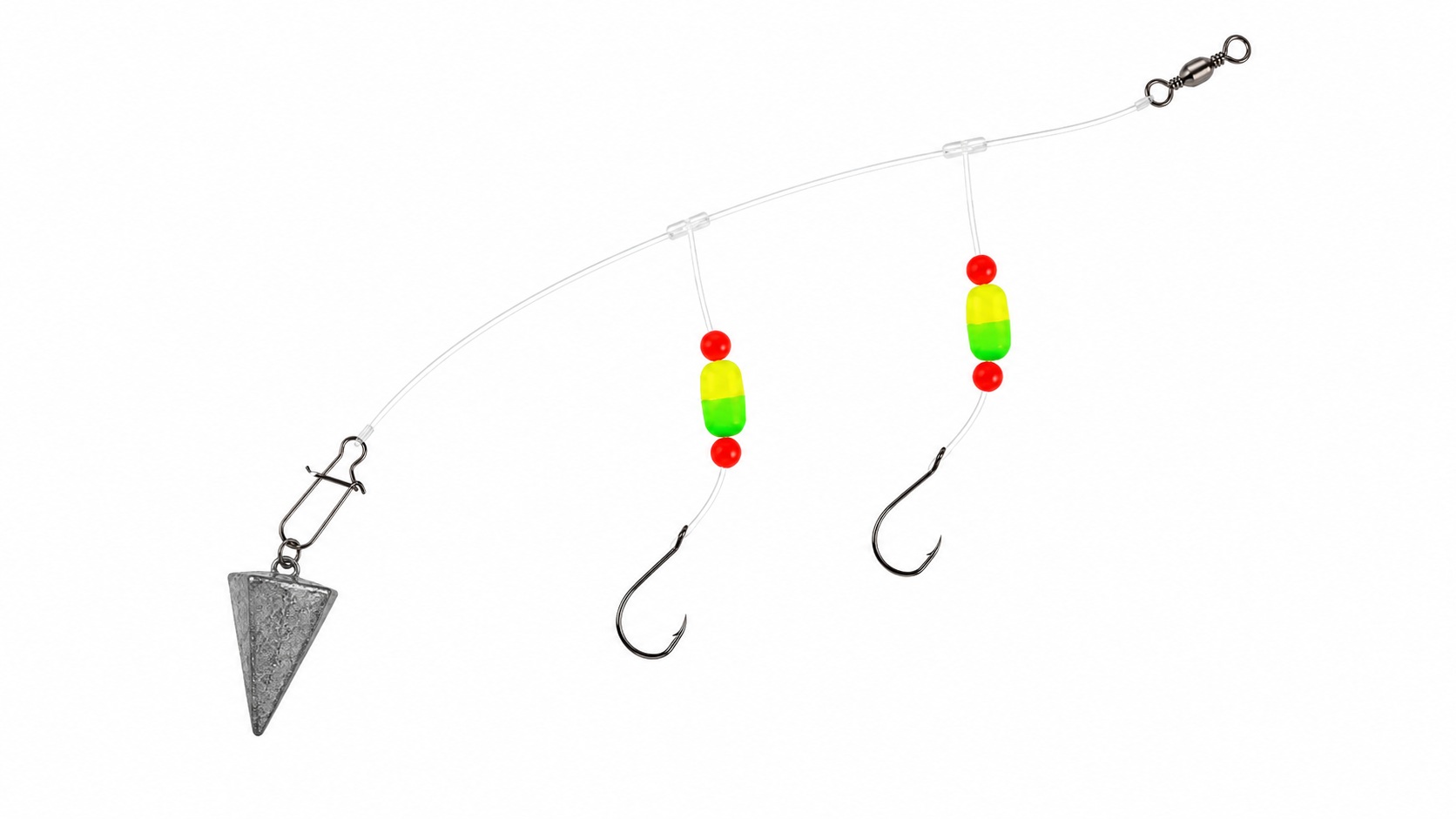
The pompano rig — also called the hi-low rig, high-low rig, or double-dropper rig — is the go-to setup for surf fishing along Atlantic and Gulf Coast beaches. It puts two baited hooks at different heights above the bottom, suspended by small foam or cork floats that keep the presentation right in the feeding zone where pompano and whiting are actively hunting.
The rig is built around a pyramid sinker at the bottom, which digs into the sand and holds position in the wash. Above it, two dropper loops branch off the main leader at different heights, each tipped with a float, a colored bead, and a hook. The float lifts the bait off the sand just enough to put it in front of fish moving through the trough. The bead adds a flash of color — often orange, which mimics sand-flea eggs, a primary food source for pompano and southern kingfish (whiting).
This is one of the most beginner-friendly surf rigs available. Pre-tied versions are sold at tackle shops across Florida and the Gulf states, and the setup takes about two minutes to attach and bait. That simplicity does not compromise effectiveness — this is the same rig tournament surf anglers rely on during pompano runs.
How to rig it
Pre-tied rigs take the work out of assembly, but understanding the components helps you customize on the water.
A standard pompano rig uses:
- Main leader: 20–30 lb monofilament or fluorocarbon, 18–24 inches long
- Dropper loops: Two loops tied at different heights along the leader, spaced 6–8 inches apart
- Float: A small foam float threaded onto each dropper loop before the hook; slides up the loop to suspend the bait
- Bead: One or two colored beads between the float and hook
- Hook: Circle hook on a 2–4 inch dropper, snelled directly to the loop
- Terminal: Barrel swivel at the top to connect to your main line; pyramid sinker clip or loop at the bottom
To attach the rig, tie your main line to the top swivel, clip or tie your pyramid sinker to the bottom loop, then bait and cast.
How to fish it
Cast past the first breaking wave and into the surf trough — typically 20 to 40 yards out depending on the beach. This is where pompano and whiting hold. If you can see a darker band of water just beyond the white water of the breaking wave, that is the trough. Aim for it.
Once the rig settles, keep the line tight enough to feel bites but not so tight you pull the sinker out of position. Pompano and whiting bites can be subtle — a tap, a bounce, or just a steady pull. Circle hooks will self-set as the fish turns, so avoid a hard hookset. Let the fish load the rod.
Run two different presentations on the same cast. Put a live sand flea on one hook and a Fishbites strip on the other. When one produces, load both hooks that way. The trough position matters more than bait selection most days, but matching what fish are eating will separate your catch from the angler next to you.
When to use it
The pompano rig works year-round in Florida and along the Gulf Coast, but spring and fall are the peak runs. Pompano migrate along the coast with water temperature, moving north in spring and south in fall. Whiting are present year-round and fill in during slower pompano periods.
Rising tide is consistently the best bite window. As the tide floods, it stirs up sand fleas and coquina clams in the wash, which draws fish into shallow water right at your feet. Plan your sessions around the incoming tide for the best results.
Float and weight selection
Conditions change quickly in the surf, and having the right float color and sinker weight makes a real difference.
| Condition | Float Color | Notes |
|---|---|---|
| Clear, calm water | No float or white | Finicky whiting in clear water can shy from bright floats |
| Normal surf | Orange | Mimics sand-flea eggs; default starting color |
| Rough or dingy surf | Chartreuse or pink | High visibility helps fish locate bait in murky water |
| Current Strength | Sinker Weight |
|---|---|
| Light to moderate | 1–2 oz pyramid |
| Strong | 2–4 oz pyramid |
| Very strong or ripping current | Sputnik sinker (wire legs anchor in sand) |
Start with 1 oz if conditions allow. A lighter sinker will drag and roll in strong current, pulling your rig out of the trough.
Gear setup
Surf fishing for pompano and whiting does not require heavy gear. A 9–11 foot medium-action surf rod paired with a 4000–5000 series spinning reel handles the casting distance and wave action well. Spool with 10–15 lb monofilament or 20 lb braid with a 20–30 lb mono leader.
Braid improves bite detection and casts farther, which matters when the trough is sitting at 40 yards. The no-stretch feel of braid telegraphs the subtle taps that mono might absorb.
Brands worth knowing
Pompano Candy makes pre-tied rigs that are popular along Florida’s Space Coast. Their floats and beads are sized and colored specifically for pompano fishing, and the hooks are sharp out of the package.
Eagle Claw offers budget-friendly pre-tied hi-low rigs that are widely available in gas stations and bait shops across the Gulf states — solid for beginners who want to start fishing without building rigs from scratch.
Owner and Hayabusa circle hooks are worth buying in bulk if you tie your own rigs. Both brands hold an edge and resist bending when a large redfish or black drum picks up your pompano bait.
For generic components, pick up a spool of 25 lb fluorocarbon, a pack of small orange foam floats, size 6 orange beads, and Owner 1/0 or 2/0 circle hooks. You can tie a dozen rigs in an hour for less than the cost of one pre-tied pack.