A note about links: If we include links to retail sites like Amazon or Bass Pro Shops, it's because they're relevant to the topic and, as anglers ourselves, we believe they're worth checking out. As an Amazon Associate we earn from qualifying purchases.
What it is
Surf fishing is fishing from the beach, casting into the breaking waves and the water just beyond them for fish that cruise the surf zone hunting for food. It is one of the most accessible kinds of saltwater fishing there is: no boat, no launch fee, no offshore weather window. You walk onto the sand with a rod, a few rigs, and some bait, and you are fishing.
The surf zone is busier than it looks from the parking lot. Waves churn up sand crabs, clams, and baitfish, and the moving water concentrates that food into predictable lanes. Fish like pompano, whiting, redfish, black drum, and striped bass patrol those lanes close to shore — often within an easy cast of dry sand. That is the beauty of the surf: the dinner table is right at your feet, and the fish come to you.
What separates anglers who catch from anglers who just cast is beach reading. A flat, featureless stretch of beach holds few fish. A beach with troughs, cuts, and sandbars funnels fish into spots you can target. Learning to see that structure is the single skill that turns surf fishing from a coin flip into a craft — and the good news is you can learn it standing on the sand at low tide.
How to do it
Start by reading the beach. Walk it at low tide, when the structure is exposed, and look for three things. A trough is the darker, deeper channel running parallel to the beach between the sand and the first bar — fish travel and feed in it. A cut is a break in a sandbar where water rushes back out to sea, carrying food and pulling fish to its edges. A sandbar is the lighter, shallower band where waves break first; fish hold along its drop-offs. Darker water means deeper water, and deeper water near shore is where you want your bait.
From there, surf anglers take one of two approaches.
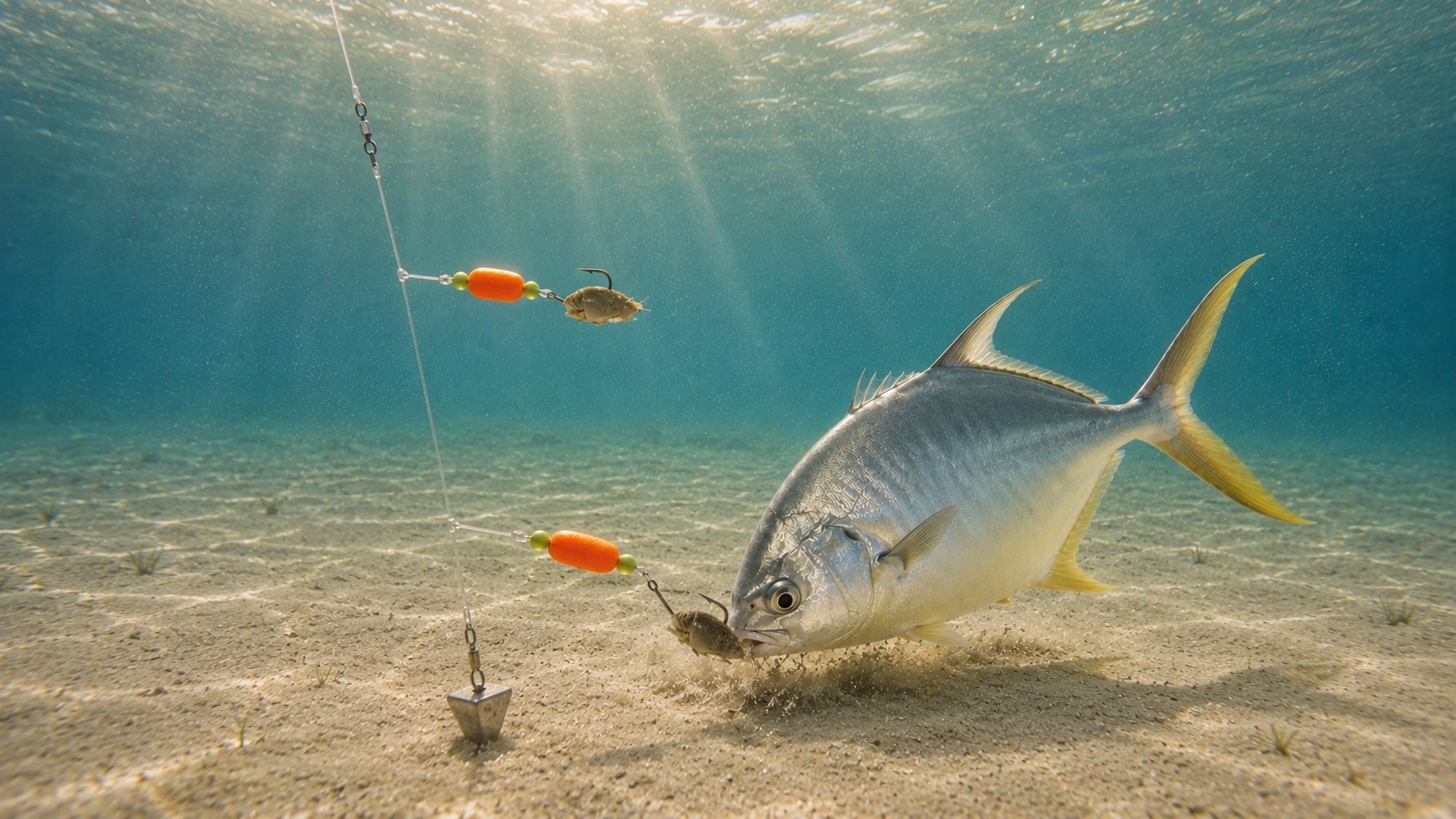
Soaking bait. The classic method is to fish natural bait on the bottom and wait. Rig cut bait, shrimp, sand fleas, or clams on a fish-finder rig for larger fish like redfish and drum, or a multi-hook pompano rig for pompano and whiting. Cast it into a trough or cut, prop the rod in a sand spike, and let the fish find it. A long surf rod — nine to twelve feet — loads up to launch the rig well past the breakers and keeps your line high over the churning whitewater.
The key to soaking bait is holding the strike zone. Surf current sweeps a round sinker sideways and drags your bait out of the productive water. Pyramid sinkers dig their flat faces into the sand to hold position, and sputnik sinkers, with spring-loaded wire arms, anchor even harder in heavy current. Use enough weight to stay put, and you keep your bait sitting right where the fish are traveling.
Casting to feeding fish. When fish are actively chasing bait — you will see birds working, bait scattering, or fish slashing the surface — put the bait rods down and cast lures. A casting metal (a compact, heavy spoon or jig) flies a long way and matches the small baitfish that bluefish and Spanish mackerel crush. A saltwater popper worked across the surface draws explosive strikes, and a paddletail swimbait on a jig head covers water through the trough for redfish and striped bass. This run-and-gun style is fast, visual, and addictive.
When to use it
Surf fishing produces year-round, but timing within the day matters most. The incoming (rising) tide is prime — moving water floods the troughs, lifts food off the bottom, and brings fish in tight to the beach to feed. The last couple hours of the incoming and the first of the outgoing are the classic windows. Dawn and dusk stack on top of that: low light pulls predators shallow and makes them bold.
Season shapes the menu. Pompano and whiting run the warmer months across the Southeast; striped bass blitz Northeast beaches in spring and fall; redfish and black drum are reliable through cooler weather. Wind and surf condition matter too — a light onshore breeze and moderate surf stir up food and turn fish on, while dead-flat or storm-blown conditions can shut them down.
Common mistakes
The biggest mistake is casting blind onto featureless beach. Fish are not spread evenly; they hold in troughs and cuts, so spend a few minutes reading the sand before you wet a line. The second is using too little weight — if your rig rolls and your line sweeps sideways, your bait is no longer in the strike zone, so step up to a heavier pyramid or a sputnik. The third is fishing too far out: beginners launch everything to the horizon when the fish are often feeding in the first trough, just past the breakers. And finally, do not anchor to one spot. If a tide window goes quiet, move down the beach to the next cut. Surf fishing rewards the angler who reads the water and goes to the fish.