A note about links: If we include links to retail sites like Amazon or Bass Pro Shops, it's because they're relevant to the topic and, as anglers ourselves, we believe they're worth checking out. As an Amazon Associate we earn from qualifying purchases.
What it is
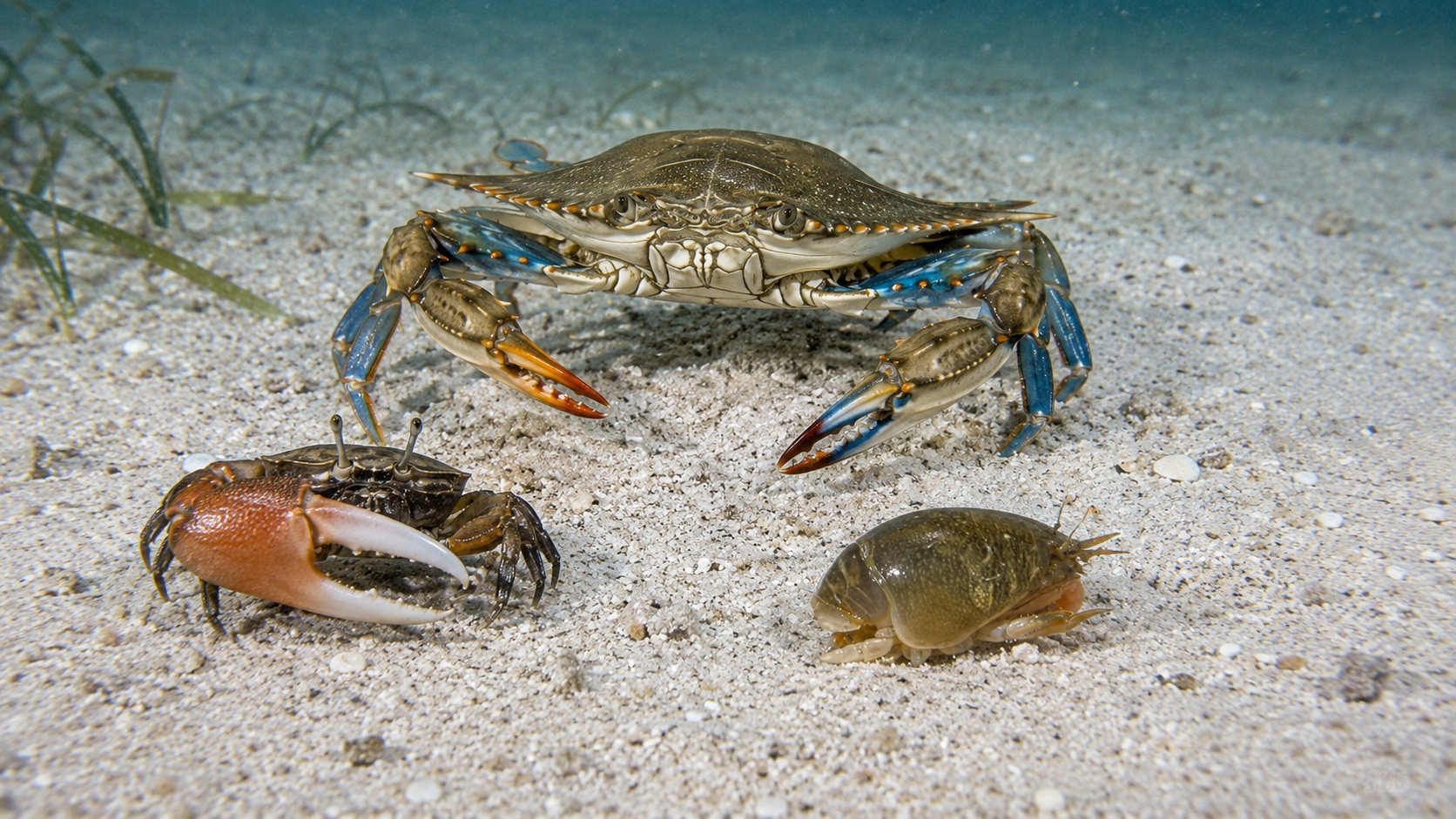
Some saltwater fish will eat a shrimp or a strip of cut bait all day, but a few species would walk past every one of them to get to a crab. Crustaceans are what they grew up eating, and when you put the right one in front of them, the bite is rarely subtle. Three crustacean baits cover almost everything you would want to catch close to shore.
Fiddler crabs are the little burrowing crabs you see scuttling across mud flats and around dock pilings, the males waving one oversized claw. They are the number-one bait for sheepshead, and they also tempt black drum, redfish, and tripletail.
Sand fleas — properly called mole crabs — are the thumbnail-sized crabs that bury in the wet sand of the swash zone, right where the waves wash up and slide back. They are THE pompano and whiting bait, and reds and black drum love them too.
Blue crab — usually quartered or used as cut crab — is the big-fish bait. A chunk of fresh crab soaked on the bottom is a five-star meal for bull redfish, big black drum, tarpon, and permit.
How to rig and fish it
The golden rule for all three: match the bait to the structure the fish are using. Fiddlers belong on pilings, sand fleas belong in the surf trough, and crab chunks belong on the bottom where the big fish cruise.
Fiddler crabs want to be fished tight to vertical structure — pilings, jetty rocks, bridge fenders, dock posts — where sheepshead scrape barnacles. Most anglers fish them on a knocker rig or a simple jighead so you can drop straight down the piling and feel the soft, telltale “tick.” Hook the crab through the body: bring the point up from the bottom shell and out the top, or insert it right above a leg and out the back, which keeps the hook mostly hidden for finicky fish. Use a thin-wire #1 or #2 octopus hook — a thick hook kills the crab fast (Salt Strong). Leave the big claw on; it waves like a flag.
Sand fleas are a surf-fishing bait first and foremost. The classic delivery is a pompano rig — a dropper rig with two or three small circle hooks, bright floats, and a pyramid sinker to anchor in the wash — cast into the trough between the beach and the first bar. Hook a sand flea through the underside and just barely break the point through the top of the shell; that wedges it tight so it survives the cast (Coastal Angler). Always hook them so the digger — the pointed end they burrow with — faces up, the way the fish sees them coming.
Cut blue crab is bottom bait. Twist off the legs and claws, cut the body into halves or quarters, and run a circle hook through a leg joint so the point sits proud. Soak it on a fish-finder rig with enough lead to hold bottom, or free-line a small whole crab on the flats for tarpon and permit. A Carolina rig does the same job with a sliding weight. Wait on the load-up bite and let the circle hook find the jaw corner — do not swing.
When to use it
Crab baits shine when fish have locked onto crustaceans and ignore everything else. Cold-water sheepshead stack on structure in late fall and winter, and a fiddler is often the only thing they will eat consistently. Pompano run the beaches as water temperatures swing in spring and fall, and a fresh sand flea outfishes anything artificial when they are dialed in. Bull reds and big black drum feed heavily on crab in the passes and backcountry, especially around the fall run, and a crab chunk weeds out the small fish.
When the bite is tough and shrimp is getting picked apart by pinfish, crab is also your friend — it is too tough for the bait-stealers to destroy, so it stays on the hook for the fish you actually want.
Forms and keeping it
Fiddler crabs are sold live at coastal bait shops and are easy to catch yourself at low tide on a mud flat — herd them toward a buried bucket. Keep them in a ventilated container with damp sand or a wet towel and a little shade; they live for days and need almost no care.
Sand fleas come live or frozen. You catch live ones with a sand flea rake — a long-handled scoop with a wire basket — dragged through the swash as the wave recedes; look for the little V-shapes and bubble trails the colony leaves in the sand (Florida Sportsman). Live fleas hold the hook better and out-fish frozen, but frozen are a fine backup when the colony has moved or the surf is too rough to dig. To keep your own, blanch them briefly in boiling water until they turn orange, cool, and vacuum-seal for the freezer. Fishbites flea-flavored strips are a no-bait fallback that tip a hook nicely.
Blue crab you can buy live, or buy cut/frozen crab made for bait. Fresh is best — the scent matters — but quartered frozen crab fished on the bottom still draws big drum and reds. Keep live crabs cool and damp, never submerged in standing fresh water, and they will last a trip.
Gear and sourcing
Keep terminal tackle simple and matched to the bait.
- Sand flea rake — the fastest way to load up on live mole crabs in the swash zone. Worth owning if you fish the beach at all.
- Circle hooks in #1 to 3/0 — the standard for sand fleas and cut crab; they hook the jaw corner on the load-up and make release clean.
- Pompano rig — pre-tied dropper rigs with floats and small hooks take the guesswork out of surf-fishing sand fleas.
- Frozen sand fleas — a reliable backup for the days you cannot dig your own.
- Octopus hooks in thin-wire #1 and #2 — the right hook for live fiddler crabs on structure.