A note about links: If we include links to retail sites like Amazon or Bass Pro Shops, it's because they're relevant to the topic and, as anglers ourselves, we believe they're worth checking out. As an Amazon Associate we earn from qualifying purchases.
Few experiences in saltwater sight fishing match the anticipation of spotting a tripletail hanging motionless beneath a crab trap buoy, tilted on its side like a piece of drifting bark, completely indifferent to your boat until the moment it is not. These fish are a genuine sight-fishing quarry, one where you scan the water, spot the fish, make a precise cast, and watch the whole thing unfold in real time. They are built for eating, known for strong runs when hooked, and locating them is a puzzle that rewards anyone willing to work a trap line or debris field slowly and carefully. From the Gulf Coast of Texas to the barrier islands of the Carolinas and up into the mid-Atlantic in summer, targeting tripletail is a legitimate specialty pursuit that produces both memorable fights and some of the best fillets in the ocean.
How to identify one
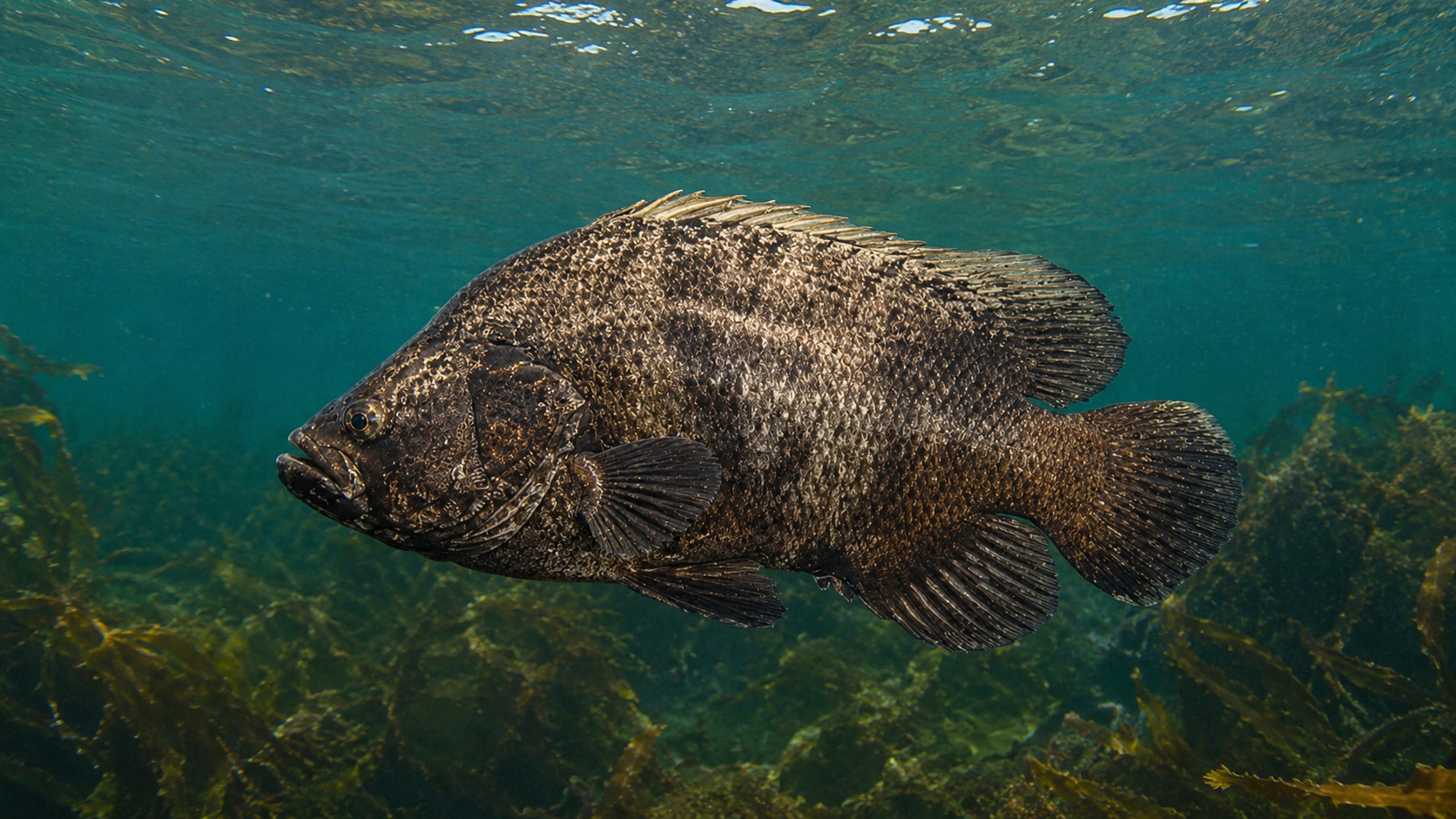
The tripletail earns its name from three rounded fins near the tail end of its body, a soft dorsal fin and an anal fin that mirror the shape of the tail, creating the impression of three separate tail lobes. Adults are deep-bodied and laterally compressed, wearing mottled brown, olive, and yellowish coloring that blends convincingly with floating debris and sargassum. The head is small relative to the body, with a slightly concave profile and an upturned jaw. Juveniles carry brighter yellow-brown tones that mimic dead leaves almost exactly. There are no close lookalikes in US waters once you know what to look for; the three-lobed tail silhouette and the characteristic sideways-floating posture near structure are unmistakable. Fish in the 2 to 5-pound range are common, but specimens of 10 to 20 pounds are caught regularly, and large fish approaching or exceeding 30 pounds are taken each season along both coasts.
Where to find them
Tripletail are structure addicts. They position themselves just beneath the surface, often tilted at an angle, using floating or fixed structure as shade and ambush cover. The key is learning to read whatever structure your region offers.
Along the Gulf Coast — from the Florida Panhandle through Alabama, Mississippi, Louisiana, and Texas — commercial crab and shrimp gear creates a dense network of buoys that concentrate fish in predictable spots. The Gulf Coast fishery is considered among the most consistent in the country, and guides from Galveston Bay to Mobile Bay specialize in running buoy lines by boat. Nearshore oil platforms and channel markers add to the mix offshore.
Along the Southeast Atlantic coast — the Carolinas, Georgia, and northeastern Florida — tripletail hold around crab pot buoys, channel markers, inshore pilings, and any floating debris that washes into nearshore waters. Estuaries with active commercial crabbing are particularly productive.
Farther north, tripletail are a summer visitor to the mid-Atlantic. As water temperatures rise from June through September, fish follow floating debris, sargassum, and crab-pot buoys northward along the continental shelf. The Chesapeake Bay region and the barrier islands and sounds of Virginia and North Carolina see consistent summer and early fall action, with fish often turning up well offshore around weed lines and floating structure.
Offshore, weed lines and floating debris patches along the Gulf Stream hold fish through summer across the entire range. The same fish may move between inshore estuaries and open nearshore water depending on water temperature and forage availability.
When to go
The productive window spans spring through fall, but exact timing shifts significantly by latitude. Water temperature is the primary driver: tripletail prefer water in the 68 to 85 degree range and become most active and accessible in the upper half of that band.
In the Gulf Coast states and Florida, reliable nearshore action typically begins in early spring as inshore waters warm, peaks through late spring and early summer around buoy lines, and remains strong through fall. Mid-summer heat pushes some fish to offshore weed lines and cooler nearshore structure.
In the Carolinas and mid-Atlantic, the fishery is largely a summer phenomenon. Tripletail begin appearing in productive numbers as inshore and nearshore waters reach the mid-70s, generally June through early October, with peak action often falling in July and August.
Regardless of region, mid-morning through early afternoon offers the best visibility for spotting fish, since polarized sunlight helps you see fish hanging beneath the surface. Calm, clear days are far more productive than windy, choppy conditions that obscure fish and make quiet approaches impossible.
What to throw
Live shrimp is the gold standard for tripletail and the bait most guides reach for first. Hook a medium or large shrimp through the horn with a 1/0 or 2/0 circle hook on a light fluorocarbon leader of 15 to 20 pounds. Cast 3 to 5 feet past or beyond the target structure and let the shrimp drift naturally back toward the fish. Avoid splashing the bait down right on top of the fish. Live pilchards and finger mullet work well when shrimp are hard to source, especially around offshore debris. Small live crabs are a natural forage item and can be deadly when fish are being selective. On the artificial side, soft plastic shrimp imitations such as DOA Shrimp or LiveTarget Shrimp in natural pink or tan, worked with a slow lift-and-drop retrieve, will trigger strikes from willing fish. Bucktail jigs tipped with a piece of shrimp cover the situation when you want more casting distance or when fish are positioned just below deeper structure. Keep your retrieve slow and your presentation natural. Tripletail are deliberate feeders that inspect baits before committing, and a high-speed retrieve will spook more fish than it catches. When fighting a hooked fish near buoy lines, move the boat immediately to keep the fish from wrapping around the trap rope.
Regulations
Regulations for tripletail vary by state, and rules have been adjusted in several jurisdictions in recent years as the fishery has grown in popularity. Always check with your state’s fish and wildlife agency before keeping fish. Minimum size limits across the range commonly fall in the 15 to 18-inch range, and daily bag limits are generally low — often 2 to 5 fish per person — reflecting the species’ slow reproductive rate and high value as a table fish.
In federal waters (beyond 3 nautical miles on the Atlantic, beyond 9 nautical miles in the Gulf of Mexico), tripletail are not subject to a federal management plan as of this writing, but state regulations typically apply to fish landed in that state regardless of where they were caught. If you fish across state lines, verify the rules for each state where you intend to land fish.
Key resources:
- Gulf Coast states: check Alabama DCNR, Mississippi MDMR, Louisiana LDWF, or Texas TPWD
- Atlantic states: check your state’s marine fisheries agency (NCDEQ, SCDNR, GADNR, etc.)
- Florida: myfwc.com/fishing/saltwater/recreational/tripletail/
Handling and release
Tripletail are hardy fish but benefit from quick, careful handling. Grip them firmly behind the pectoral fins or use a lip grip if the fish is large. Avoid prolonged exposure to air. For fish being kept, a quick bleed improves table quality significantly. Tripletail rank among the finest eating fish in saltwater: the flesh is firm, white, mild, and versatile, holding up well to grilling, sauteing, or blackening. For released fish, lower them into the water and allow them to swim free rather than dropping them; fish that have been fought hard may need a moment of support near the surface before reviving fully.
On the Table
Tripletail is one of the most prized table fish in inshore and nearshore saltwater fishing, consistently ranked alongside grouper and snapper by anglers and chefs who have tasted it. Its combination of mild sweetness, firm texture, and forgiving flesh makes it a catch worth keeping whenever regulations allow.
Taste and texture: Tripletail has a mild, clean flavor with a slight sweetness that draws frequent comparisons to grouper and red snapper. The flesh is pearly white, with thick, wide flakes and a texture that is simultaneously firm and tender. It is dense enough to hold up on a grill or in a hot pan without falling apart, yet delicate enough to absorb butter- and herb-based sauces readily.
Best preparation methods:
- Pan-searing or pan-roasting: The thick, firm fillets develop a golden, slightly crisp crust over medium-high heat while staying moist inside. A finish with garlic butter and fresh thyme lets the mild flesh shine without masking it.
- Grilling: The density of the fillet means it handles direct flame well without sticking or breaking. A light coat of oil and simple seasoning is all that is needed; the flesh holds structure through the cook.
- Baking or en papillote: Wrapping fillets in parchment with herbs, a splash of white wine, and butter produces a clean, steamed result that highlights the natural sweetness. This is a forgiving method — the fish tolerates slight overcooking better than many species.
- Blackening: Tripletail’s firm white flesh is an ideal candidate for Cajun blackening. The mild base flavor takes the spice crust without being overwhelmed, making it a natural fit for Gulf-coast preparations.
Handling for table quality: Bleed tripletail immediately at the gills while the heart is still pumping — this removes blood from the flesh, reduces discoloration, and slows spoilage. Place bled fish directly into an ice slurry (saltwater plus ice) rather than dry ice alone; contact chilling preserves the firmness that makes this species so good at the table. Keep the cooler shaded and drained so fish are not sitting in warm meltwater. Fillets are thick and broad; use a long, flexible boning knife and work close to the backbone to minimize waste.
Eating caveats: No significant ciguatera or mercury concerns are associated with tripletail. Bag and size limits apply in most states — check current local regulations before keeping fish, as rules vary by jurisdiction and have been adjusted in several states in recent years to protect the fishery.