A note about links: If we include links to retail sites like Amazon or Bass Pro Shops, it's because they're relevant to the topic and, as anglers ourselves, we believe they're worth checking out. As an Amazon Associate we earn from qualifying purchases.
What it is
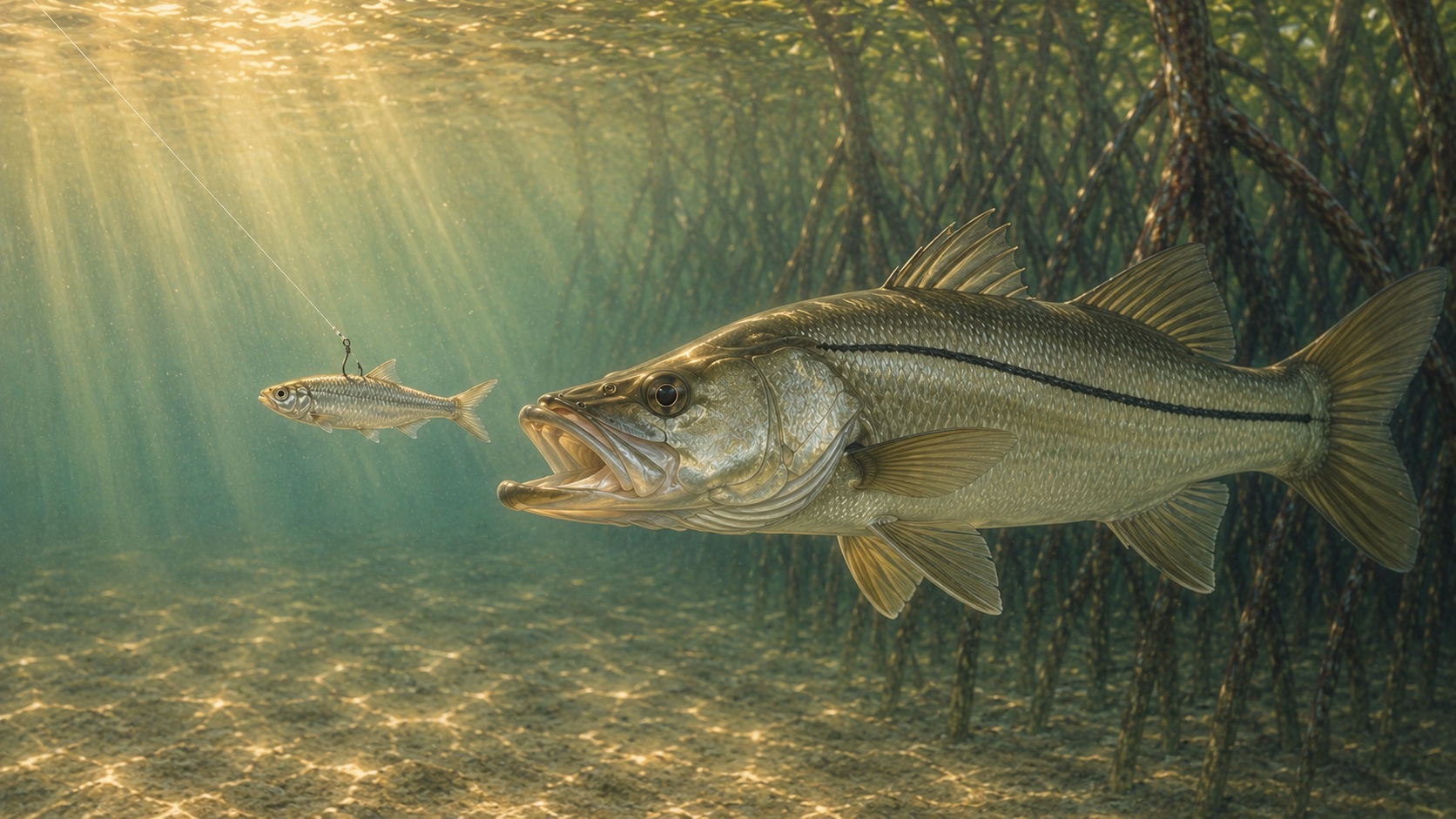
Live bait fishing is exactly what it sounds like: presenting a living bait — a baitfish, shrimp, crab, worm, or minnow — so its natural movement and scent trigger a strike. Nothing tied on a hook imitates a real meal as convincingly as the real thing. A frantic, struggling baitfish sends out vibration, flash, and a scent trail that a predator’s senses are wired to home in on, and that combination is often the single most effective way to catch a wary or pressured fish.
This is the oldest, most universal way to fish, and it works everywhere. In freshwater, a lively shiner free-lined past a laydown draws a giant largemouth bass that has ignored every artificial in the box; worms under a bobber catch bluegill all day for beginners; and cut or live bait on the bottom is the backbone of channel catfish fishing. In saltwater, pilchards, pinfish, and mullet fool snook, tarpon, and redfish along the coast, and a slow-trolled bait is hard to beat for king mackerel.
The appeal is simple. Live bait removes the technique burden — you are not trying to make plastic look alive, because your bait already is. That makes it the most forgiving approach for a new angler and, at the same time, the most reliable trick a seasoned angler keeps in their pocket for days when fish will not chase a lure.
How to do it
Live bait fishing breaks into three parts: getting the bait, keeping it alive, and presenting it.
Acquiring bait. The cheapest and most fun way is catching your own: a cast net thrown over a school of mullet or pilchards, or a sabiki rig — a string of tiny tinsel hooks — jigged through a bait school for pinfish or herring. For worms, shiners, and shrimp, a bait shop is fast and dependable. Match what you catch or buy to what the fish are eating locally — “matching the hatch” matters as much with live bait as with lures.
Keeping it alive. Fresh, frisky bait outfishes tired bait by a wide margin. An aerated livewell or a bucket with a battery aerator keeps oxygen up; change the water if it warms, do not overcrowd, and handle bait with wet hands to protect its slime coat. A bait that swims hard draws strikes; a dying one largely does not.
Hooking the bait. Where you put the hook controls how the bait swims and how long it lives:
- Through the nose or lips: keeps the bait swimming forward naturally; best for casting, trolling, or live-lining in current.
- Through the back, behind the dorsal fin: lets it swim freely under a float; keep the hook above the spine so you do not kill it.
- Through the tail: makes a bait pull away and dive, which can provoke a chase.
Presenting it. The rig depends on where the fish are. Free-line a bait on nothing but a hook so it swims naturally — deadly for snook and tarpon around structure. Suspend one under a float or popping cork to hold it at a set depth and add noise. Fish it on the bottom with a fish-finder rig so a fish can pick it up without feeling weight, or use a knocker rig tight to cover. Or slow-troll and live-line baits behind a drifting boat to cover water. Use circle hooks: they almost always set in the corner of the jaw, for cleaner hookups and healthier release. Let the fish turn and come tight rather than swinging hard, and the hook does the rest.
When to use it
Reach for live bait when:
- Fish are pressured or finicky. On waters where fish see lures constantly, a real, struggling meal often gets bit when nothing artificial will.
- Conditions are tough. Cold fronts, dead-calm clear water, and the dog days of summer all push fish off the chew; live bait’s scent and motion still pull bites.
- You are after a trophy. Big snook, tarpon, and bass fall to live bait at a rate artificials struggle to match.
- You are teaching a beginner. A worm under a bobber is the simplest, most rewarding way to start, and it catches fish.
The trade-off: live bait takes effort to gather and keep alive, you cannot cover water as fast as with a lure, and it is harder to fish selectively. When fish are aggressive and schooled up, an artificial may be more efficient. Match the method to the day.
Common mistakes
The most common mistake is fishing dead or dying bait — if it is not swimming hard, it is not earning its keep, so cull and replace it. Second is too much hardware: heavy leaders, big swivels, and oversized hooks rob a small bait of its natural action, so go as light as the situation allows. Third is hooking the bait wrong and killing it. Finally, many anglers set the hook too soon and too hard on a circle hook — resist the reflex, let the fish eat and turn, and simply reel until the rod loads.