A note about links: If we include links to retail sites like Amazon or Bass Pro Shops, it's because they're relevant to the topic and, as anglers ourselves, we believe they're worth checking out. As an Amazon Associate we earn from qualifying purchases.
What it is
Nothing fools a big inshore predator like a live baitfish it already eats every day. The “liners” — the small fish you catch yourself and then live-line for something bigger — are the most reliable bait in the salt for a simple reason: they are exactly what a snook, a redfish, or a tarpon is hunting. There is no plastic to imitate the real thing when you can hook the real thing.
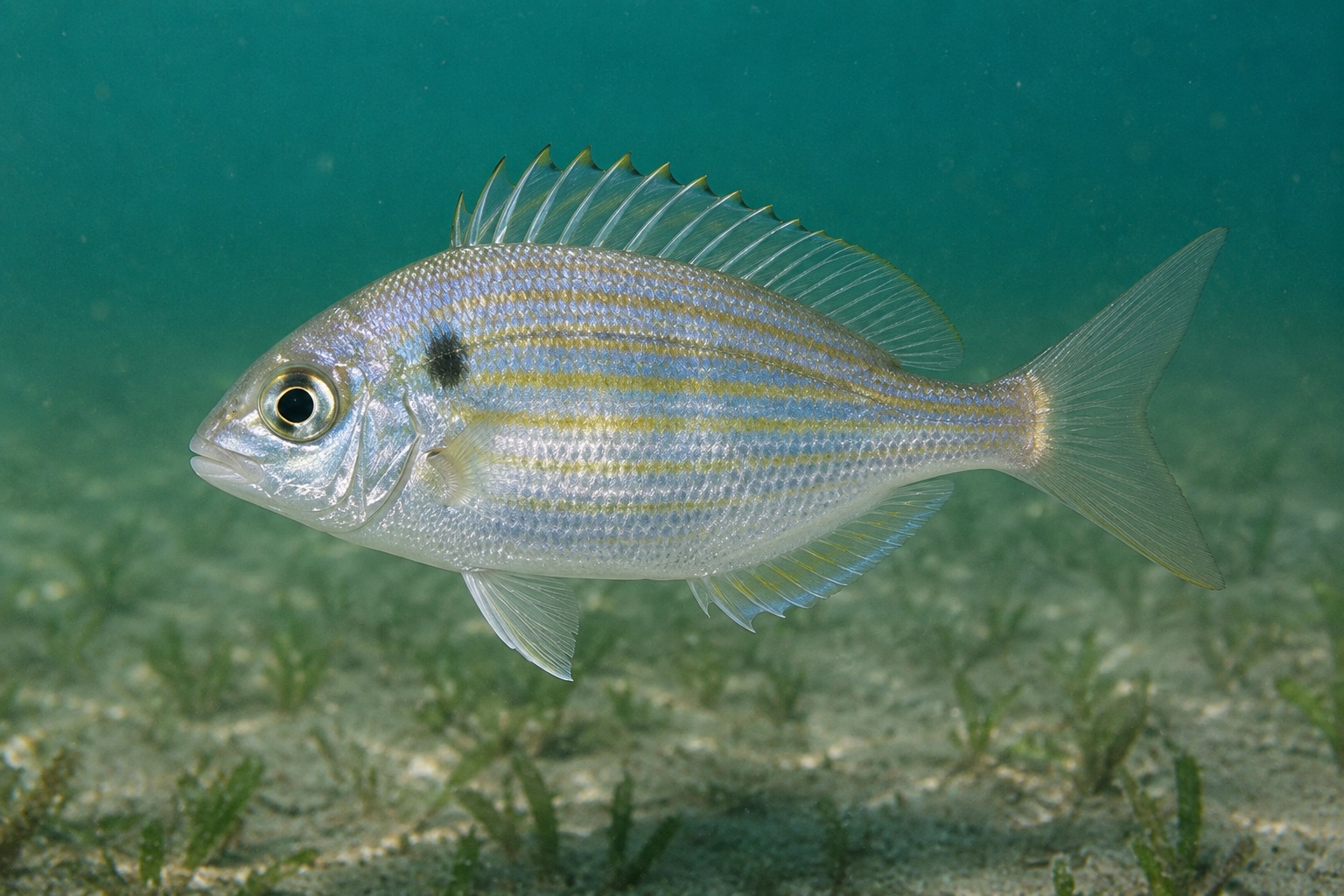
A handful of species do the heavy lifting along the Southeast and Gulf coasts. Pinfish and croaker are tough, scrappy bottom baits — they shrug off the well, stay frisky on the hook for an hour, and dive for cover, which is exactly what tempts a snapper, a grouper, or a redfish holding tight to structure. Scaled sardines — the silvery baits Florida anglers call pilchards, greenbacks, or whitebait — are the premier free-lined bait for snook and tarpon: shiny, frantic, and irresistible, but delicate. Mojarra and grunts round out the menu. Learn to catch them, keep them alive, and present them well, and you have the most productive bait there is.
How to rig and fish it
The presentation is the easy part once your bait is healthy. Match the rig to where the fish are sitting.
Free-lined. The deadliest method when fish are feeding up in the water column. Hook a pilchard through the nose or just behind the dorsal with a free-line rig — nothing but a circle hook tied to your leader, no weight at all — and let the bait swim naturally. This is the classic snook and tarpon presentation, and it is the whole reason anglers chase whitebait. Pinfish and croaker free-line well too around docks and bridges.
Under a cork. A popping cork or float suspends the bait at a set depth over grass and oyster bars and adds a calling chug. Great for seatrout and reds, and it keeps a lively bait from burrowing into structure.
On the bottom. When fish hold deep or tight to hard structure, pin the bait down. A fish-finder rig lets a fish run without feeling the sinker; a knocker rig slides the weight right to the hook for fishing snug against pilings and rocks where you cannot give line. A Carolina rig is the same idea with a sliding egg sinker above a leader. A hardy pinfish or croaker on the bottom is the go-to for mangrove snapper, gag grouper, and cobia.
Whatever the rig, use a circle hook sized to the bait — 1/0 to 3/0 for pilchards, 3/0 to 5/0 for a big pinfish. When a fish eats, reel down tight and let the hook find the corner of the jaw rather than swinging on it. This is true live-bait fishing: the bait does the convincing, and your job is to keep it alive and out of the way.
When to use it
Reach for live baitfish when artificials are getting refused — pressured fish, gin-clear water, or a school locked onto one forage. Live-lining shines on moving tides, when current sweeps your free-lined pilchard naturally past structure exactly as a fleeing baitfish would move.
It is a four-season approach, but the calendar steers your bait choice. Pinfish and croaker are available almost year-round and are your cold-weather workhorses. Pilchards school heavily from late spring through fall, and the fall mullet run turns big predators — snook, jacks, king mackerel — into reckless feeders that crush a free-lined bait. Match the size of your bait to what the fish are eating: small whitebait when they are picky, a hand-sized pinfish when you want a trophy.
Forms and keeping it
You cannot buy this bait fresh at most tackle shops — catching it is half the game, and keeping it lively is the other half.
Catching them. A sabiki rig — a string of tiny flash-dressed hooks — loaded down and jigged near bridges, channel markers, and grass edges fills a well with pinfish, croaker, grunts, and pilchards. For pilchards in numbers, a cast net is faster: chum the flats first with a menhaden or oatmeal-based chum to ball the bait up at the surface, then throw over the school. Use a small-mesh net (3/8 inch or smaller) that sinks fast and clean, and never let the bait hit the deck — not for a second — because a lost slime coat means a dead bait.
Keeping them alive. This is where most anglers lose their day. Pinfish and croaker are hardy and forgiving — a basic aerated bucket holds them fine. Pilchards are the divas: thin scales, a delicate slime coat, and a high oxygen demand. Get them straight into a well-aerated bait bucket or livewell — a round well, not a square one, so they swim in a circle instead of pinning in corners. Run a strong aerator, keep the water cool, don’t overcrowd, and pull dead fish out the moment you see them, because one decaying bait fouls the water for the rest. If you are out for hours, change a quarter of the water every couple of hours to keep ammonia down. Wet your hands before you touch a bait, and store pinfish separately — they will pick the eyes out of weaker baitfish given the chance. Healthy bait swims hard and triggers strikes; a stressed, faded bait gets ignored.
Gear and sourcing
You need a way to catch bait, a way to keep it, and the right hook to fish it.
- Sabiki rigs — carry a few sizes; smaller hooks for pilchards, larger for pinfish and croaker. They tangle easily, so a sabiki rod or rig holder earns its keep.
- Cast net — a 3/8-inch-mesh net in the 8 to 10 foot range that sinks quickly is the right tool for pilchards and pinfish on the flats.
- Aerated bait bucket — the minimum for hardy pinfish and croaker, and a lifeline for short pilchard trips.
- Aerator pump — a strong, quiet pump with fresh batteries keeps oxygen up; bring a spare set.
- Circle hooks — 1/0 to 5/0 sizes to match the bait, for clean corner-of-the-jaw hookups that release fish healthy.