A note about links: If we include links to retail sites like Amazon or Bass Pro Shops, it's because they're relevant to the topic and, as anglers ourselves, we believe they're worth checking out. As an Amazon Associate we earn from qualifying purchases.
What is it?
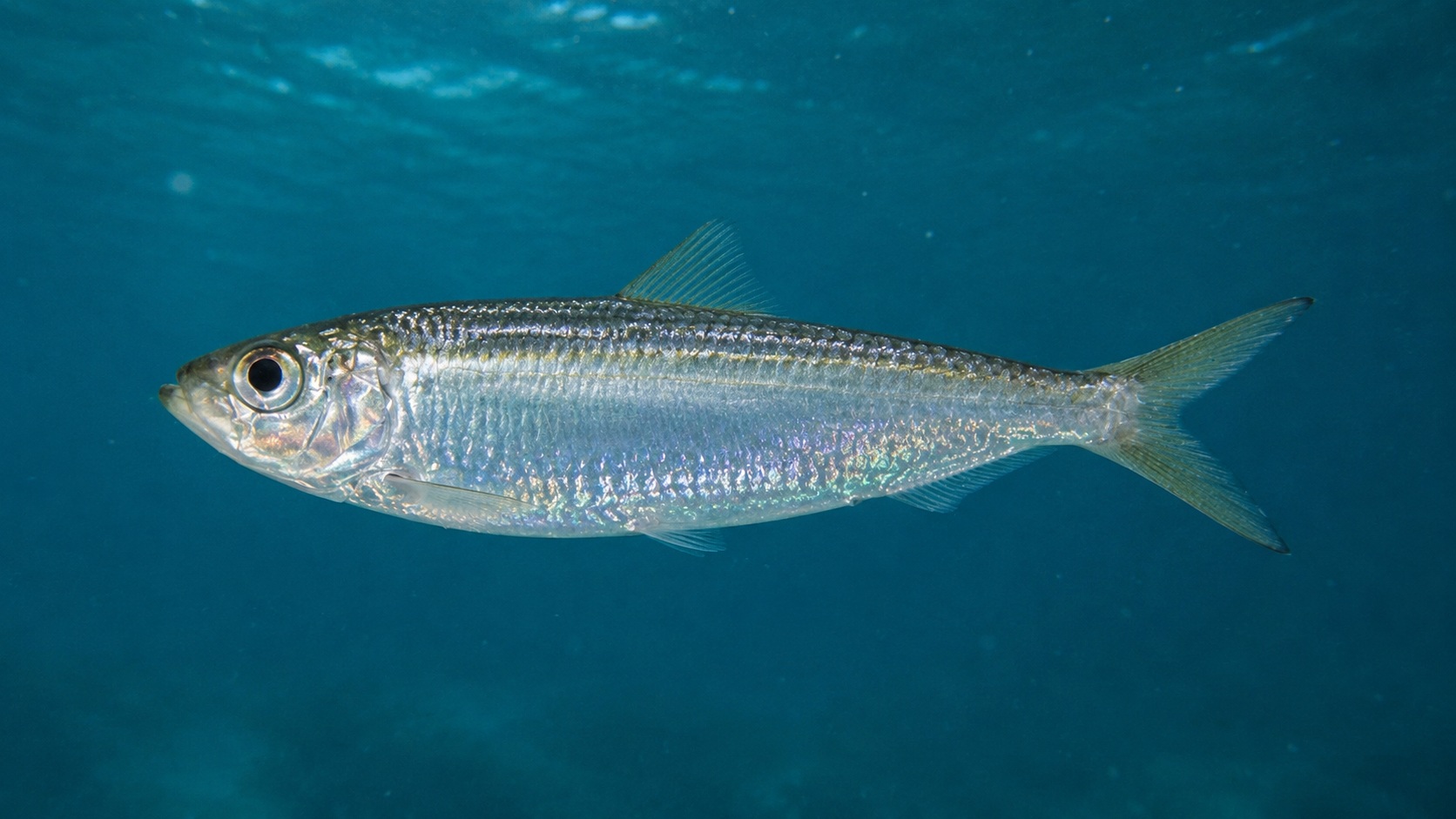
The scaled sardine (Harengula jaguana) — known in many ports as the pilchard or whitebait — is one of the most important baitfish along the Gulf Coast and Atlantic seaboard from South Carolina to the tip of Texas. This small, silver herring-family member schools in enormous aggregations in inshore bays, around inlet jetties, and along nearshore reefs, and it forms the foundation of the food chain in the coastal waters where it lives.
Understanding this fish matters because nearly every predator worth chasing feeds on it. Snook, tarpon, redfish, Spanish mackerel, king mackerel, cobia, amberjack, mahi-mahi, grouper, and a dozen other species key in on scaled sardine schools as a primary food source. When predators are actively feeding, having live pilchards in the well is often the difference between a memorable day and a slow one. Frozen or cut bait rarely generates the same reaction from finicky fish that a nervous, swimming pilchard does when presented on a hook.
From an ecological standpoint, the scaled sardine occupies the middle of the food web: it feeds primarily on phytoplankton and zooplankton filtered from the water column, then converts that energy into protein that fuels everything above it. The species is prolific and fast-growing, which makes it a renewable resource for anglers who know how to find and catch it. Because scaled sardines are so fragile — they die quickly from stress, warm water, and crowding — the skill in using them as bait is not just catching them, but keeping them alive long enough to present them effectively. For how to catch, keep, and present them, see our live baitfish guide.
How to identify one
Scaled sardines are small, streamlined fish with a strongly compressed, elongated body. Most fish you will encounter range from 3 to 6 inches in length, though individuals approaching 8 inches are occasionally netted. A “big” pilchard for bait purposes is anything over 5 inches; the majority of fish in a school tend to run 3 to 5 inches.
The key field marks are:
- Color: The back is blue-green to olive-green, fading to bright silver on the sides and white on the belly. When light hits them at an angle, the flanks flash intensely.
- Scale pattern: Each scale on the upper body has a dark margin, creating a net-like or reticulated pattern. This is visible on fresh fish in good light and is one of the most reliable identification features.
- Body profile: Moderately deep and laterally compressed, more so than the threadfin herring or Spanish sardine.
- Scutes: A row of keeled scales (scutes) runs along the belly, forming a saw-edged keel. This is a shared feature of the herring family.
- No dorsal filament: The scaled sardine lacks the long trailing dorsal ray that distinguishes the threadfin herring (Opisthonema oglinum), which is sometimes found in the same bait schools.
- Eye: Moderately large with a visible adipose eyelid (a transparent covering).
Similar species and how to tell them apart: The species most commonly confused with the scaled sardine are the thread herring (Opisthonema oglinum), the Spanish sardine (Sardinella aurita), and the false pilchard (Harengula clupeola). Thread herring have an obvious elongated trailing filament on the dorsal fin; scaled sardines do not. Spanish sardines tend to be slimmer and more elongated with a less pronounced belly keel, and they lack the strongly reticulated scale pattern. The false pilchard is nearly identical but has a more pronounced black spot behind the gill cover; both species are used interchangeably as bait when caught together.
In a net full of mixed baitfish, scaled sardines are identifiable by their chunky, bright-silver body, the dark scale margins on the back, and the absence of a dorsal filament.
How to catch your own
Catching pilchards efficiently is a learnable skill, and once you get it down, it is one of the most rewarding parts of a day on the water.
Reading the water first
Before throwing a net, find the fish. Scaled sardines school near the surface and their presence is revealed by several signs:
- Nervous water: A patch of water that looks choppy, disturbed, or rippling without obvious wind cause often has a bait school just below or at the surface.
- Birds working: Terns and pelicans diving or hovering in one spot indicate baitfish near the surface. Locate the birds, position the boat upwind, and look for the school.
- Surface flashing: On calm mornings, pilchards will flash silver as they turn in the water. Look for glittering, sparkling patches.
- Predator surface activity: Explosions, swirls, or finning fish near a bait school mean the school is being pushed up. If you can throw a net ahead of the disturbance, you can collect bait quickly.
- Chum: Many guides chum pilchards up to the boat using a small amount of canned jack mackerel, commercially prepared chum, or finely ground frozen bait mixed with water. Ladling a slow chum trail near promising structure will draw schools within casting range of your net.
Where to find them by region
Scaled sardines range from South Carolina south around the Florida peninsula and west across the entire Gulf Coast through Texas. Within that range, they concentrate in similar habitat types: protected bays and estuaries, around inlet jetties and passes, in grass flat shallows, near bridge and dock pilings, and along the edges of nearshore reefs and channel drops. Along the northern Gulf Coast — Mississippi, Alabama, and the Texas bays — they appear in numbers once water temperatures climb above 68 to 70 degrees Fahrenheit in late spring. Along the Atlantic coast from the Carolinas through Georgia, they are found in coastal sounds and near inlets during the warmer months. The species becomes progressively more abundant and year-round in the warmer waters toward the southern end of its range. When planning a trip around live-bait fishing, check with local bait shops or guides for current concentrations — school locations shift with bait movements, currents, and predator pressure.
Cast net - the primary method
A cast net is the tool of choice for almost every angler who uses pilchards regularly. A 10-foot radius net (20 feet in diameter when spread) with a 3/8-inch to 1/2-inch mesh is ideal for scaled sardines in the 3-to-6-inch range. Larger mesh lets small fish escape; smaller mesh can tangle more easily.
- Time of day: Early morning is the most productive window. Bait schools are most concentrated near the surface in low-light conditions. By mid-morning in warm weather, schools tend to scatter or go deeper.
- Location: Look for scaled sardines in protected bays, grass flats, around inlet jetties, near bridges and dock pilings, along channel edges with current, and on the inshore side of nearshore reefs. They are especially reliable around structure that concentrates plankton.
- Throwing technique: Open the net fully and throw it flat and low. A net that opens poorly catches few fish; practice on land if needed. Lead the school slightly — throw ahead of where the fish are moving, not directly at the center.
- Depth: Most scaled sardines are caught in 3 to 15 feet of water when in school near the surface. Deeper presentations are less effective with a cast net.
A small-hook Sabiki rig (size 8 to 12 hooks) worked through a school will catch pilchards individually. This is a slower method than the cast net and is most useful when you have located fish but the school is too deep or too scattered for a net, or when you need a small number of baits quickly. Drop the rig through the school and retrieve it slowly with periodic pauses.
Best seasons and conditions: Scaled sardines are most accessible when water temperatures are above 68 to 70 degrees Fahrenheit — typically spring through fall across their range. In the northern part of the range (the Carolinas, northern Gulf Coast), productive bait-netting begins in late spring and runs through early fall. In the southern portion of the range, bait is available much of the year. In winter, scaled sardines move offshore or into deeper, warmer water and become harder to find in traditional nearshore haunts regardless of location.
Keeping them alive
Live pilchards are extraordinary bait when they are healthy, and sluggish pilchards are often ignored entirely by target species. Keeping them alive is the biggest challenge associated with using them.
Live well requirements
Scaled sardines are among the most oxygen-sensitive baitfish in saltwater fishing. They need:
- Heavy aeration: A continuously recirculating live well with a strong aerator is non-negotiable. Simple bilge pump systems that recirculate water without adding oxygen are usually not adequate. Aeration systems that inject air directly into the water or venturi-style injectors work best.
- Water exchange: The live well should turn over its volume of water at least once every few minutes. Stale water accumulates ammonia from fish waste and depletes oxygen rapidly.
- Temperature: Pilchards stress quickly in warm water. On hot summer days, the live well water will warm rapidly, especially in shallow wells with little shade. Ice bags added to the water can drop the temperature 5 to 10 degrees and significantly extend bait survival. Target water temperatures between 70 and 78 degrees Fahrenheit for best results.
- Space: Overcrowding is the single most common cause of dead bait. A rough rule of thumb is no more than 1 pilchard per gallon of live well capacity — some experienced guides use even more space per fish. If you catch 200 pilchards, you need at least a 200-gallon system, or you will lose most of them within an hour.
Signs of stress
Watch for pilchards that are:
- Rolling at the surface of the live well (a sign of oxygen depletion or disease)
- Swimming erratically or spiraling
- Clustering tightly at the aerator outflow (seeking oxygen)
- Changing color to gray or dull silver
When you see these signs, immediately reduce the number of fish in the well by releasing some, increase aeration, or exchange water.
How long they last
Under ideal conditions in a well-maintained system, scaled sardines will survive 6 to 8 hours. In a typical recreational live well on a hot summer day, survival time is often 2 to 4 hours before significant die-off begins. Guides who target sailfish or king mackerel offshore often make two bait stops per day to replenish supplies.
If they die
Dead scaled sardines are not worthless. As cut bait, they produce an oily, highly attractive scent trail that works well for:
- Kingfish drifting: a whole dead pilchard rigged on a stinger rig catches plenty of fish
- Bottom fishing for grouper and snapper
- Chumming to attract sharks, tarpon, and jacks
They can also be frozen in brine for later use, though they are soft and tend to fall apart on the hook more readily than firmer baits.
How to rig it
Nose/lip hook
Threading the hook through the lower jaw and out through the upper jaw (or just through the nostrils) allows the pilchard to swim freely and naturally. This is the standard presentation for free-lining, kite fishing, or fishing under a float. Use a live bait hook (short shank, wide gap) in size 1 to 2/0 depending on bait size. Penetrating too far into the head can injure the fish and reduce swimming action.
Dorsal/back hook
Hooking under the dorsal fin — forward of the fin rather than through the base — allows the bait to swim freely at depth. This is a good choice for drifting over reefs, presenting bait under a kite, or when you want the bait to swim in an arc below the boat. Keep the hook shallow; going too deep hits the spine and kills the bait quickly.
Tail hook
Hooking through the base of the tail causes the pilchard to swim forward frantically, creating a lot of motion and vibration. This is a common choice for targeting fish that respond to erratic bait movement, such as tarpon rolling in a current. It is harder on the bait and reduces survival time.
Under a popping cork
A scaled sardine suspended 18 to 36 inches below a popping cork is one of the most effective presentations for nearshore snook, redfish, and trout in shallow water. The cork holds the bait at a fixed depth, and the popping action attracts fish from a distance. A small treble hook or a plain live bait hook in the nose allows the pilchard to work the entire depth below the cork.
Free-lining
Free-lining is the most natural presentation: nose-hook the pilchard and let it swim freely away from the boat with no weight. The bait swims in its natural direction and depth, and the absence of terminal tackle makes it less detectable. This is the preferred method offshore when chumming with live pilchards for sailfish, mahi, and cobia, and inshore when targeting tarpon on the flats.
Cut bait
Scaled sardines cut into 1-inch chunks work well for bottom fishing. Cut the fish crosswise into sections and thread a chunk onto a hook through the skin side to hold it on during the cast. For snapper and grouper, a whole pilchard split butterfly-style and rigged on a two-hook rig is productive when the bite is off for live bait.
Hook size summary: Size 1 to 1/0 for fish up to 4 inches; size 2/0 for fish from 4 to 6 inches; size 3/0 for larger baits or when using a stinger rig.
What it catches
Scaled sardines are versatile baits that work across virtually every nearshore and offshore fishery within their range along the Gulf Coast and Atlantic seaboard. Here is a breakdown of the primary targets:
Snook - Free-lined or under a popping cork, especially around passes, bridges, and mangrove edges on moving tides. Live pilchards are among the most reliable snook baits in existence wherever snook are found.
Tarpon - Nose-hooked and free-lined or tail-hooked in current near bridges and inlet channels. Tarpon rolling on the surface will often take a pilchard that drifts into their path on a minimal leader.
King mackerel (kingfish) - Live pilchards on a stinger rig drifted or slow-trolled are among the top presentations for kings along the Gulf Coast and Atlantic coast. Rig a 5-to-6-inch pilchard with the front hook through the nose and a short-wire stinger placed near the tail to catch short-striking fish.
Cobia - Cobia are notorious pilchard eaters, and a live pilchard free-lined ahead of a traveling cobia or dropped near a reef will draw strikes from fish that ignore other presentations. This applies from the Texas coast east to the Carolinas wherever cobia migrate through.
Mahi-mahi (dolphin) - Offshore, live pilchards pitched near weed lines, floating debris, or under birds trigger aggressive responses from mahi. A nose-hooked pilchard allowed to swim freely near a weed line is a standard tactic from the Gulf Stream to the deeper blue water of the Gulf of Mexico.
Spanish mackerel - Small scaled sardines (3 to 4 inches) on light spinning tackle with a small wire leader catch large numbers of Spanish mackerel around nearshore reefs and grass flat edges throughout the Gulf and Atlantic coasts.
Sailfish - Live chumming with pilchards while keeping several baits kite-rigged at the surface is the dominant technique for sailfish off the Atlantic coast, particularly in the waters off southeast Florida and the Carolinas. Sailfish will sometimes ignore dead or artificial bait but will consistently eat a lively, struggling pilchard.
Jack crevalle and bluefish - When a school of jacks or blues pushes pilchards to the surface, a live pilchard or even a freshly killed one on a light wire leader will catch fish on nearly every cast.
Regulations
Scaled sardines are almost universally treated as baitfish rather than a managed recreational target species, but regulations on netting, possession, and use of live baitfish vary by state. Before you cast a net, check the current rules with your state’s fish and wildlife agency:
- Bag and possession limits for baitfish (if any) vary by state
- Cast net size and mesh restrictions are common — some states limit net diameter or mesh size
- Live-well transport rules may apply when crossing state lines or moving baitfish between water bodies
- Saltwater fishing license requirements often cover cast-netting for bait
In federal waters (beyond 3 nautical miles on the Atlantic, beyond 9 nautical miles in the Gulf of Mexico), NOAA Fisheries manages the broader ecosystem, but scaled sardines themselves are not subject to federal quota management. They are considered forage fish, and some states have begun adopting forage fish protections in line with national guidance. Check with NOAA’s Southeast Regional Office or your state agency for the latest guidance.
A quick call to the local bait shop or a check of your state wildlife agency’s website before your trip will confirm current rules and point you toward any recent changes.
On the Table
Scaled sardines are rarely eaten in the United States, though they are consumed in other parts of their range and are a legitimate food fish when prepared correctly.
The reasons most anglers skip them are practical: they are small (requiring significant effort to clean), very oily (which means rapid spoilage and a pronounced flavor), and extremely soft-fleshed (which makes them fall apart during cooking). The bones are numerous and small throughout the body, making filleting a 4-inch pilchard impractical for most purposes.
That said, they can be deep-fried whole (gutted and scaled) or smoked, and some traditional preparations in the Caribbean treat them like any small coastal herring — fried crisp enough that the small bones are edible. Their oil content makes them excellent candidates for smoking or pickling if you are inclined to process them.
In practical terms, most anglers who end up with dead pilchards at the end of a trip use them as cut bait on the next trip, freeze them for future use, or return them to the water as chum. The bait value of a scaled sardine far exceeds its table value in most fishing contexts.