A note about links: If we include links to retail sites like Amazon or Bass Pro Shops, it's because they're relevant to the topic and, as anglers ourselves, we believe they're worth checking out. As an Amazon Associate we earn from qualifying purchases.
What it is
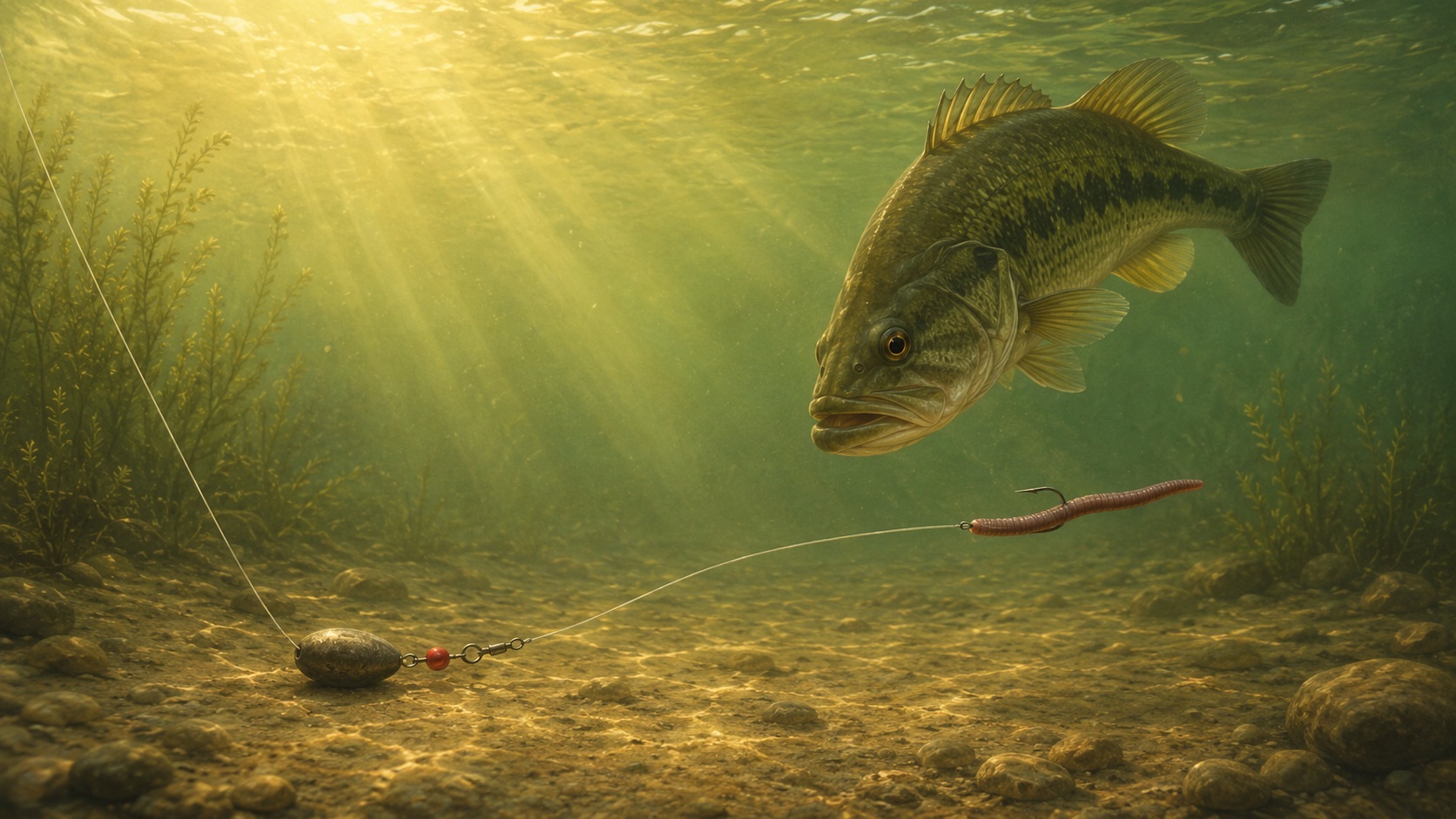
Bottom fishing is exactly what it sounds like: presenting bait on or near the bottom, held down with weight, where structure-oriented fish live and feed. It is one of the oldest, simplest, and most productive ways to catch fish that exists. The kid soaking nightcrawlers off a dock for catfish and panfish is bottom fishing. So is the offshore angler dropping cut bait over a wreck for grouper. The water depth changes, the tackle gets heavier, but the idea is identical — put a baited hook down where the fish are holding and wait for the bite.
Most of the fish worth catching relate to the bottom. Reefs, wrecks, ledges, rock piles, oyster bars, brush, channel edges, and drop-offs all concentrate fish because they hold food and give cover. Bait drifting weightlessly in open water rarely finds them; bait pinned to the bottom over structure does. That is the entire premise. You are not searching for fish so much as putting a meal in front of fish that are already there.
It also happens to be the most beginner-friendly way to fish. There is no retrieve to master, no casting accuracy to drill. Rig it, drop it, hold the rod, and pay attention. That simplicity is exactly why it produces — and why almost every angler starts here.
How to do it
Bottom fishing comes down to three things: the right rig, enough weight to hold bottom, and getting positioned over structure.
Pick a bottom rig. The fish-finder rig (a sliding egg sinker on the main line above a swivel, leader, and hook) lets a fish pick up the bait and move off without feeling the weight — ideal for wary fish in current. The Carolina rig is its freshwater cousin, sliding a weight ahead of a leader and hook for catfish, drum, and bottom-feeding bass. The knocker rig runs the weight right down to the hook so the bait stays pinned tight to structure — the go-to for snapper and grouper around reefs and wrecks. Dropper or “chicken” rigs stack two or more hooks above a bottom sinker to fish multiple baits and find the feeding depth.
Use enough weight to hold bottom. This is where beginners go wrong. If your sinker drifts, your bait leaves the strike zone and tangles. Match the weight to depth and current: a half-ounce may be plenty in a calm pond, while heavy current over an offshore reef can demand 8 ounces or more. You want just enough to plant the bait and keep it there.
Get on top of the structure. Anchor up-current of the spot so your bait drifts back into it, or use a trolling motor or spot-lock to hold over a wreck. Use your electronics. Bottom fishing rewards precise positioning far more than long casts — a few feet off the structure can be the difference between a cooler full of fish and a dead drop.
Use circle hooks and set them right. Circle hooks pin fish in the corner of the jaw and dramatically cut gut-hooking, which matters for release survival and is required for many reef species. The trick is counterintuitive: do not swing on the bite. When you feel weight, reel down steadily and let the hook find the jaw. A hard hookset pulls a circle hook right out of the fish’s mouth.
When to use it
Bottom fishing shines whenever fish are holding to structure rather than chasing bait in open water — which is most of the time. Reach for it when:
- You are targeting reef, wreck, or ledge fish. Snapper, grouper, sheepshead, and rockfish live tight to hard structure and feed down. Bottom rigs put bait where they actually are.
- You want a meal for the table. Few methods fill a cooler as reliably as soaking bait over good bottom.
- You are introducing a new angler. No retrieve, no casting skill — just drop and watch the rod tip.
- The bite is slow or scattered. A soaked bait works for you while you wait, covering the strike zone without constant effort.
Common mistakes
The biggest mistake is using too little weight, so the bait never holds bottom or drifts out of the zone. Second is waiting too long to react over toothy or structure fish — a snapper or grouper will bury you in the rocks in seconds, so when you feel weight, get the fish’s head up and moving immediately. Third is swinging hard on circle hooks instead of reeling them tight. Fourth is poor positioning: anchoring or drifting just off the structure leaves your bait in dead water. Finally, do not ignore your rig’s leader and hook size — too heavy and wary fish in clear water leave it alone; too light and a good fish breaks you off in the structure.