A note about links: If we include links to retail sites like Amazon or Bass Pro Shops, it's because they're relevant to the topic and, as anglers ourselves, we believe they're worth checking out. As an Amazon Associate we earn from qualifying purchases.
Pull up to a reef edge somewhere between Islamorada and Key West, drop a chum ball into the current, and wait. Within minutes the water behind the boat transforms: a cloud of yellow-striped fish materializes from the blue, tails flickering gold in the sunlight. Yellowtail snapper are one of the most consistently rewarding reef species in Florida and the Caribbean because they respond so eagerly to chum, fight sporting on light tackle, and land on the plate as some of the finest-eating fish in the ocean. They are approachable enough for a first-time offshore angler, yet the big “Flags” pushing five pounds and up require real finesse to fool. It is a species you will fish your whole life without getting bored.
How to identify one
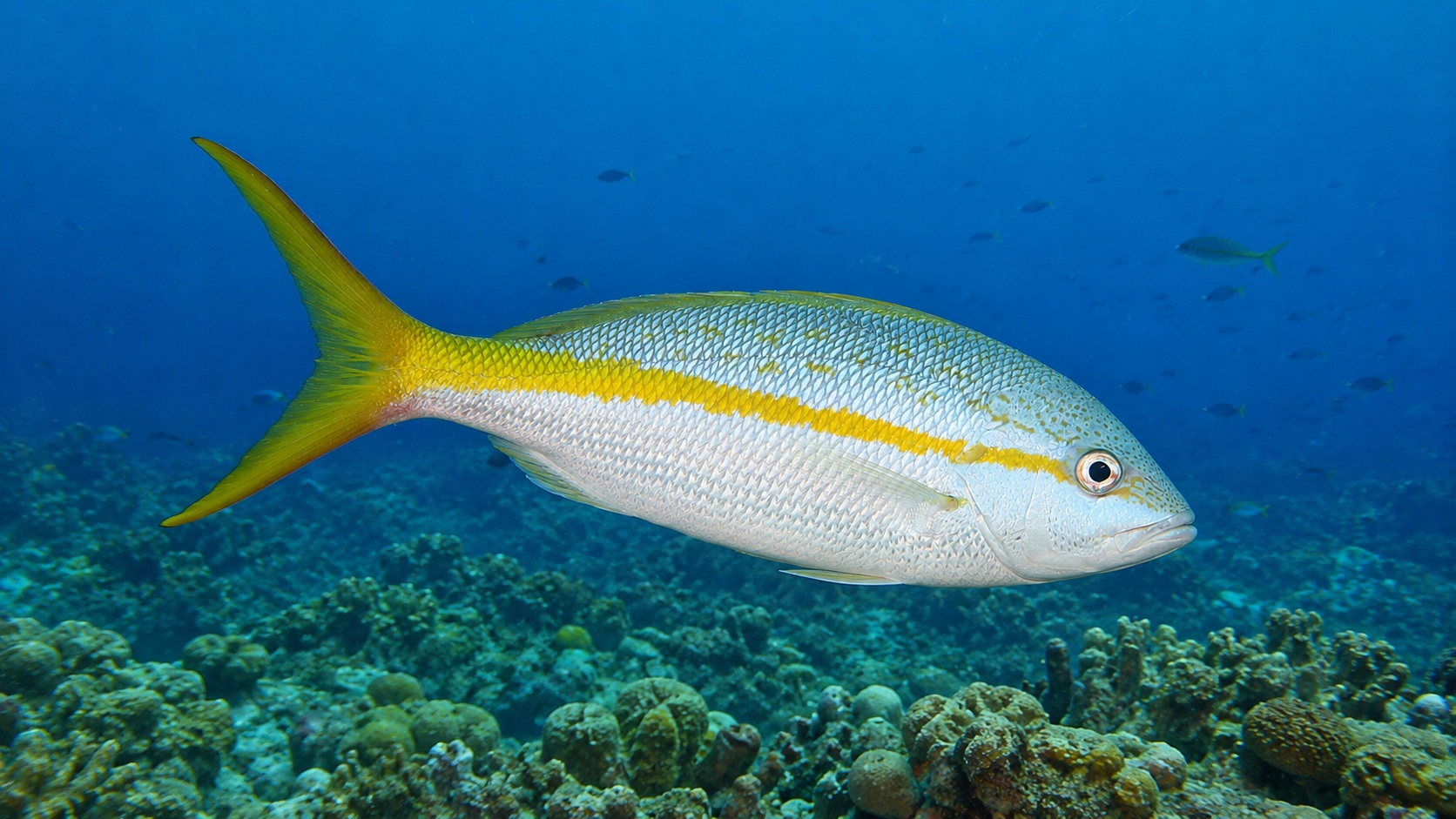
Yellowtail snapper are unmistakable once you have seen one. The defining feature is a broad, bright yellow stripe that begins at the snout and runs the full length of the body, widening as it approaches the deeply forked, all-yellow tail. The back is olive to bluish with scattered yellow spots, and the belly is white to pale. The body is more slender and torpedo-shaped than most other snappers. No common lookalike shares that combination of full-length yellow racing stripe and forked yellow tail. Lane snapper have yellow horizontal lines but a rounded pinkish tail. Mutton snapper are much larger and lack the yellow stripe running to the nose. Size at catch in Florida typically runs 12 to 16 inches; any yellowtail over 18 inches is a quality fish, and anything over 24 inches earns a closer look.
Where to find them
Yellowtail snapper are a reef species that spend their adult lives oriented to hard structure, usually at depths of 32 to 100 feet. In the Florida Keys the productive zone is the outer reef line, which begins in roughly 60 to 80 feet of water. Islamorada, Marathon, Key West, and the Dry Tortugas are the benchmark destinations in the Keys. The Tortugas in particular produces some of the largest specimens caught anywhere in U.S. waters. Along the southeast Florida coast, the nearshore reefs from Miami to Fort Lauderdale hold reliable populations year-round. Juveniles grow up in seagrass beds and shallow patch reefs closer to shore, which is why you occasionally catch small yellowtails on flats and backcountry trips. The Bahamas and Caribbean offer comparable or better fishing, with heaviest concentrations in the Virgin Islands, Belize, and Cuba. Outside of Florida, the species ranges as far north as Massachusetts but is rarely targeted north of the Carolinas.
When to go
Yellowtail snapper are a year-round resident rather than a migratory fish, so they are catchable in Florida every month. That said, the peak window runs from April through July. Spring through early summer concentrates the largest fish as pre-spawn aggregations build along the outer reef. Spawning activity peaks in midsummer, which keeps fish active and feeding in the water column. Summer afternoons with overcast skies or a light chop are ideal, as the diffused light makes yellowtail less wary. Low-light windows at sunrise and sunset produce better quality fish throughout the year. Strong tidal current helps disperse chum across a wide area and brings fish to you. Flat-calm bluebird days tend to push fish deeper and make them harder to fool on light gear.
What to throw
The core technique for reef yellowtail is chumming with frozen menhaden chum, sometimes augmented with live pilchards when they are available. Thaw a five-pound chum block overnight and mix it to a mud-like consistency with rolled oats before heading out. At anchor over the reef, deploy a chum block in a mesh bag and supplement it with hand-tossed chum balls to create a steady slick trailing downcurrent. Give the slick 20 to 30 minutes to load up the fish before you start fishing in earnest.
For bait, freeline a small piece of squid, a pilchard, or a bonito strip on a bare hook with no weight, so it drifts naturally in the current at the same speed as the chum. This is the single most important detail in yellowtail fishing. A bait that sinks faster or slower than the chum stream looks wrong, and yellowtail are sharp-eyed enough to refuse it. Use a size 1 to 3/0 short-shank live-bait hook tied directly to a 12 to 20-pound fluorocarbon leader. Light fluorocarbon is nearly invisible in clear reef water and makes a significant difference on wary fish and on the big Flags.
Spinning tackle in the light-to-medium range handles everything you will encounter. A 7-foot light-action spinning rod paired with a 2500 to 4000 series reel spooled with 10 to 20-pound braided line gives excellent sensitivity and casting distance for freelining. Keep a second heavier outfit ready if you are specifically targeting Flags in deeper water along the drop.
Small yellowtail jigs in white or chartreuse (1/4 to 1/2 oz) work well when the chum has the fish fired up and feeding in the water column. They are a faster option than bait when fish are actively crashing the slick. Shrimp on a light jig head also produces, particularly when the bite slows toward the end of the tide.
Regulations
In Florida state and federal waters, yellowtail snapper carry a 12-inch total length minimum size limit. The bag limit is 10 fish per person per day and they count within Florida’s 10-fish snapper aggregate limit, meaning your combined total of all snapper species cannot exceed 10 per person. The season is open year-round for recreational anglers. Reef fish gear requirements apply, so check current rules before heading out.
Federal regulations for the Atlantic and Gulf apply in waters beyond 3 miles. Always verify current rules with the Florida Fish and Wildlife Conservation Commission before your trip, as regulations can change.
FWC Snappers page: https://myfwc.com/fishing/saltwater/recreational/snappers/
Handling and release
Yellowtail snapper are a legal-to-keep species with a well-established recreational bag limit and are excellent table fare. The white, flaky, mild flesh holds up to a wide range of preparations and is widely considered one of the top eating fish in south Florida. Whole fish on a grill, pan-fried filets, and ceviche are all popular preparations.
For fish you intend to keep, a cooler with ice ready on the boat makes a significant difference in fillet quality. Bleed the fish immediately by cutting behind the pectoral fin.
For fish you are releasing, yellowtail snapper are generally caught in relatively shallow water (under 100 feet) and do not suffer severe barotrauma at those depths. A healthy fish can be unhooked and returned to the water without extended revival. Wet your hands before handling, keep the fish horizontal, and lower it back to the surface rather than dropping it. Fish caught deeper than 80 feet may show signs of barotrauma and benefit from venting or descending with a weighted release tool before letting go.
On the Table
Yellowtail snapper is one of the most prized table fish in the Florida Keys and Caribbean, consistently ranking among the top reef species that anglers specifically target for the cooler. Its combination of sweet, delicate flavor and easy-to-work fillets makes it a restaurant staple and a backyard grill favorite in equal measure.
Taste and texture: The flesh is white to pale pink, fine-grained, and moist with a mild, slightly sweet flavor that lacks the pronounced “fishy” quality of many saltwater species. Texture is tender-firm — it holds together well during cooking but flakes cleanly and never goes rubbery when handled right. The fat content is low, which keeps the flavor clean and makes it versatile across cooking styles.
Best preparation methods:
- Whole grilled or broiled: Smaller yellowtails (under 1.5 lbs) cook beautifully whole. The skin crisps up and the bones baste the flesh from the inside, concentrating flavor. Score the sides and season simply with citrus and olive oil.
- Pan-seared fillets: The fine texture responds well to a hard sear in butter or olive oil. A 2-3 minute sear per side on skin-on fillets renders the skin crispy while keeping the interior moist. Works well with a simple pan sauce.
- Ceviche: The sweet, clean flesh is a natural fit for acid-cure preparations. The low fat content means it “cooks” evenly in lime juice without turning mushy or greasy.
- Blackening: Yellowtail’s mild flavor takes on bold seasoning without being overwhelmed. A cast-iron blackening with Cajun spices is a classic preparation throughout the Keys and Gulf Coast.
Handling for table quality: Yellowtail snapper are delicate compared to heavier reef species — their quality drops noticeably if left to die in a livewell or on a stringer in warm water. Best practice is to ice immediately after dispatch. A quick bleed at the gills before icing noticeably improves flesh color and flavor. When filleting, the skin is thin and easy to remove; keep it on if pan-searing for the textural contrast.
Eating caveats:
- Ciguatera risk: Yellowtail snapper carry a low-to-moderate ciguatera risk compared to larger apex reef predators. Smaller fish (under 3 lbs) from open-water reef environments present minimal risk. Larger fish from known high-risk areas in the Caribbean warrant more caution, though yellowtail are rarely the primary ciguatera concern anglers cite.
- Bag and size limits: Federal and state regulations in Florida set daily bag limits and minimum size requirements that vary by zone (Atlantic vs. Gulf). Check current FWC and NOAA regs before keeping fish, as limits can be restrictive enough to affect how many you realistically bring home.