A note about links: If we include links to retail sites like Amazon or Bass Pro Shops, it's because they're relevant to the topic and, as anglers ourselves, we believe they're worth checking out. As an Amazon Associate we earn from qualifying purchases.
What it is
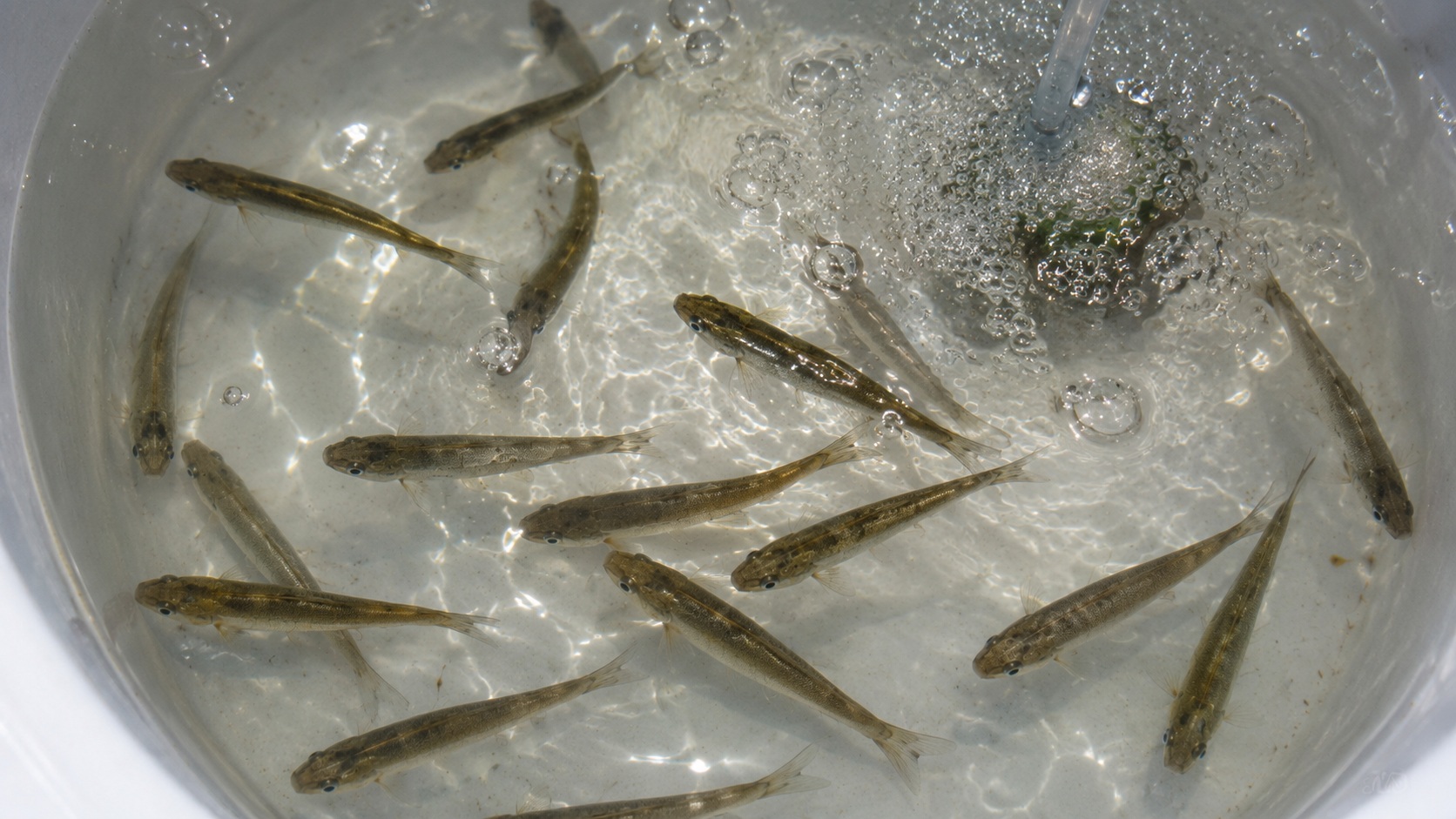
A mud minnow is a small, drab, thumb-sized baitfish that lives in the marshes, creeks, and tidal flats up and down the coast. You will hear it called a killifish, a mummichog, a bull minnow, or a cocahoe — all the same tough little fish, just different names depending on where you are standing. It is not flashy. It does not have the silver sparkle of a finger mullet or the kick of a live shrimp. What it has instead is the single trait that matters most to a beginner: it refuses to die.
That toughness is the whole story. Mud minnows tolerate low oxygen, high heat, and wild swings in salinity, and if you keep them damp they can even gulp air at the surface. A live shrimp turns belly-up in a warm bucket within an hour; a mud minnow will still be kicking at the end of the day in water you forgot to change. That durability is exactly why this is the flounder angler’s classic confidence bait — it stays lively and wiggling on the hook for hour after hour, which is precisely what an ambush predator like a flounder is waiting to see. The same bait fools spotted seatrout, redfish, and snook just as well.
How to rig and fish it
The beauty of a mud minnow is that it does the work for you. Hook it right and let it swim, and its panic does the advertising.
The standard hookset is through the lips — in under the chin and out through the top of the head, just in front of the eyes. This keeps the minnow facing forward, lets it swim naturally, and puts the hook point up where a striking fish will find it. For a tougher hold when you are casting hard or fishing current, you can instead hook it just behind the dorsal fin, keeping the point shallow so you do not hit the spine. Avoid hooking deep through the body — that pins the fish still, and a still mud minnow is a wasted one. You want it struggling.
From there, pick the presentation to match where the fish are:
- On a Carolina rig for flounder. This is the deadliest setup there is. A sliding egg sinker pins the bottom while the minnow swims on a short 8—18 inch leader just above the sand. Drag it slowly along channel edges, drop-offs, and sandy pockets near oyster bars. Flounder lie buried and ambush from below, so keep it low and creep it along. The closely related fish-finder rig does the same job in current.
- Under a popping cork for trout and reds. Suspend the minnow 1—3 feet under a float over grass flats and creek mouths, give the cork a sharp pop every so often, and let the minnow flutter in the silence after. That popping-and-pause cadence is classic float-cork fishing and it calls fish in from a distance.
- On a jig head or bucktail jig. Pin a minnow on a 1/8—1/4 oz jig head and hop it slowly along the bottom for a livelier, more mobile version of a dragged bait.
Whichever way you fish it, this is live-bait and bottom-fishing at its most forgiving. Use a circle hook, reel down tight when you feel weight, and let the hook find the corner of the jaw rather than swinging on it.
When to use it
Reach for mud minnows when you want a bait that will outlast a slow day. On a tough bite — cold water, off-color conditions, fish that are holding tight and not chasing — a minnow that keeps wiggling on the bottom for an hour will draw a strike that a dead shrimp never could. That patience is its edge over shrimp: shrimp get picked apart by pinfish and crabs and die fast, while a mud minnow keeps working.
It shines all year. In cold winter water when flounder and reds go sluggish, a slow-dragged minnow is one of the few things that still produces. Through the warm months it is a reliable creek-and-flat bait for trout and reds. And because it lives in the same backcountry marshes you are fishing, it always looks at home there.
Forms and keeping it
Mud minnows are fished live, period — their durability is the entire point, so there is no reason to freeze or cut them. Keeping them alive is almost effortless, which is the best part for a beginner. A simple aerated bait bucket holds a dozen happily, but the truth is they will survive for days even in a poorly aerated bucket as long as the water stays cool. Keep them out of the hot sun, swap in fresh seawater when you can, and do not overcrowd them. That is the whole maintenance routine.
To hook and keep them lively, scoop one out with a small net rather than chasing it by hand, hook it cleanly through the lips, and drop it back fresh every so often — a minnow that has been swimming hard for an hour can be swapped for a fresh one in seconds. Keep your bucket in the shade and your bait will be ready long after you are.
Gear and sourcing
You can buy mud minnows at most coastal tackle shops for just a few dollars a dozen, and you can catch your own with a trap baited with crushed crab set in a tidal cut. Keep the gear simple:
- Aerated bait bucket — a small flow-through or battery-aerated bucket keeps a dozen minnows lively all day.
- Minnow trap — drop one baited with crushed crab in 1—3 feet of water and you will catch your own bait for free.
- Jig heads — 1/8 to 1/4 oz heads for hopping a minnow along the bottom.
- Circle hooks — a 1/0 to 2/0 circle hook is the right call for live minnows on a Carolina or fish-finder rig; it pins the jaw cleanly and is easy on released fish.
- Egg sinkers — a small selection of sliding egg weights covers most Carolina-rig situations.
Start with mud minnows on a Carolina rig along a sandy edge, and there is a very good chance your first flounder is not far off.