A note about links: If we include links to retail sites like Amazon or Bass Pro Shops, it's because they're relevant to the topic and, as anglers ourselves, we believe they're worth checking out. As an Amazon Associate we earn from qualifying purchases.
What it is
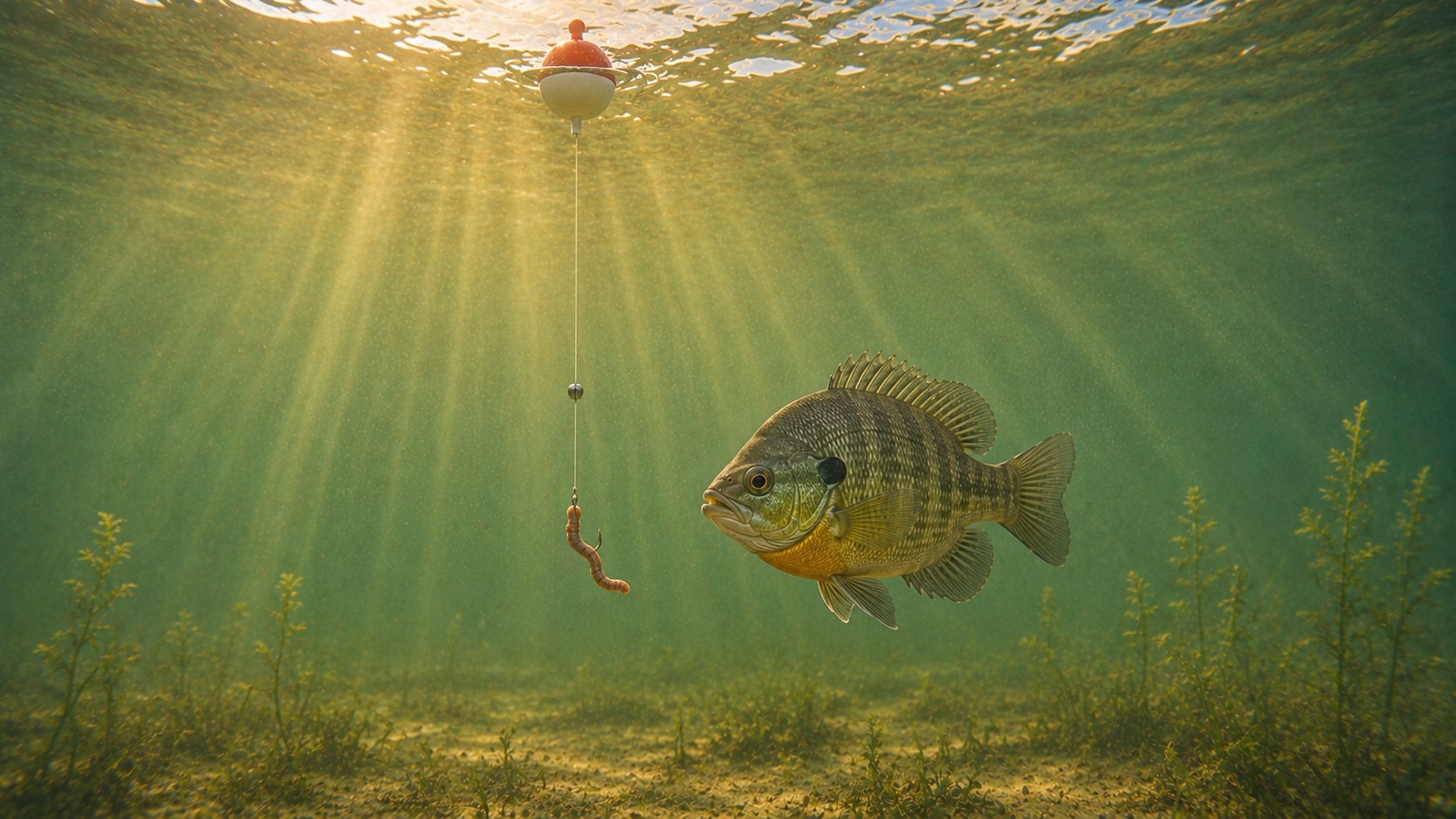
Float and cork fishing suspends your bait or lure at a chosen depth beneath a float, while that same float doubles as a strike indicator you can watch from across the water. It is one of the oldest, simplest, and most effective presentations in fishing — and one of the easiest for a beginner to get right. Set the depth, cast it out, and watch the float. When it goes under, a fish has eaten.
There are two families under one idea. The first is the classic still float — the bobber every kid grows up with. A round or pencil float pins a worm, minnow, or jig at a fixed depth over a brushpile, dock, or weed edge, and you wait for it to dive. It is deadly on panfish, crappie, and catfish because it keeps a natural bait hanging right in the strike zone with no effort from the fish.
The second is the saltwater popping cork — a weighted, concave or beaded cork that clacks and chugs when you snap the rod. Worked over a grass flat, the noise mimics feeding fish and shrimp popping the surface, calling redfish, seatrout, and snook in to investigate. Below the cork hangs a live shrimp, a soft-plastic shrimp, or a jig, suspended above the grass where cruising fish can find it. The cork is part dinner bell, part suspension system, part bite indicator — all in one.
How to do it
Set your depth. This is the whole game. You want the bait hanging where the fish are — a foot or two off the bottom over grass, or right at the depth crappie are holding. Two ways to set it: a fixed float clamps or pegs at a set distance up the line and works great in shallow water (up to roughly the length of your rod). A slip float slides freely until it hits a small bobber stop you’ve set up the line, letting you fish 8, 10, or 15 feet deep while still casting a short, manageable rig. Use a slip float whenever your target depth is deeper than your rod is long.
Pick the right float. Match the float to the bait, not the other way around. A small, slender float offers little resistance, so a light-biting bluegill pulls it under cleanly. A bigger float floats a heavier bait or a feisty live shrimp. For popping corks, choose a model with a concave or cupped face and weighted bottom — it stands upright, casts well, and makes the loud chug you’re after.
Work the popping cork with a pop-pause cadence. Cast it out, let it settle, then give the rod tip a sharp downward snap to make the cork chug and clack — then pause. The pause is critical: that’s when the suspended shrimp or jig flutters down naturally and gets eaten. Pop, pause two to four seconds, pop again, reeling in slack between pops. Most bites come on the fall right after the pop.
Let the still float sit. For freshwater bobber fishing, the opposite is true — do less. Cast near cover, leave it alone, and let the bait do the work. A twitch every minute or two to reposition is plenty.
Read the strike. With a still float, a clean pull-under is your hookset cue; reel up slack and sweep the rod. With a popping cork, the cork may dart sideways, lay flat, or simply vanish — any change means a fish has the bait. Tighten up and set.
When to use it
Reach for a float or cork when you want to keep bait in a precise zone without dragging bottom:
- Over grass or snaggy bottom. Suspending the bait above the grass keeps it visible and snag-free — the popping cork’s biggest advantage on inshore flats.
- For schooling, suspended fish. Crappie hanging at 10 feet off a brushpile or seatrout cruising a flat are perfectly served by a bait pinned at their level.
- In current. A float drifts a bait naturally down a river seam to channel cats or panfish staged along the edge.
- When you want a visual bite. New anglers and kids learn fast watching a float — the strike is unmistakable.
It is less ideal when fish are tight to the bottom (fish a bottom rig instead) or when you need to cover lots of open water quickly.
Common mistakes
The biggest mistake is setting the wrong depth — a bait three feet over the fish never gets eaten. When in doubt, fish a little deeper and adjust. Second is using too big a float, which gives a wary fish enough resistance to drop the bait before the float ever moves; downsize until light bites register. Third, with popping corks, anglers pop too fast and steadily — the pause sells the bait, so slow the cadence and let it fall. Finally, don’t leave too much slack: when the cork goes down, a slack line means a missed hookset.