A note about links: If we include links to retail sites like Amazon or Bass Pro Shops, it's because they're relevant to the topic and, as anglers ourselves, we believe they're worth checking out. As an Amazon Associate we earn from qualifying purchases.
What it is
Jigging is fishing a weighted jig head — usually dressed with hair, a skirt, or a soft plastic — with a lift-and-drop motion so the bait darts up and then flutters back down along or near the bottom. It is one of the oldest, simplest, and most productive techniques in all of fishing, and it works in fresh water, salt water, and the brackish water in between. If you could only fish one method for the rest of your life, a jig would be a defensible choice.
The bait is built from two parts: a jig head — a hook with a molded lead or tungsten weight near the eye — and a trailer that gives it action and profile. That trailer might be marabou or bucktail hair, a rubber skirt, a curly-tail grub, a paddletail swimbait, or a soft-plastic shrimp. The weight pulls the bait down and lets you keep contact with the bottom, while the trailer pulses and glides on the fall. Swap the trailer and you change the entire presentation without changing your rig.
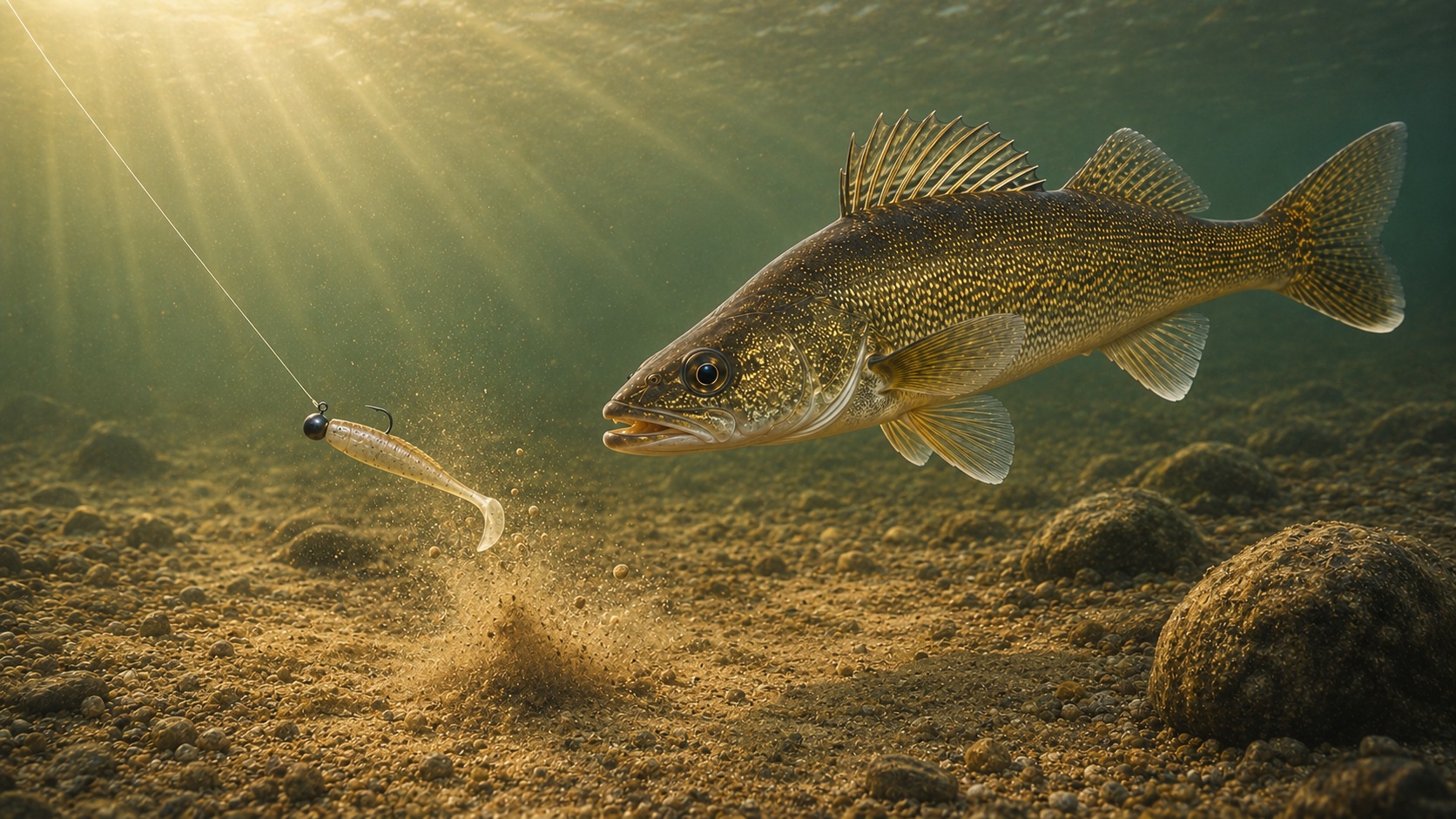
A falling, fluttering bait near the bottom looks like the two things most fish eat: a fleeing baitfish and a crawling bottom creature. Crappie, walleye, and both bass species crush jigs in fresh water. Inshore, the same lift-fall motion takes flounder, redfish, spotted seatrout, and striped bass on a bucktail or a soft-plastic shrimp. Few techniques cross over between worlds this cleanly.
This article covers general cast-and-hop and short-range vertical jigging. The fast, deep, rod-pumping style used over offshore wrecks and reefs is its own discipline — see the vertical jigging guide for that.
How to do it
The heart of jigging is the lift-fall cadence. Cast out or drop straight down, let the jig sink to the bottom on a semi-slack line, then lift the rod tip smoothly to hop the bait up off the bottom. Lower the tip and let it fall back down. Pause. Repeat. The bait climbs and dives in a series of hops, and most strikes come on the fall — that fluttering drop is what triggers the bite.
Because the bite happens on the fall, the single most important skill is watching your line and staying in light contact as the jig sinks. A fish often eats the moment the bait starts dropping, and all you see is the line jumping, ticking, or going slack early instead of falling all the way. Reel up the slack and set the hook with a firm sweep whenever the line does anything it should not.
Match the jig weight to the depth and current. The goal is a jig heavy enough to reach and hold bottom but light enough to fall slowly and naturally. In shallow, calm fresh water a 1/16 to 1/8 ounce head is plenty. In deeper water, wind, or moving current you may need 1/4, 3/8, or more to stay in touch with the bottom. The rule inshore is simple: if you cannot feel the bottom in current, go heavier.
There are two main presentations. Vertical jigging drops the jig straight down beneath the boat — ideal over a brush pile, bridge piling, or a marked school, and the most precise way to fish a spot. Cast-and-hop throws the jig out and works it back across the bottom in a series of hops, covering water and finding scattered fish. Crappie anglers do both; bass and walleye anglers lean on the cast-and-hop to search.
Keep the fall as natural as you can. Don’t fish on a tight line all the way down, or the bait pendulums back toward you instead of dropping straight. A slightly slack — but still watched — line lets the jig flutter and fall the way fish expect.
When to use it
Jigging shines when fish are holding near the bottom or relating to structure, which is most of the time. Reach for it when:
- Fish are tight to cover or structure. Brush piles, rock, docks, ledges, and channel edges are made for a jig dropped or hopped right into them.
- You are fishing cold or tough conditions. A jig hopped slowly stays in the strike zone longer than almost anything, which is why it produces in winter and after cold fronts.
- You want one rig for many species. On a mixed-bag day, a jig head and a box of trailers will catch whatever shows up.
- Current is moving inshore. A bucktail bounced along the bottom in a tidal cut or inlet is a classic for flounder, redfish, and striped bass.
The flip side: when fish are chasing bait high in the water column, a faster horizontal retrieve covers water better. Jigging is a bottom-and-structure tool first.
Common mistakes
The biggest mistake is not watching the line on the fall and missing the bites that come as the jig drops. The second is using the wrong weight — too light and you never reach bottom in current, too heavy and the bait drops like a rock with no glide. The third is hopping too hard and too fast; most days a gentle lift and a long pause out-fishes an aggressive jerk. When the bites slow, slow your cadence down before you change anything else.