A note about links: If we include links to retail sites like Amazon or Bass Pro Shops, it's because they're relevant to the topic and, as anglers ourselves, we believe they're worth checking out. As an Amazon Associate we earn from qualifying purchases.
What it is
Finesse fishing is the art of doing less. Instead of large, loud baits worked fast to trigger reaction strikes, finesse relies on small profiles, light line, and slow, subtle movement to coax bites from fish that have stopped feeding aggressively. It is the answer to a hard day — cold fronts, clear water, heavy fishing pressure, and the dead of summer or winter, when fish go quiet and refuse anything that looks like work to eat.
The core idea is to make your bait look like an easy, natural, low-risk meal. A finesse worm drifting almost motionless on the bottom asks nothing of a sluggish bass except to open its mouth. That low-commitment presentation is exactly what tips a neutral fish into biting when a spinnerbait or a big jig would send it the other way.
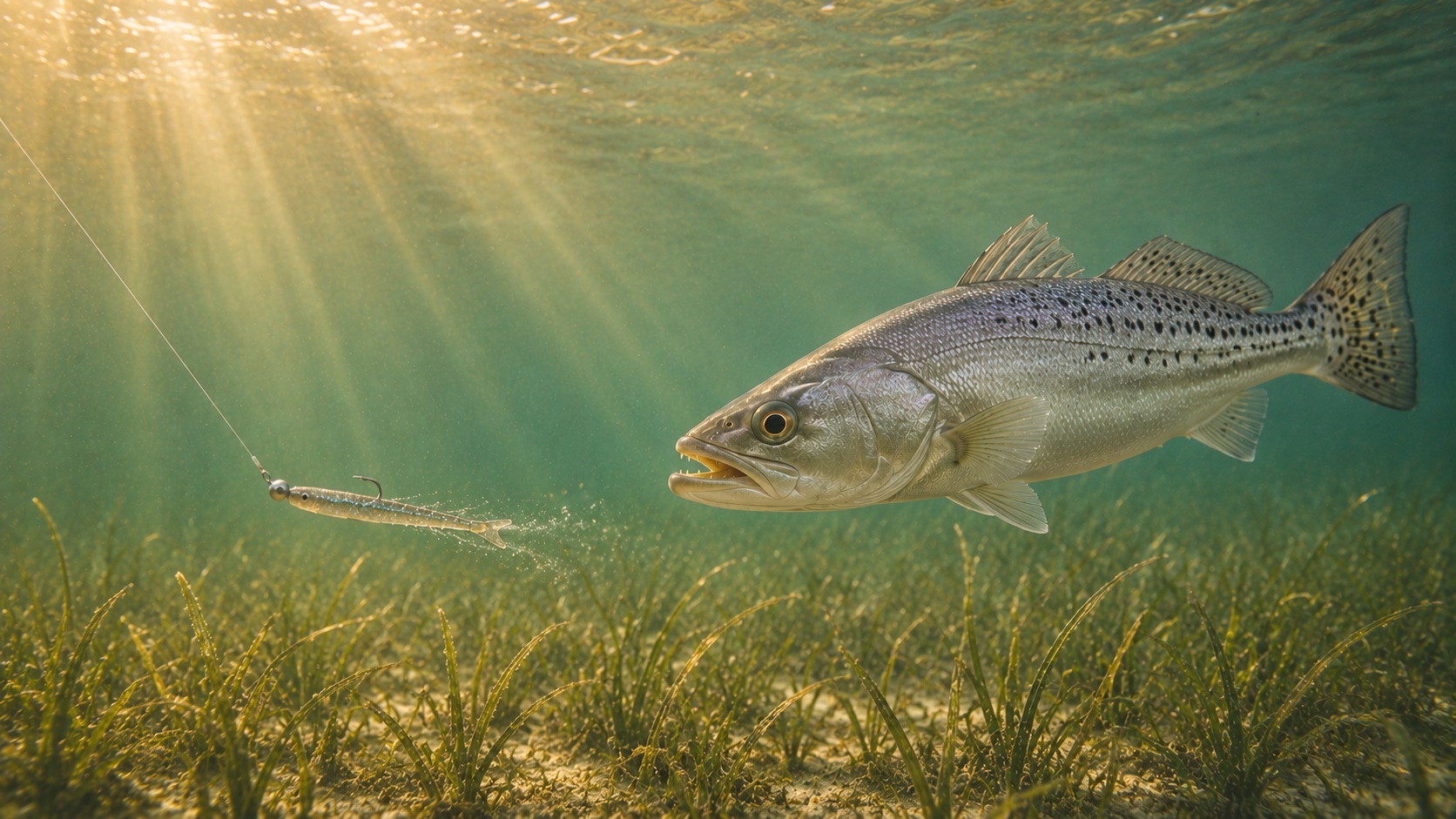
Finesse is most associated with bass fishing, but the principles cross over to nearly everything that swims. Crappie, perch, walleye, and trout in pressured lakes all respond to downsized, subtle presentations. Inshore saltwater anglers finesse spotted seatrout and redfish on calm, clear flats with small soft plastics and light jig heads when the fish are spooky.
How to do it
Finesse fishing is built on three things: small baits, light line, and patience.
Downsize the bait. Finesse baits run small — 2.5 to 4 inch soft plastics, small jig heads, compact profiles. The whole point is a non-threatening presentation. A 3-inch stick bait on a light mushroom head looks like an easy snack, not a challenge.
Lighten the line. Light line is central to finesse. Thinner line is harder for fish to see in clear water, it lets a light bait fall more naturally, and it transmits the subtle ticks of a soft bite. Most freshwater finesse fishing is done on spinning gear with 6 to 10 lb braid and a 4 to 8 lb fluorocarbon leader — light enough for a natural fall, sensitive enough to feel everything.
Slow everything down. This is the hardest part for most anglers. Finesse retrieves are measured in inches, not feet. Cast out, let the bait settle, and move it slightly — a small drag, a tiny hop, a long pause. The pause is where most finesse bites happen. When in doubt, slow down and do less.
The bite itself is often subtle: a soft tick, a mushy weight on the line, or the line simply swimming off to the side. Watch your line, keep light contact, and set the hook with a firm sweep rather than a violent snap — a hard hookset on light line breaks off fish.
When to use it
Finesse is a tool for tough conditions, not an everyday default. Reach for it when:
- The fish are pressured. Popular waters where fish see lures constantly call for a more natural, downsized look.
- The water is clear. In clear water, fish get a long, careful look at a bait. Light line and small profiles tip the odds back in your favor.
- A cold front has passed. Bluebird skies and falling water temperatures shut fish down. Finesse coaxes bites when nothing aggressive will draw a strike.
- It is the heat of summer or the cold of winter. At temperature extremes, fish hold tight to structure and feed reluctantly. A slow finesse presentation keeps the bait in the strike zone long enough to matter.
The flip side: when fish are active and feeding — low light, warming water, stained conditions, an active bait school — finesse leaves fish on the table. In those windows, a faster reaction bait covers water and catches more. Match the approach to the mood of the fish.
Common mistakes
The number one mistake is fishing too fast. Anglers used to power fishing struggle to slow down enough; if you think you are fishing slowly, slow down more. The second is using too heavy a line or rod — finesse falls apart with stiff gear that won’t let a light bait work or telegraph a soft bite. The third is impatience: finesse rewards anglers who work a spot thoroughly and let the bait sit. Give each cast time before you reel in and move on.