A note about links: If we include links to retail sites like Amazon or Bass Pro Shops, it's because they're relevant to the topic and, as anglers ourselves, we believe they're worth checking out. As an Amazon Associate we earn from qualifying purchases.
What it is
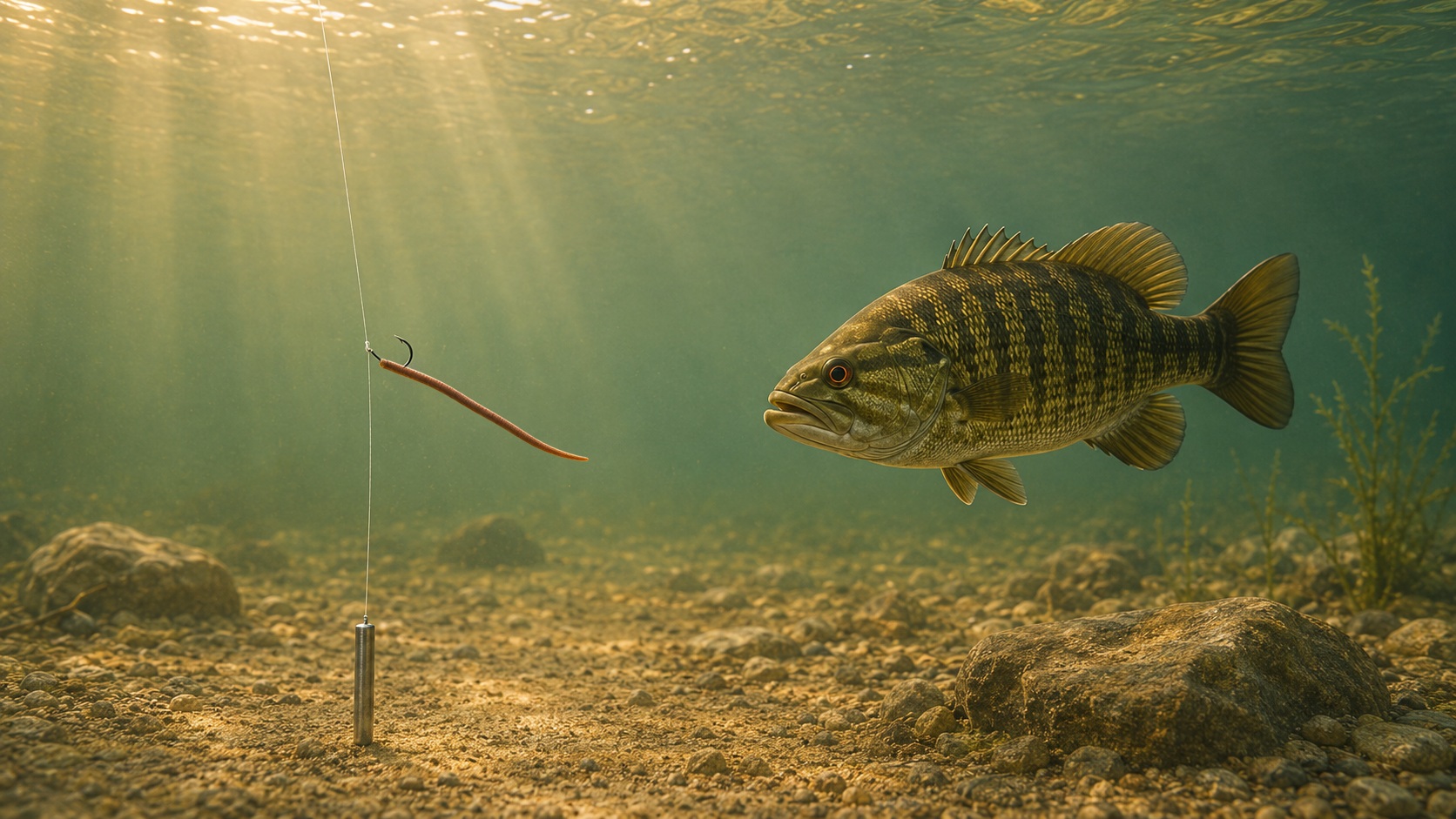
Drop shot flips the usual rig upside down. Instead of putting the weight up the line and letting the bait fall behind it, you tie the hook on a tag above a weight that rests on the bottom. The result is a small soft plastic suspended at eye level in the strike zone, where a fish can stare at it as long as it wants. The weight anchors the rig; the bait hovers and quivers on a light line above it.
That single change makes drop shot one of the deadliest finesse presentations ever devised. Most bottom rigs drag the bait through the mud; drop shot holds it up in clear view and keeps it there, almost motionless, for as long as you care to shake the rod tip. For pressured fish and for fish suspended off the bottom over deep structure, nothing else keeps a bait in front of their nose so patiently.
It earned its reputation on tough, clear-water smallmouth, but it is just as deadly on hard-pressed largemouth and crosses over to inshore saltwater for spotted seatrout, to deep structure for walleye and yellow perch, to crappie in brush, and to rockfish out west. As a subset of finesse fishing, it shines exactly when nothing aggressive is working.
How to do it
The rig is simple once you understand the geometry. Tie your hook directly to the main line with a Palomar knot, leaving a long tag end — 12 to 18 inches is the standard window. Run that tag back down through the eye so the hook stands out perpendicular to the line, point up, then tie a drop-shot weight to the bottom of the tag. The hook-to-weight distance sets how high your bait rides: short for fish glued to the floor, longer for fish suspended above it.
Pick the right plastic and hook it light. Drop shot wants small, subtle baits — 3 to 4.5 inch finesse worms, minnow-style plastics, or a small soft shrimp inshore. Nose-hook through the head for a horizontal, swimming look, or wacky-rig through the middle for more wounded action and a slower fall. Either way, keep the hook exposed; light-wire finesse hooks bite easily on a sharp set.
Fish light spinning gear. This is a spinning-rod technique. A medium-light to medium rod with 8 to 15 lb braid and a 6 to 10 lb fluorocarbon leader gives you the sensitivity to feel a soft tick and the low visibility clear water demands. Fluoro is the standard leader — it disappears underwater and sinks, helping the rig settle.
Shake it in place. The signature presentation is doing almost nothing. Let the weight settle, take up just enough line to feel it, and shake the rod tip. Because the weight stays put, that shaking quivers the bait without moving it — a steady, hovering tremble fish can’t ignore. Pause often; the bites usually come on the pause.
Vertical or cast-and-drag. Vertically, drop straight down over structure, brush, or a marked school and work the rig in place — ideal from a boat or kayak over walleye, crappie, perch, or suspended bass. Casting, pitch it out, let it sink, shake, then slowly drag the weight a foot, pause, and shake again to cover a flat or breakline.
Read the subtle bites. Drop-shot bites are often nothing more than a soft tick, the bait feeling heavy, or the line drifting to one side. Watch your line and keep light contact. Set with a firm sweep, not a violent snap — on light line and a small hook, a smooth, steady sweep buries the hook and saves break-offs.
When to use it
Reach for drop shot when the fish have shut down or gone deep:
- Clear, pressured water. When fish have seen every moving lure and won’t chase, a hovering bait they can study tips neutral fish into biting.
- Suspended or deep fish. When your electronics show fish holding off the bottom over structure, drop shot puts the bait at their level and keeps it there.
- Cold fronts and tough conditions. Post-frontal bluebird days and temperature extremes call for a slow, in-your-face presentation that asks little of a sluggish fish.
- Vertical structure fishing. Over brush piles, rock, ledges, or a marked school, dropping straight down and shaking in place is hard to beat.
When fish are active and willing to chase, faster reaction baits cover more water. Match the rig to the mood — drop shot is a precision tool, not an everyday search bait.
Common mistakes
The biggest error is moving the bait too much. The magic is in the bait staying put while it quivers; drag it around constantly and you have just an ordinary bottom rig. The second is too heavy a leader or weight, which kills the natural hover and spooks clear-water fish — go lighter than feels comfortable. The third is setting too hard on light line and a finesse hook; sweep, don’t snap. Finally, many anglers give up on a spot too soon. Drop shot rewards patience: let the bait hover, shake, and wait before you move on.