A note about links: If we include links to retail sites like Amazon or Bass Pro Shops, it's because they're relevant to the topic and, as anglers ourselves, we believe they're worth checking out. As an Amazon Associate we earn from qualifying purchases.
What it is
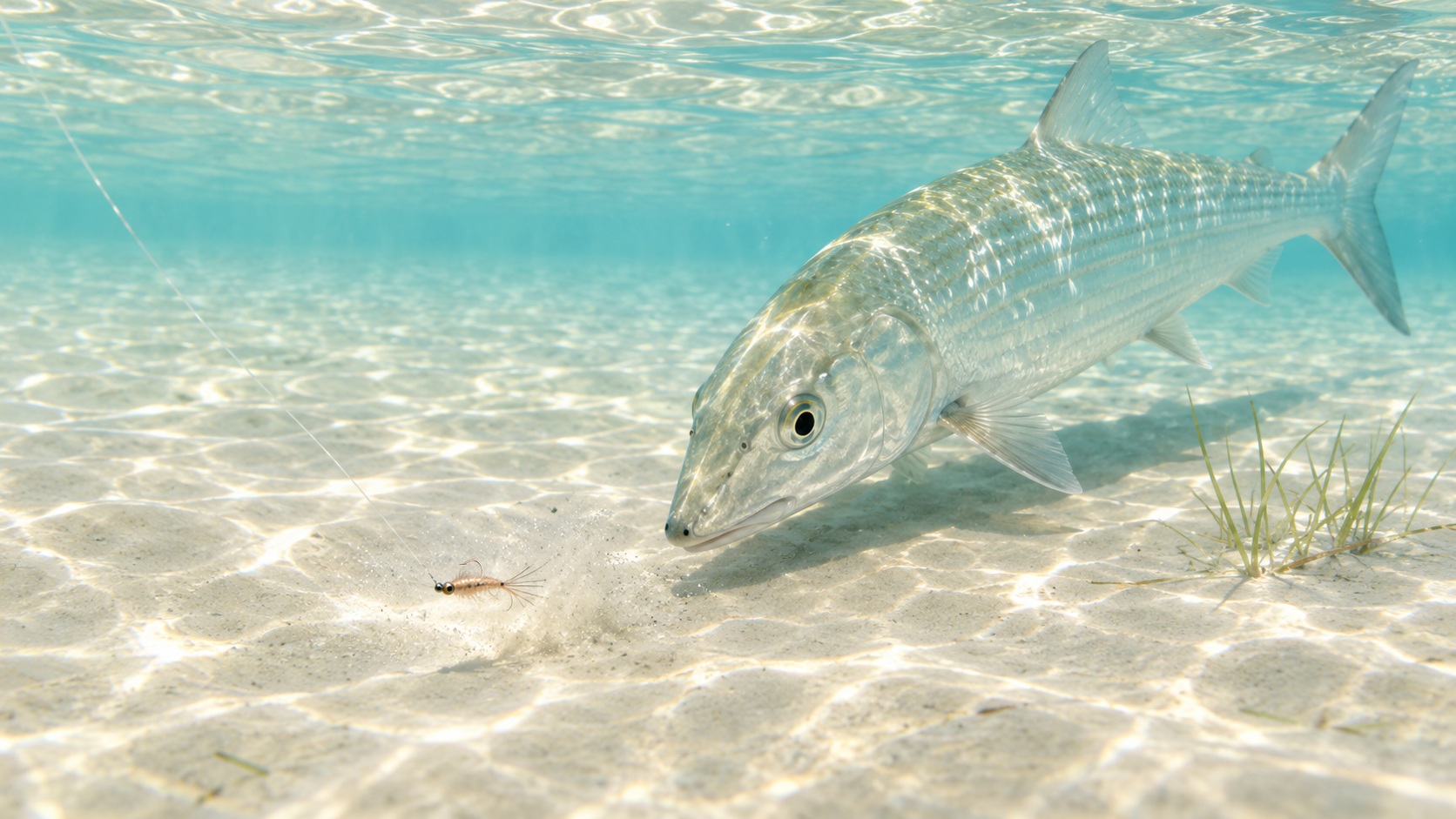
Sight fishing is exactly what it sounds like: you find a single fish with your eyes, then cast to that one fish on purpose. There is no blind casting, no covering water and hoping — you spot the target, plan your shot, and put a bait in front of it. It is the most hunting-like form of fishing there is, and many anglers consider it the purest. You see the animal, you stalk it, you make one good cast, and you watch the whole thing unfold.
That visual feedback loop is what makes it so demanding and so addictive. You are not guessing whether a fish is there — you know it is, and you watch how it reacts to everything you do. A bad cast spooks it and it is gone in a flash of mud or a bow wave across the flat. A good cast draws a tail-up tip, a turn, a chase, an eat you see happen with your own eyes. Few moments in fishing match watching a redfish flare its gills and inhale your bait six feet from the boat.
This is the signature game of the saltwater flats. Redfish, bonefish, permit, tarpon, and snook are all hunted on sight in skinny water, where the fish are visible and the casts have to be precise. But it is not strictly a salt sport. Largemouth bass in the spring spawn are sight-fished on their beds, sheepshead and black drum get tracked tailing along oyster bars and dock edges, and any clear shallow water sets the stage for spotting and stalking a single fish.
How to do it
Sight fishing breaks down into four skills: spotting, approaching, casting, and reading the eat.
Spotting. You cannot cast to what you cannot see, so this comes first. Wear quality polarized sunglasses — they cut surface glare and let you see into the water, and amber or copper lenses help on the flats. Get up high: a poling platform, a casting deck on the bow, a paddleboard, or even standing on shore gives you a steeper angle to see down through the column. Then learn to read the water. You are rarely looking for a whole fish. You are looking for the clues a fish leaves — a tail breaking the surface, a wake or push of water, a moving shadow on the bottom, “nervous water” where bait scatters, a wisp of mud where a fish rooted the bottom, or just a shape that is the wrong color and moving against the current.
Approaching. Once you have a fish, the game is getting into casting range without being detected. Stay quiet — no hull slap, no dropped pliers, no slamming hatches. Keep a low profile so your silhouette does not loom over the water. Use the sun and wind to your advantage: keep the sun at your back so you can see and the fish is lit up, and use the wind to drift or pole in silently rather than fighting it. Move slowly and stop often.
Casting. The shot has to lead the fish and land softly. You are casting to where the fish will be, not where it is, so it swims onto the bait rather than having the bait drop on its head. Lead it a few feet ahead and to the side. The cardinal sins are lining the fish — dropping your line across its back — and slapping the bait down right on top of it. Either one spooks the fish instantly. Practice casting accuracy on land; sight fishing punishes a sloppy cast harder than any other technique.
Reading the eat. Now watch. A fish that turns toward the bait, speeds up, or tips down to the bottom is committed — get ready. A fish that flares or bolts has been spooked, so freeze and let it settle. Often you can see the mouth open or the fish flash on the bait; that is your cue to come tight. With many flats species you set on the feel or the sight of the eat, not before.
When to use it
Sight fishing needs the right conditions, and the biggest one is visibility. You want shallow, clear water, bright overhead sun, and light wind so you can see into the column. Mid-morning to mid-afternoon on a calm, sunny day is prime; an overcast sky or a chop on the water turns the lights off and you are back to blind casting.
Seasonally, it shines spring through fall: spring brings bedding bass and warming flats, summer puts fish shallow on the high tides, and fall stages reds and other inshore species in skinny water. On the flats, a rising or high tide that floods fish onto the shallows is your window. This is a technique you reach for when you can see — and on the days you can, it is the most exciting fishing available.
Common mistakes
The most common mistake is moving too fast and too loud, blowing fish out before you ever get a shot. Slow down and treat it like a hunt. Second is the rushed, inaccurate cast — anglers see a fish, get excited, and fire a bad cast that lines or spooks it; take the half-second to set up the right shot. Third is leading the fish wrong, either dropping the bait on its head or so far away it never sees it. Fourth is not wearing real polarized glasses, which leaves you half-blind. And finally, impatience: if a fish refuses, do not keep hammering it — back off, let it settle, and wait for the next opportunity.