A note about links: If we include links to retail sites like Amazon or Bass Pro Shops, it's because they're relevant to the topic and, as anglers ourselves, we believe they're worth checking out. As an Amazon Associate we earn from qualifying purchases.
What it is
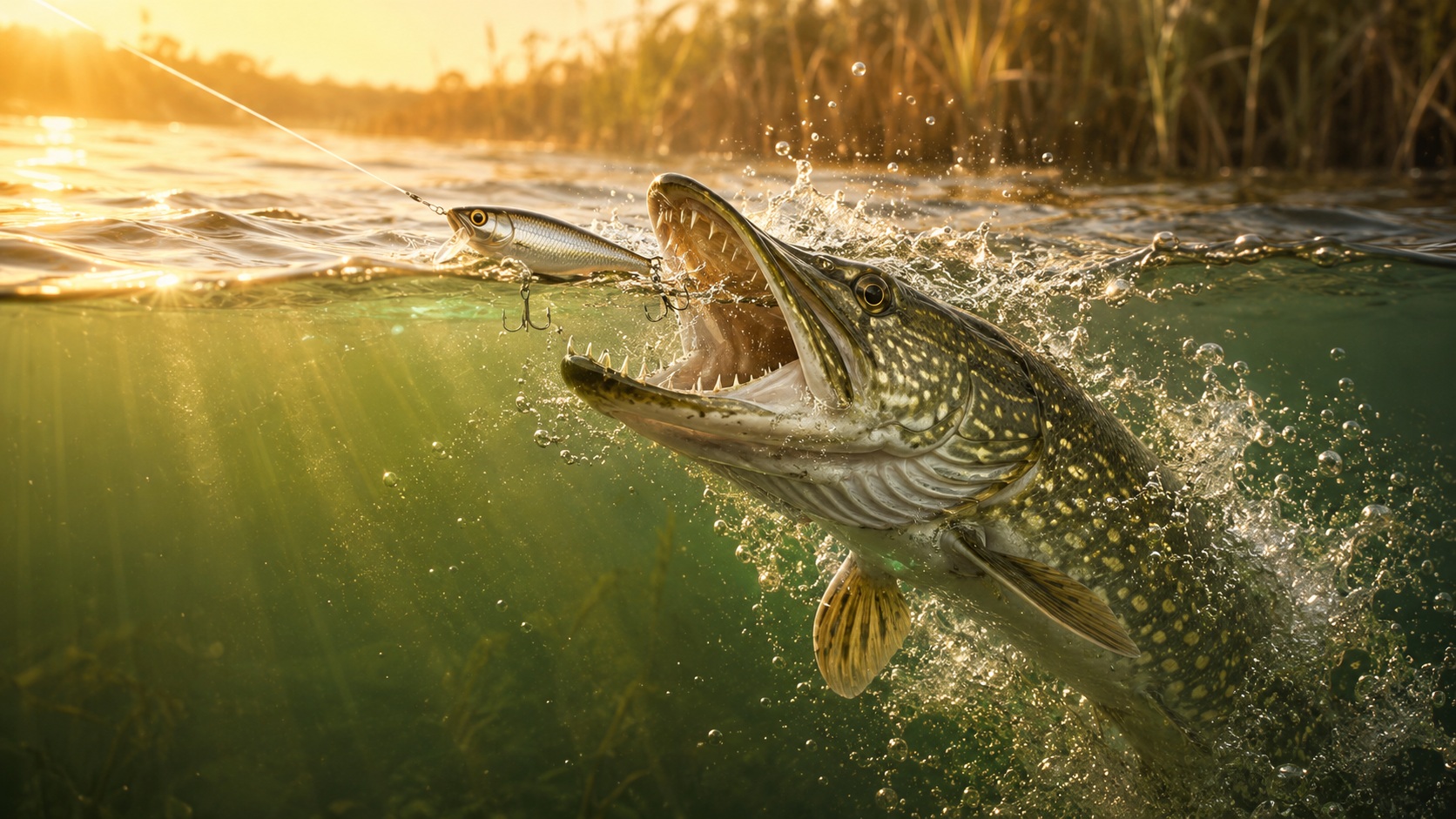
Topwater fishing is presenting a lure on the surface so that fish strike up through it. Nothing else in fishing looks like it: the water bulges, a wake closes in, and the bait disappears in a violent boil. You do not feel the bite first — you see it. That is what makes topwater the most exciting technique in the sport and the reason anglers will throw it for hours waiting on a single blow-up.
Mechanically, a topwater bait floats and stays floating, riding on top while you work it with the rod tip and reel. The lure never sinks; the strike zone is the film of water where the surface meets the air. That narrow zone is exactly what fish key on when they are feeding up — chasing baitfish pinned against the surface, ambushing from below, or smashing anything that looks vulnerable overhead.
It is a true crossover technique. In fresh water, largemouth and smallmouth bass and peacock bass crush surface lures over grass, around docks, and along rocky banks. In salt and brackish water, snook, redfish, spotted seatrout, striped bass, bluefish, and jack crevalle blow up on poppers and walkers across flats, oyster bars, and estuary edges. The water changes; the heart-stopping eat does not.
How to do it
Topwater breaks down into a handful of lure types, each with its own cadence:
Poppers. A cupped or concave face that spits and chugs water when you twitch the rod. Work it with a pop-pause rhythm: a sharp snap, then let it sit dead still. The pause sells the bait. Many fish hit the moment it stops moving, so resist the urge to keep reeling.
Walkers (spooks). A cigar-shaped bait with no lip that glides side to side — the “walk-the-dog” action. With slack in the line, give the rod tip a steady rhythmic twitch-twitch-twitch and let the bait swing left, then right, in a zig-zag. Cadence is everything; find the rhythm and keep it going.
Frogs. Hollow-body, weedless baits you can drag straight across matted grass, lily pads, and slop where nothing else will go. Walk it in the open water and twitch-pause it over cover. The weedless hooks let you fish water no other lure can touch.
Buzzbaits. A bladed bait you reel steadily so the blade churns a wake and gurgle across the surface. It is a search bait — cover water, keep it moving, and let aggressive fish run it down.
Propbaits. Straight-bodied baits with spinning props at one or both ends that sputter when twitched. Fish them like a popper, with sharp twitches and long pauses.
The single most important discipline in all of topwater is the hookset. When a fish explodes on the bait, your instinct is to swing immediately — and you will pull the lure right out of its mouth. Wait until you feel the weight of the fish loading the rod, then sweep into it. See it, feel it, set it — in that order. Use a soft, slightly slow rod tip and a reel-down hookset rather than a violent snap.
When to use it
Topwater shines in specific windows, and matching those windows is most of the battle:
- Low light. Dawn and dusk are prime. The flat light hides the bait’s flaws and fish feed up confidently. The first and last hour of daylight are the highest-percentage topwater times of the day.
- Overcast skies. A gray, cloudy day extends the topwater bite well past dawn and dusk — sometimes all day.
- Warm water. Topwater is a warm-water game. As water climbs into the 60s and up through summer into fall, fish are active near the surface and willing to come up. It fades in cold water.
- Calm or lightly rippled surface. A slick or a light chop is ideal. A faint ripple actually helps by breaking up the lure’s outline. Heavy wind and rough chop usually kill the bite.
- Fish busting bait. When you see schools breaking the surface or birds working bait, throw topwater into the chaos immediately. Surface-feeding fish are the easiest topwater targets there are.
Common mistakes
The number one mistake is setting the hook on sight instead of on feel — swinging at the splash and yanking the bait away from the fish. Wait for the weight. The second is fishing the bait too fast and skipping the pause; with poppers and walkers, the dead-stop moments draw most of the strikes. The third is throwing topwater in the wrong conditions — a bright bluebird midday with a flat-calm bake-off, or cold water — and grinding away when a subsurface bait would catch. Last, watch your gear: braided line with a short leader gives the long casts and solid hooksets topwater demands, and rod-tip-down positioning keeps slack available for working walkers. Match the bait, the cadence, and the window, and topwater rewards you with the best eats in fishing.