A note about links: If we include links to retail sites like Amazon or Bass Pro Shops, it's because they're relevant to the topic and, as anglers ourselves, we believe they're worth checking out. As an Amazon Associate we earn from qualifying purchases.
What it is
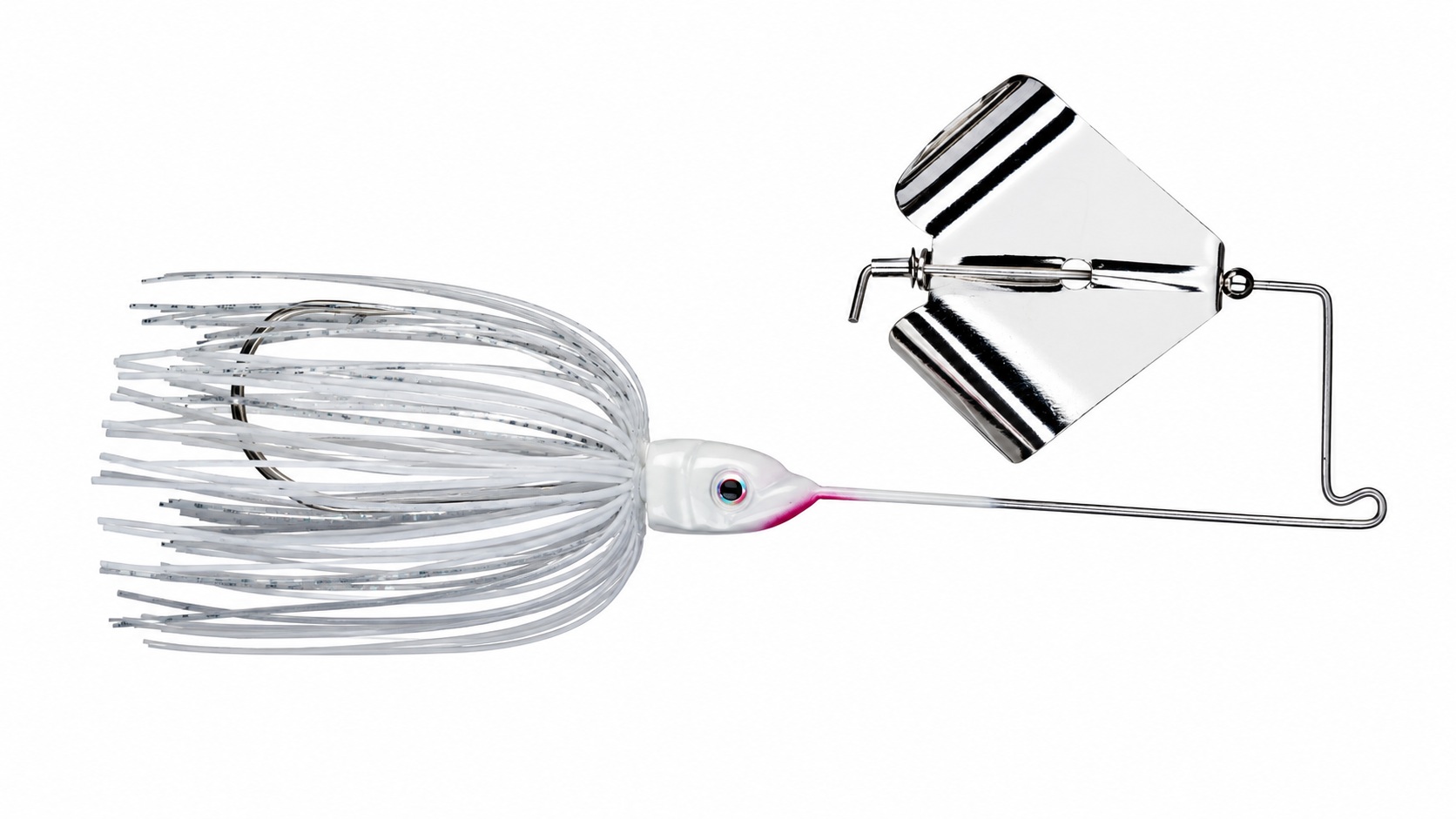
The buzzbait is a wire-frame bait built around a single idea: make as much commotion on the surface as possible. A lead jig body — usually dressed with a rubber skirt — rides on one arm of a bent safety-pin wire. On the upper arm, a large propeller blade spins as the lure is retrieved, catching air and water, churning a visible wake, and clacking loudly against a brass rivet with every revolution. The whole rig rides on top.
That clacking, gurgling racket is the point. Buzzbaits trigger largemouth bass through aggression and reaction, not imitation. They work on fish that have completely ignored slower, more subtle presentations. When bass are shallow and active — chasing shad at sunrise, pushing into grass flats at dusk, or sitting on pad fields waiting to ambush — a buzzbait draws strikes from fish you did not know were there.
It is also one of the most honest confidence builders in freshwater fishing. The explosion on the surface is violent and visible. Nothing else quite matches it.
The setup
The buzzbait comes pre-rigged from the package and does not require additional rigging to fish, but a few components are worth knowing:
- Wire frame: The bent safety-pin shape creates the angle that keeps the blade on top and the jig body below, running just under the film.
- Propeller blade: Usually a single Delta-wing or twin-wing blade. Twin-wing (clacker-style) blades are louder; single-wing blades run cleaner through grass.
- Lead head and skirt: The jig body provides weight for casting. The skirt pulses behind it and conceals the hook.
- Trailer hook: A critical add-on. Thread a wide-gap trailer hook onto the main hook shank so the point rides up. Fish that slash at the lure and miss the main hook often connect on the trailer. If you are getting blowups without hookups, add the trailer first.
- Soft plastic trailer: A swimbait tail, toad, or chunk bait threaded onto the hook adds bulk, buoyancy, and a second target for short-striking fish. A Zoom Horny Toad or similar kick-tail trailer is a classic combination.
Keep a few sizes on hand. A 3/8 oz buzzbait casts well and runs at moderate speed. A 1/2 oz gives you casting distance and a deeper clacking sound that carries in wind or stained water. Drop to 1/4 oz in calm, clear conditions where a quieter approach helps.
How to fish it
Start your retrieve before the lure hits the water. This is the most important rule with a buzzbait. Unlike most lures, a buzzbait sinks the moment it stops moving. If you let it settle and then start retrieving, it will already be underwater by the time the blade catches and lifts the lure to the surface. Begin reeling the instant the lure lands, or even a half-second before to get the blade spinning on impact.
Keep the rod tip up and reel just fast enough to keep the blade churning on top. The ideal speed produces a steady wake and a consistent clacking sound. Too slow and the lure dips under; too fast and you lose the tight-to-surface action that triggers strikes. In calm morning water you can often slow it down dramatically — almost to a crawl — which gives bass more time to track and commit.
Burn it when they are unresponsive. On days when a slow retrieve produces nothing, speed up aggressively. A fast buzzbait over shallow cover sometimes triggers pure reaction strikes from fish that would not chase a slow presentation.
Run it over the top of submerged grass, lily pads, and hydrilla mats. The buzzbait does not hang up in vegetation the way treble-hook baits do. Work it right across the canopy. Bass sitting in the shade underneath will blow through the surface to hit it.
When a fish strikes, wait. This is where most anglers lose fish. The surface explosion is so sudden and loud that the instinct is to set the hook immediately — which pulls the lure away from the fish before it has turned. Instead, lower the rod tip slightly, let the fish take the lure and feel its weight for a half-beat, then sweep the hookset hard to the side. A one-count wait is usually enough. If you are still missing fish, pause even longer before swinging.
When to use it
Early morning along grass edges and dock lines. The calm, low-light window before the sun gets high is peak buzzbait time. Bass are in the shallows, feeding aggressively, and the buzzbait’s surface disturbance is visible and audible from a distance.
Summer evenings during shad blowups. When largemouth bass are pushing shad to the surface along points, channel edges, or in coves, a buzzbait thrown into the melee gets struck almost immediately. Match the blade size to the shad — smaller blades in clear water during smaller forage blowups.
Stained or muddy water. In water where visibility is low, the buzzbait’s vibration and noise do the work that sight-dependent lures cannot. Chartreuse and white blades are particularly effective in stained conditions.
Overcast days. Cloud cover keeps bass in the shallows longer and reduces light penetration enough that fish hold higher in the water column throughout the day, not just at dawn and dusk.
The buzzbait is not a cold-water bait. Water temperature below 55 degrees slows bass metabolism enough that they will not chase a fast surface lure. Below 60 degrees, returns drop sharply. Save it for spring through fall, with the best windows in late spring and early summer when fish are actively patrolling the shallows.
Color selection
| Color | Best conditions |
|---|---|
| White or pearl | Clear to lightly stained water, shad forage, bright days |
| Black or black/blue | Low light, predawn, overcast, dark days |
| Chartreuse | Stained or muddy water, high visibility needed |
| Chartreuse/white | All-purpose stained water option |
| Green pumpkin | Clear water, natural bottom tones |
Blade color matters too. Painted aluminum blades in white or chartreuse are the most common. Unpainted aluminum produces more flash in clear water. Black blades are surprisingly effective at night, creating a sharp silhouette against a moonlit surface.
Gear setup
A buzzbait works best on a medium-heavy to heavy baitcasting rod, 7 to 7’3” with a moderate-fast action. You want enough backbone to sweep a solid hookset but not so stiff that the rod tip telegraphs every blade rotation rather than letting the fish load on the line.
Monofilament or fluorocarbon in 17–20 lb is the standard choice. Mono has more stretch than braid, which gives a slight delay on the hookset and helps keep fish buttoned on a fast-moving topwater bait. Braid (40–50 lb) works well in heavy grass where you need to horse fish out of cover, but requires an even more disciplined wait on the strike to avoid pulling the hook.
Brands worth knowing
Booyah Buzz is the most widely distributed buzzbait and a reliable starting point — good blade clack, quality skirt, and consistent action out of the package.
Strike King Pro-Model buzzbait runs true and is widely available.
War Eagle produces a distinctive high-pitched clacker that many tournament anglers prefer.
Nichols Lures Pacemaker and Lunker Lure buzzbaits have loyal followings on tournament circuits for their blade sound and durability.
Stanley offers a reliable twin-blade clacker that is loud enough for rough conditions and stained water.
Buy a few in 3/8 oz to start, pick up white and black/blue as your first two colors, add trailer hooks to the package before your first trip, and you are ready to go.