A note about links: If we include links to retail sites like Amazon or Bass Pro Shops, it's because they're relevant to the topic and, as anglers ourselves, we believe they're worth checking out. As an Amazon Associate we earn from qualifying purchases.
What it is
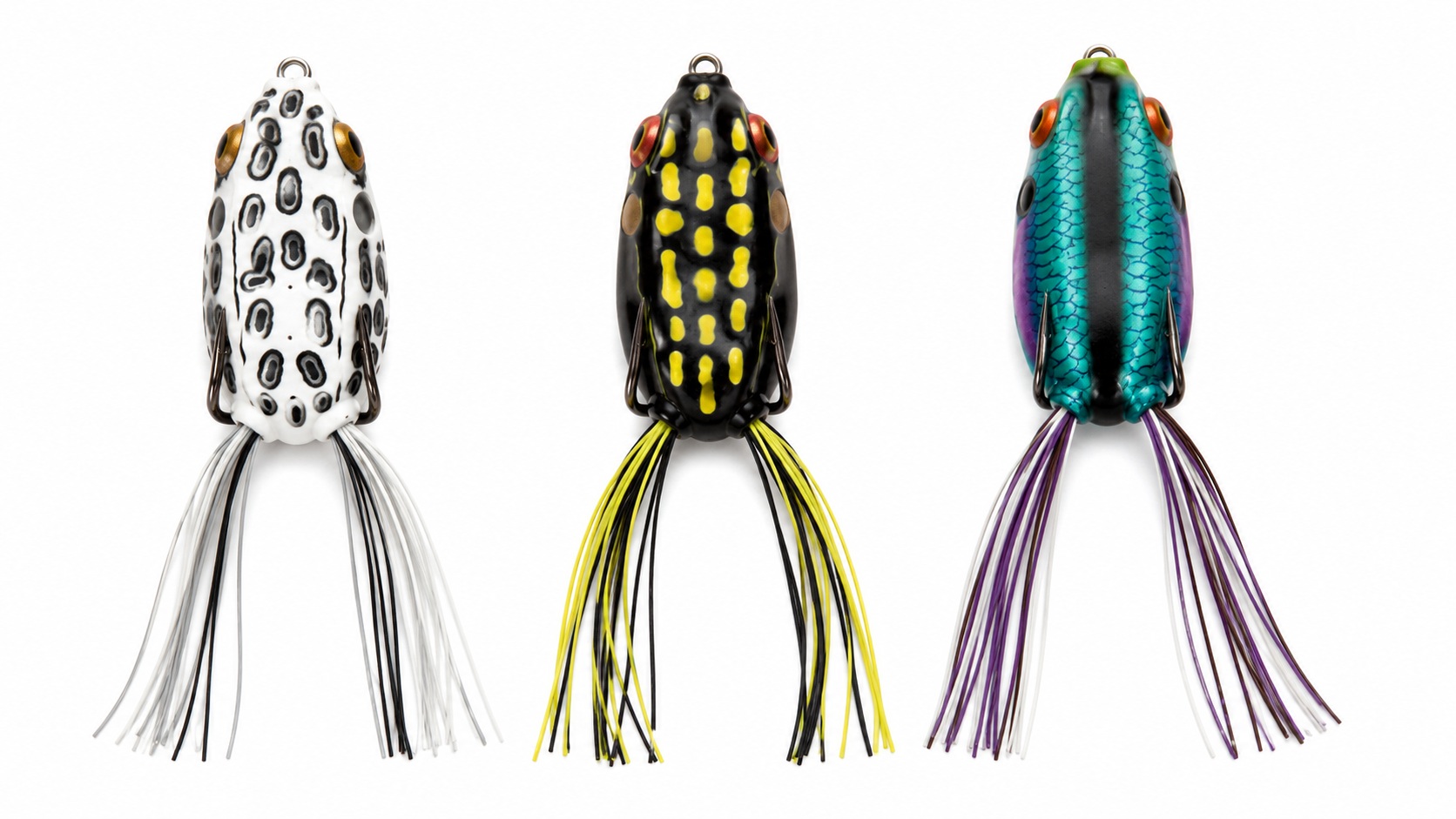
The hollow-body frog is a soft rubber topwater lure designed to fish places most other baits cannot go. Its hollow compressed body and twin upturned hooks sit flush against the lure, so it glides over lily pads, floating mats, hyacinths, duckweed, and other dense surface vegetation without snagging. When a fish explodes on it, the soft sides collapse on the hookset and the hooks drive home.
This is the lure anglers reach for when largemouth bass are buried in the nastiest cover on the lake. Big bass use thick vegetation as ambush points and thermal refuge during warm months, and they are almost unreachable with conventional presentations. The frog lets you walk a bait right across the top of that cover and provoke reaction strikes from fish that would never see a texas rig or carolina rig working below them.
Northern pike and muskellunge will also target frogs aggressively, particularly along weedline edges in natural lakes and river backwaters.
How it’s rigged
The hollow-body frog comes pre-rigged from the manufacturer with a double hook molded into or through the body. There is no additional rigging required for the lure itself. What matters is your terminal connection.
Most anglers tie direct to the line using a loop knot — a Perfection Loop or Non-Slip Mono Loop — rather than a straight clinch knot. A loop connection lets the frog swing freely on the retrieve, which improves the walking action considerably. Avoid heavy snap swivels; they kill the lure’s movement and add unnecessary weight to the nose.
Keep the hook points lightly embedded in the soft body sides if they are exposed, or confirm the factory setting keeps them riding close enough to stay weedless over tight mats.
How to fish it
The standard retrieve is a walk-the-dog action: point your rod tip down toward the water, then use short, rhythmic wrist twitches to make the frog dart left and right across the surface. Twitch, pause, twitch, pause. The pause is critical. Bass often follow a frog and commit during a dead stop.
Over open pockets in pads or at the edges of mats, slow the cadence down and let the lure sit longer between twitches. Over thick continuous cover with no open water, a slightly faster walk keeps the frog riding up on top of the vegetation instead of sinking into gaps.
The most common mistake new frog anglers make is swinging on the explosion. When a bass blows up on a frog, the strike looks and sounds enormous — it takes discipline not to react immediately. Wait until you feel the weight of the fish on the line before driving the hooks. A half-second delay after the blow-up is often enough. Setting too early pulls the frog away from the fish before the hooks have a chance to compress and bite.
When to use it
The hollow-body frog is at its best during warm-weather months when surface vegetation is at peak growth. Early morning on summer days is prime time: bass are actively feeding near the surface before the heat pushes them deeper, and low-light conditions make topwater strikes more frequent.
It also performs well on overcast days throughout the day, and during the pre-spawn and post-spawn periods in spring and fall when bass push into shallow weedy areas.
Avoid fishing a frog when water temperatures drop below the mid-50s. Bass become sluggish and less likely to commit to a fast topwater presentation in cold water.
Color selection
Color choice for frog fishing is straightforward and based primarily on light conditions.
| Condition | Color |
|---|---|
| Overcast / low light / early morning | Black or black/blue |
| Bright sun / clear skies | White or natural green |
| Stained or tannic water | Black |
| Clear water, full sun | Chartreuse belly, natural colors |
Black produces a clean, hard silhouette against a grey sky when viewed from below, which is exactly what you want on dark days. White reflects the sky on bright days and looks natural against a sunlit surface. When in doubt, black is the safer choice for most frog fishing situations.
Gear setup
Frog fishing demands heavy gear. You need the backbone to drive a hook through a soft lure body and into a fish’s mouth, and then the raw power to pull a large bass up through vegetation before it wraps you and throws the hook.
- Rod: Heavy or extra-heavy power, fast or extra-fast action; 7 to 7’6” is the most common length for casting accuracy and leverage
- Reel: High-speed baitcaster (7:1 or faster) to take up slack quickly after a strike
- Line: 50 to 65 lb braided line; braid floats, cuts through vegetation, and has no stretch for solid hooksets
Monofilament and fluorocarbon are too stretchy and too heavy in the water column for this application. Braid is not optional here.
Brands worth knowing
SPRO Bronzeye Frog is widely considered the benchmark. It has a consistent walking action out of the box, durable construction, and sharp hooks. Available in multiple sizes (65mm and 75mm are the most popular).
Booyah Pad Crasher is a close second and often more affordable. It walks easily and holds up well over rough mat fishing. The Pad Crasher Jr. is a useful option when fish are being finicky or when targeting smaller water.
Livetarget Hollow Body Frog offers hyper-realistic color patterns for clear-water situations where fish get a good look before committing.
River2Sea Bully Wa 2 has a slightly different body profile that some anglers find walks more naturally with minimal rod input.
All of these frogs are capable fish catchers. Most experienced frog anglers settle on one or two models and learn their specific action, rather than rotating through many options.