A note about links: If we include links to retail sites like Amazon or Bass Pro Shops, it's because they're relevant to the topic and, as anglers ourselves, we believe they're worth checking out. As an Amazon Associate we earn from qualifying purchases.
What it is
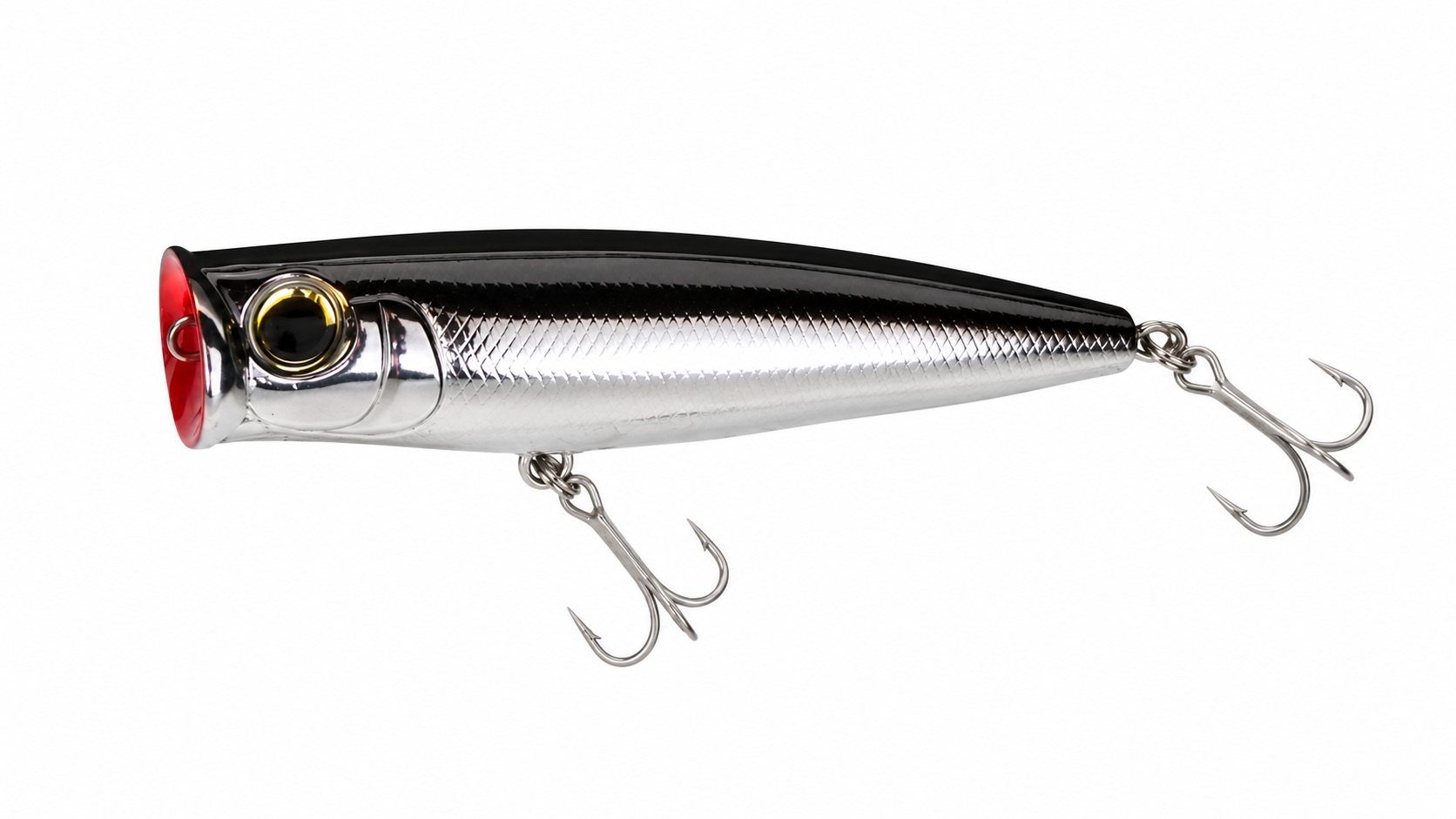
A saltwater popper is a hard-body surface lure built to be thrown hard, worked aggressively, and survived by fish that can weigh triple digits. The concept is the same as any popper — a cupped or scooped face that displaces water into a splash and spitting sound with each rod sweep — but the scale is entirely different from freshwater versions. Where a freshwater popper might weigh a quarter ounce with light treble hooks, saltwater poppers run 1 to 4 oz, are built around thick-gauge hook hardware, and are designed to hold up to bluefish teeth, tarpon head shakes, and the raw power of an offshore tuna.
Two styles dominate the market. The cupped-face popper (classic design) has a concave dish cut into the nose that catches water and throws a wide white-water plume on each pull. The pencil or stick popper is longer and more slender, with a sinking nose that creates a walking, darting action when worked at speed — it pushes less surface commotion but covers water faster and draws strikes from wahoo and kingfish that refuse a slower bait. Most inshore anglers start with the cupped face. Offshore anglers carry both.
The setup
Saltwater popper fishing puts serious stress on every piece of your gear. This is not a place to use light tackle.
Rod: A medium-heavy to heavy spinning or conventional rod rated for 2–4 oz lures and 30–50 lb line. The rod needs enough backbone to generate a hard pop and enough tip sensitivity to feel the pause before a strike. A 7 to 7.5 foot rod is standard for inshore; go longer (7.6–8 ft) for offshore casting distance.
Reel: A quality spinning reel in the 5000–8000 size range handles most inshore applications. For offshore work — mahi-mahi, wahoo, amberjack — step up to a 10000 or larger with a drag rated at 25 lb or more. The drag needs to be smooth under pressure, not just strong on a static pull.
Line: 20–50 lb braided mainline is the standard. Braid gives you the sensitivity to feel the lure working, the casting distance to reach bait schools, and zero stretch for a solid hookset. Do not use monofilament as a mainline here.
Leader: 40–80 lb fluorocarbon, connected to the braid via an FG knot or double uni. Go heavier toward 80 lb when wahoo or bluefish are present — both species will slice through leader that feels more than adequate on anything else. Leader length is typically 4–6 feet for inshore, slightly shorter for offshore casts.
Hooks: Many poppers ship with treble hooks. A growing number of offshore anglers swap to heavy single assist hooks — they penetrate more reliably on a hard-fighting fish and are easier to remove for a clean release. If your popper comes with light trebles, upgrade them to saltwater-grade hardware before you ever wet the lure.
How to fish it
The retrieve for a saltwater popper is deliberate and rhythmic. Cast the lure out and let it settle for a moment so any excess line sinks out of the loop, then begin your sequence: sweep the rod tip down and to the side 2 to 3 feet, then reel up the slack as you bring the rod back to the starting position. That sweep-and-reel motion is one pop. Pause. Then repeat.
The pause is as important as the pop. Fish key in on the stillness after the disturbance. Strikes often come in the half-second after the lure goes quiet — a snook materializes from under a dock, a jack erupts from below the school, a tuna comes up from dark water. Resist the urge to shorten the pause when nothing is happening immediately.
Critical rule on the hookset: Do not swing the moment you see the explosion. Saltwater fish hitting a surface popper is spectacular and the instinct is to set the hook the instant you see the boil — this is the most reliable way to pull the lure right out of the fish’s mouth. Instead, keep the rod where it is, watch the lure, and wait for the rod to load. Feel the fish on the line. Then sweep hard into the fish once tension is there. This patience separates anglers who land fish on topwater from those who just see a lot of big blowups.
When to use it
Inshore: Saltwater poppers are productive for common snook along seawalls, dock edges, and channel mouths from late spring through fall. Work the popper parallel to structure at dusk and dawn when snook are actively feeding on the surface. Tarpon rolling in passes and channels will eat a popper fished in their path. Jack crevalle are aggressive popper targets in open water — they chase baits in packs and compete for the lure.
Nearshore and offshore: This is where the popper earns its reputation as a serious tool. Mahi-mahi on a bait ball are sucker for a popper worked at the edge of the commotion — cast past the school and pop it back through the feeding fish. Wahoo at first light, when they push bait to the surface before the sun gets high, will crash a fast-worked pencil popper on a single-minded charge. Greater amberjack and king mackerel respond well during surface-feeding windows. Tuna on a feeding frenzy — blackfin, yellowfin, or skipjack crashing bait near the surface — are prime popper targets; match the lure size to the bait size in the water column.
Seasonal window: Spring through fall covers the prime window. Summer heat pushes fish to the surface early in the morning. Fall migrations move fish in predictable concentrations along the coast that are highly accessible on topwater.
Size and color reference
| Size | Best use |
|---|---|
| 1 – 1.5 oz | Inshore: snook, redfish, slot tarpon |
| 2 – 3 oz | Nearshore: mahi-mahi, bluefish, kingfish |
| 3 – 4 oz | Offshore: wahoo, amberjack, tuna |
Color: Match the baitfish in the water. Sardine, mullet, greenback, and anchovy patterns cover 90 percent of situations. Chartreuse and white work well in off-color or stained water. Bright colors (pink, orange) add contrast in choppy offshore conditions when visibility at the surface is limited.
Brands worth knowing
ORCA is the most recognized name on the Space Coast and Florida inshore scene — the classic inshore/nearshore popper with a loyal following among snook and tarpon guides.
Nomad Design builds offshore-grade poppers built for serious pelagic work, with hardware to match.
Shimano (especially the Ocea series) and Daiwa produce precision-tuned poppers used heavily in tournament jigging and offshore casting.
Yo-Zuri offers solid mid-price options accessible to anglers just starting with saltwater topwater.
Williamson fills the offshore casting category with heavy, durable lures at a competitive price point.
If you are fishing inshore Florida on a budget, start with an ORCA or a Yo-Zuri and learn the technique. If you are heading offshore or targeting tuna and wahoo, invest in Nomad Design or Shimano-grade hardware and matched hooks before you go — the difference in durability and hook penetration will show up on your first serious fish.