A note about links: If we include links to retail sites like Amazon or Bass Pro Shops, it's because they're relevant to the topic and, as anglers ourselves, we believe they're worth checking out. As an Amazon Associate we earn from qualifying purchases.
What it is
The floating worm is one of the most deceptively effective techniques in bass fishing. There is almost nothing to it — a long, straight soft plastic worm, a light hook, and zero weight. Yet few presentations match it for producing largemouth bass in warm, shallow water, especially over vegetation and around structure where a weighted rig would snag and a hard bait would look out of place.
The concept is simple: a buoyant worm rigged weightless floats on or just barely beneath the surface. When retrieved slowly, the tail wags and undulates with a lazy, alive motion that triggers reaction strikes from bass that might study and refuse almost anything else. When paused, it just drifts. That combination of subtle surface movement and effortless suspension is exactly what fish holding in 1 to 4 feet of water over grass or along a flat want to see.
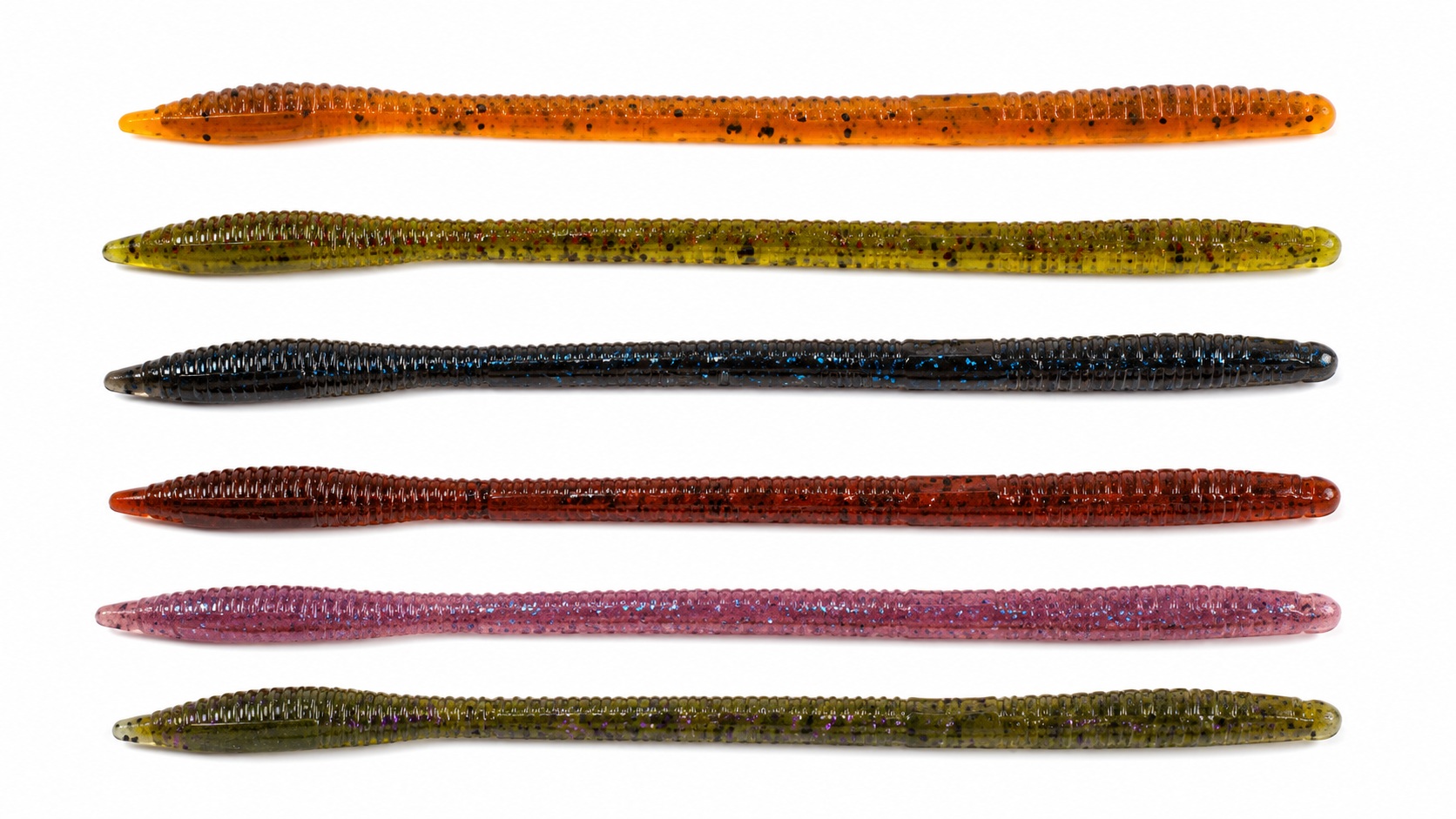
The Zoom Trick Worm is the classic tool for this technique. The “trick” in the name is not marketing — the bait is specifically designed with a buoyancy that keeps it riding high even on a slow retrieve.
The setup
Rigging a floating worm takes less than a minute:
- Hook: Use a 2/0 or 3/0 extra wide gap (EWG) offset worm hook. The wider gap gives better hookup rates on a bait this long when fished on the surface, where fish sometimes grab the tail first.
- Weight: None. No bullet weight, no split shot, no insert. The entire point is that the worm floats.
- Texas-rig the hook weedless: Push the hook point into the nose of the worm about 1/4 inch, bring it out the side, slide the worm up to the eye, rotate the hook, and skin-hook the point back into the bait so it lies flat. The weedless presentation is critical — you will be fishing this over vegetation constantly.
- Line: 8 lb monofilament or fluorocarbon. Monofilament is the better choice here because it floats naturally, reducing the tendency for the line to pull the nose of the bait underwater. The stretch in mono is also an asset on this technique — bass often strike short, grabbing the tail, and the cushion of mono stretch keeps you from ripping the bait away before the fish has it fully committed.
Worm length: 7 to 10 inches is standard. Longer worms provide more surface action and a bigger visual target in open water. The Zoom Trick Worm at 6.75 inches is the go-to size for most situations. Step up to the Zoom Mag Trick (9 inches) when targeting larger fish or fishing to visible big bass.
How to fish it
The retrieve is slow — slower than you think is necessary.
Standard surface retrieve: Cast past your target, take up slack, and begin a slow, steady reel with the rod tip held low or angled toward the water. The tail wags on the surface, pushing a small wake. Pause every few feet and let the worm drift. Most strikes happen just as the bait stops moving or just as it starts moving again after a pause.
The do-nothing approach: Cast to a visible bass — a fish you can see on a bed, staging near a dock piling, or cruising a grass edge — and let the worm settle on the surface with zero movement. Then barely twitch it. Then wait. This is especially devastating on spawning fish. A bedded largemouth will eventually lose patience with a weightless worm drifting over its bed and commit hard.
Over submerged vegetation: The floating worm’s greatest structural advantage is that it skims across the top of submerged hydrilla, coontail, and milfoil without fouling. The weedless hook and zero-weight setup allow you to cover water that a texas rig or carolina rig would drag right through and snag repeatedly. Work it across the top in a slow, steady pull — bass holding just below the grass canopy will blow up through the vegetation to take it.
When to use it
Summer is the prime season. When water temperatures are above 65 degrees and bass move shallow in the early morning and evening, the floating worm covers a lot of water quickly and puts a natural-looking bait in the strike zone.
Best scenarios:
- Over submerged grass flats: The technique the floating worm was essentially built for. Anywhere you have a shallow flat with hydrilla, coontail, or pondweed just below the surface, this is the first bait to tie on.
- Spawning beds: When you can see a bass on a bed, a floating worm on a do-nothing presentation is one of the most consistent ways to draw a strike. Work it slowly past the fish and be patient.
- Dock shade and edges: A slow surface presentation along the shadow line of a dock brings fish out of the shade. Keep the bait right on the edge of the shadow.
- Emergent grass edges: Parallel the outside edge of cattails, reeds, or emergent hydrilla. Fish ambush from just inside the grass.
- Post-spawn / early summer: As bass come off beds and stage in shallow cover before moving deeper for summer, the floating worm fished along transition edges produces consistently.
Color and size
| Color | When to use |
|---|---|
| Watermelon red | Clear to lightly stained water; the iconic summer all-arounder |
| Green pumpkin | Clear water; natural, subtle profile |
| White / pearl | Low light, early morning, overcast conditions |
| Junebug | Stained or darker water; high-contrast silhouette |
| Chartreuse | Heavily stained water; maximum visibility |
Watermelon red is the starting point for almost every floating worm situation. Most experienced anglers fish it 80 percent of the time and reach for white in low-light conditions or junebug when the water goes stained.
Gear setup
Rod: A medium-action spinning rod in the 6’10” to 7’2” range is the most versatile choice. The medium action loads on the cast for distance with a light bait and has enough give to prevent pulling the hook on short-striking fish. A medium-heavy setup works if you are fishing heavier cover and need more control on the hookset.
Reel: A 2500 or 3000 series spinning reel keeps the light bait castable and gives you a smooth, controlled retrieve. Slow down your default retrieve speed — spin the handle about half as fast as you normally would and you will be in the right range.
Line: 8 lb monofilament is the traditional choice and still the best option for pure floating worm fishing. Fluorocarbon in the same weight is acceptable and offers better abrasion resistance around grass and structure, but mono’s natural float helps keep the nose of the bait riding correctly on the surface.
Brands worth knowing
Zoom Trick Worm is the standard — the bait most closely associated with this technique. The buoyancy formula and tail action have made it the benchmark since the technique gained widespread use in the 1980s and 1990s.
Zoom Mag Trick Worm (9 inch) is the big-water version, useful when you want more surface presence or are targeting trophy-class largemouth in clear lakes.
Berkley PowerBait Floating Worm adds scent to the equation and is a sound alternative. The scent compound increases the time a fish holds the bait, which matters on short-striking bass.
Yamamoto Kut Tail Worm fishes similarly to the Trick Worm when rigged weightless. The slight action tail provides a different look that can outperform in pressured conditions.
NetBait Tiny Paca Chunk and Strike King Finesse Worm round out a versatile floating worm selection. When bass have seen the Trick Worm on a heavily pressured lake, downsizing or changing profiles can break the pattern open.
The floating worm is one of the few techniques where less gear, less weight, and less retrieve truly produce more fish. Cast it shallow, fish it slow, and trust the pause.