A note about links: If we include links to retail sites like Amazon or Bass Pro Shops, it's because they're relevant to the topic and, as anglers ourselves, we believe they're worth checking out. As an Amazon Associate we earn from qualifying purchases.
What it is
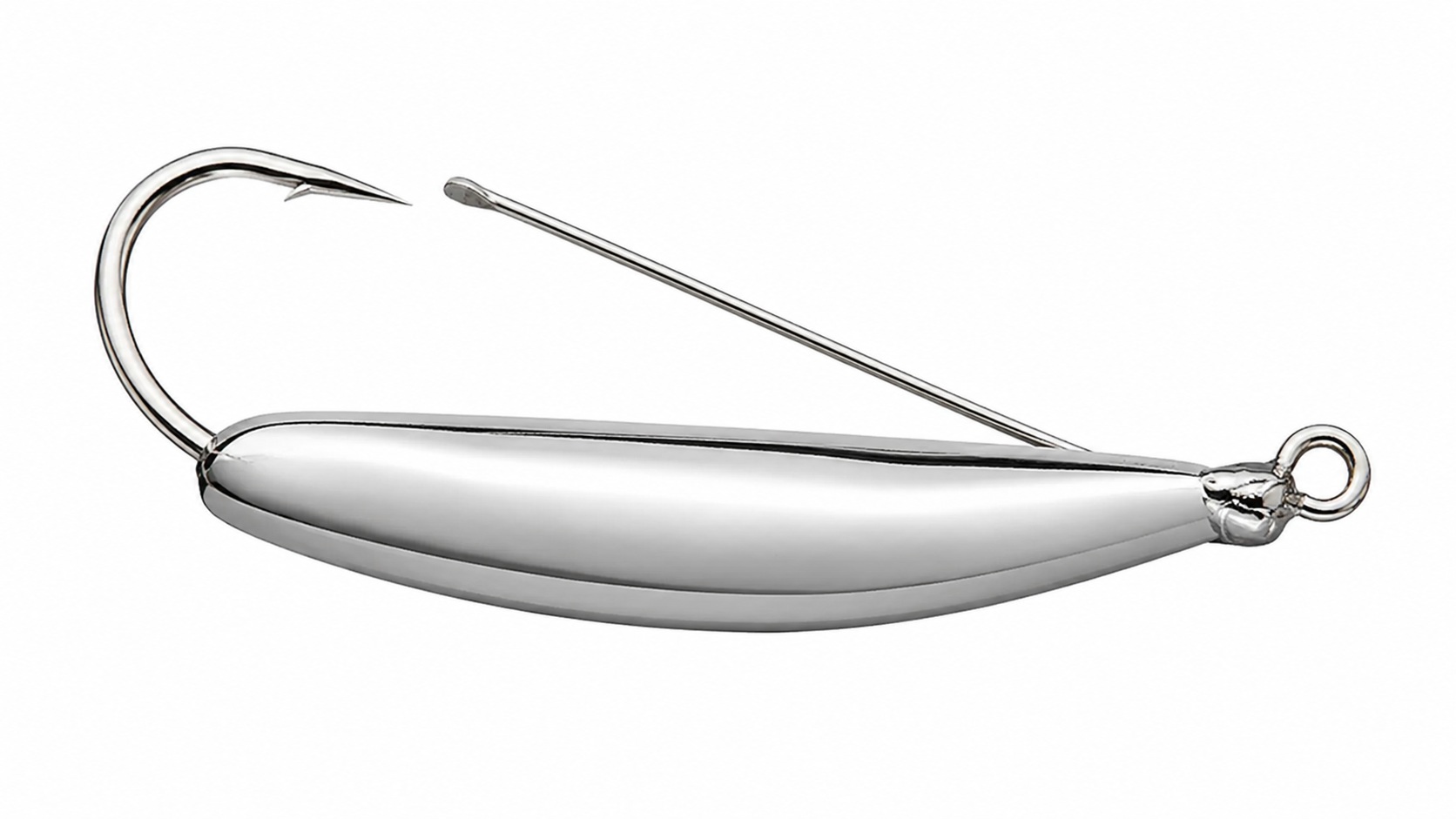
The weedless spoon is one of the oldest, most versatile lures in fishing — a thin, curved piece of metal with a single hook protected by a wire or plastic weed guard. That simple design lets it do something most lures cannot: skate over lily pads, slide through grass mats, and run just above submerged vegetation without fouling. When a fish attacks, the weed guard deflects on the strike and the hook drives home.
Anglers reach for the weedless spoon when fish are holding in the type of vegetation that catches and kills every other presentation. It is a searching lure that covers water quickly, uses flash and wobble to draw fish out of cover, and can be fished from the surface down into two or three feet without changing gear. In freshwater, it is a proven largemouth bass, northern pike, and muskellunge bait. In salt and brackish water — particularly on Florida inshore grass flats — it is one of the primary lures for redfish and common-snook.
The Johnson Silver Minnow is the lure most anglers picture when they hear “weedless spoon.” It has been in production for decades and remains the standard against which other models are measured.
How it’s rigged
The weedless spoon comes ready to fish out of the package. The hook is fixed to the body; there is no additional rigging required to get it in the water. Where anglers customize the presentation is with trailers.
Bucktail trailer: A small white or chartreuse bucktail jig tied directly to the main hook is the classic inshore setup for redfish over grass. The bucktail adds bulk, slows the fall slightly, and mimics a shrimp or small baitfish. It is also the natural choice when mullet or minnow schools are thick — white bucktail on a silver spoon is a convincing match for a fleeing baitfish.
Soft plastic trailer: A curly-tail grub, paddle-tail shad, or soft plastic chunk threaded onto the hook adds action on the fall and gives the spoon more profile. This is particularly effective in freshwater when largemouth bass are holding deeper in the vegetation and you want the bait to flutter down on pauses.
Stinger hook / dropper fly: When fish are short-striking — hitting the trailer but missing the main hook — add a small bucktail jig dropper on a short length of line as a stinger. This is more common in inshore saltwater applications but works anywhere fish are finicky about committing fully to the bait.
How to fish it
The standard retrieve is a steady medium-speed wind that keeps the spoon riding just at the surface or barely subsurface, folding over the tops of grass blades and pads without digging in. The wobbling, flashing action does the work — keep the retrieve consistent and let the lure’s movement attract fish.
Over a grass flat in one to three feet of water, cast to visible current edges, pot holes, or darker patches of bottom (which indicate depth changes or different grass species), and wind the spoon back with a smooth, even retrieve. When the spoon crosses open water between grass patches, slow down briefly and let it flutter — that momentary drop is when many strikes happen.
Over pads or floating mats, use the same mechanics you would with a hollow-body frog: keep the rod tip elevated, maintain steady pressure, and let the spoon slide across the surface rather than punching through gaps. In this presentation the flash is visible to bass holding just below the mat.
When fish are visible but sluggish, kill the retrieve and let the spoon sink on a slack line. The fluttering fall produces reaction strikes from fish that ignored a moving bait.
When to use it
The weedless spoon is a warm-weather lure. It performs best from late spring through early fall when vegetation is at peak growth and fish are actively using it as cover. Water temperatures in the 65—85 degree range are ideal.
In freshwater, target shallow flats two to four feet deep with emergent or submerged vegetation. Post-spawn largemouth bass stack in this type of cover and are aggressive feeders. Early morning and late evening are peak windows, but overcast days produce throughout the day.
In inshore saltwater, fish grass flats at mid to high tide when redfish and snook push up onto the flat to feed. Falling tide concentrates fish at the edges of the flat and at the mouths of drains — cast parallel to grass edges and work the spoon back through the transition zone.
Cold fronts slow weedless spoon fishing considerably. After a hard front, fish pull off the flats into deeper channels and become less willing to chase a moving bait. Wait for stable conditions and warming water to return before going back to the spoon.
Color selection
Color follows a simple rule that holds across both fresh and saltwater.
| Condition | Color |
|---|---|
| Stained water / overcast / low light | Gold |
| Clear water / bright sun | Silver |
| Dingy or muddy water | Chartreuse or white |
| Dark water with heavy tannins | Gold or copper |
Gold produces in low-visibility conditions because it warms and diffuses light rather than reflecting it sharply. Silver excels in clear water and bright sunlight where a hard flash mimics a startled baitfish. Chartreuse and white are useful in very dark or muddy conditions where you need maximum contrast.
Size selection
| Spoon weight | Best applications |
|---|---|
| 1/4 oz | Skinny water (under 18 inches), light grass, finesse inshore |
| 3/8 – 1/2 oz | Standard all-around; most grass flat and shallow lake situations |
| 3/4 – 1 oz | Deeper flats, casting distance, wind, larger species (pike, cobia) |
Heavier spoons cast farther and sink faster, which is useful in wind or when you need to reach fish at the far edge of a flat. Lighter spoons stay high in the water column longer and are better suited for very shallow water where a heavy lure would hang bottom constantly.
Gear setup
The weedless spoon is forgiving on tackle, but a few guidelines keep it fishing efficiently.
- Rod: Medium-heavy to heavy power, fast action; 7 to 7’6” is practical for most situations. In saltwater on a kayak or skiff, a 7’ fast-action medium-heavy spinning rod handles the spoon well and covers both casting distance and hookset power.
- Reel: Baitcaster or spinning, depending on preference. Most inshore anglers use spinning gear in the 3000—4000 size class; freshwater anglers working heavy cover often prefer a baitcaster for the additional torque and control.
- Line: 30—50 lb braided line as mainline, with a 20—30 lb fluorocarbon leader in clear inshore water. Braid provides the casting distance and hookset authority the spoon requires. In heavily stained freshwater where fish are less line-shy, you can skip the leader.
Brands worth knowing
Johnson Silver Minnow is the reference lure for this category. The original design has changed very little over the decades, and for good reason — it works. Available in 1/4, 3/8, 1/2, and 3/4 oz sizes in gold and silver, plus several color variations.
Tony Acetta Pet Spoon is a longtime favorite in inshore circles, particularly for redfish. The Pet Spoon has a slightly different body curve than the Johnson that some anglers feel produces a more erratic wobble in current.
Eppinger Dardevle Weedless brings the classic Dardevle spoon body in a weedless configuration — a solid choice for northern pike and muskellunge applications where durability under repeated attacks matters.
Strike King Sexy Spoon is a modern freshwater-focused entry with a wider body profile that puts out more flash and a stronger thump. It has become a go-to for tournament anglers targeting shallow bass in heavy cover.
Nichols Lures Ben Parker Magnum Spoon is a larger-profile option designed for big-water largemouth and pike fishing, favored when a full-size presentation is needed to draw commitment from fish that have seen smaller lures all season.