A note about links: If we include links to retail sites like Amazon or Bass Pro Shops, it's because they're relevant to the topic and, as anglers ourselves, we believe they're worth checking out. As an Amazon Associate we earn from qualifying purchases.
What it is
The bobber rig is the entry point for almost every angler alive. It is a float clipped or threaded onto your line that suspends your bait at a fixed depth and doubles as a strike indicator — when it dips, you set the hook. That is the whole system, and it works.
Calling it a beginner rig undersells it. The float is doing two jobs simultaneously: it controls depth with precision and it signals strikes you would never feel through the rod on a slack-line presentation. Slip float rigs catch walleye and crappie consistently in 10 to 15 feet of water on professional guide boats. Fixed bobbers catch redfish on live shrimp in shin-deep salt flats. The gear is simple; the application is not.
There are two fundamentally different float designs, and choosing between them shapes every other decision in the rig.
Fixed bobber: The classic round or oval float with spring-loaded clips that attach directly to the line at a set point. Setup takes ten seconds. It works perfectly in shallow water — docks, ponds, creek edges — anywhere you are fishing less than about six feet deep. The limitation is casting: a long, rigid leader between float and hook is awkward to cast and limits you to depths shorter than your rod.
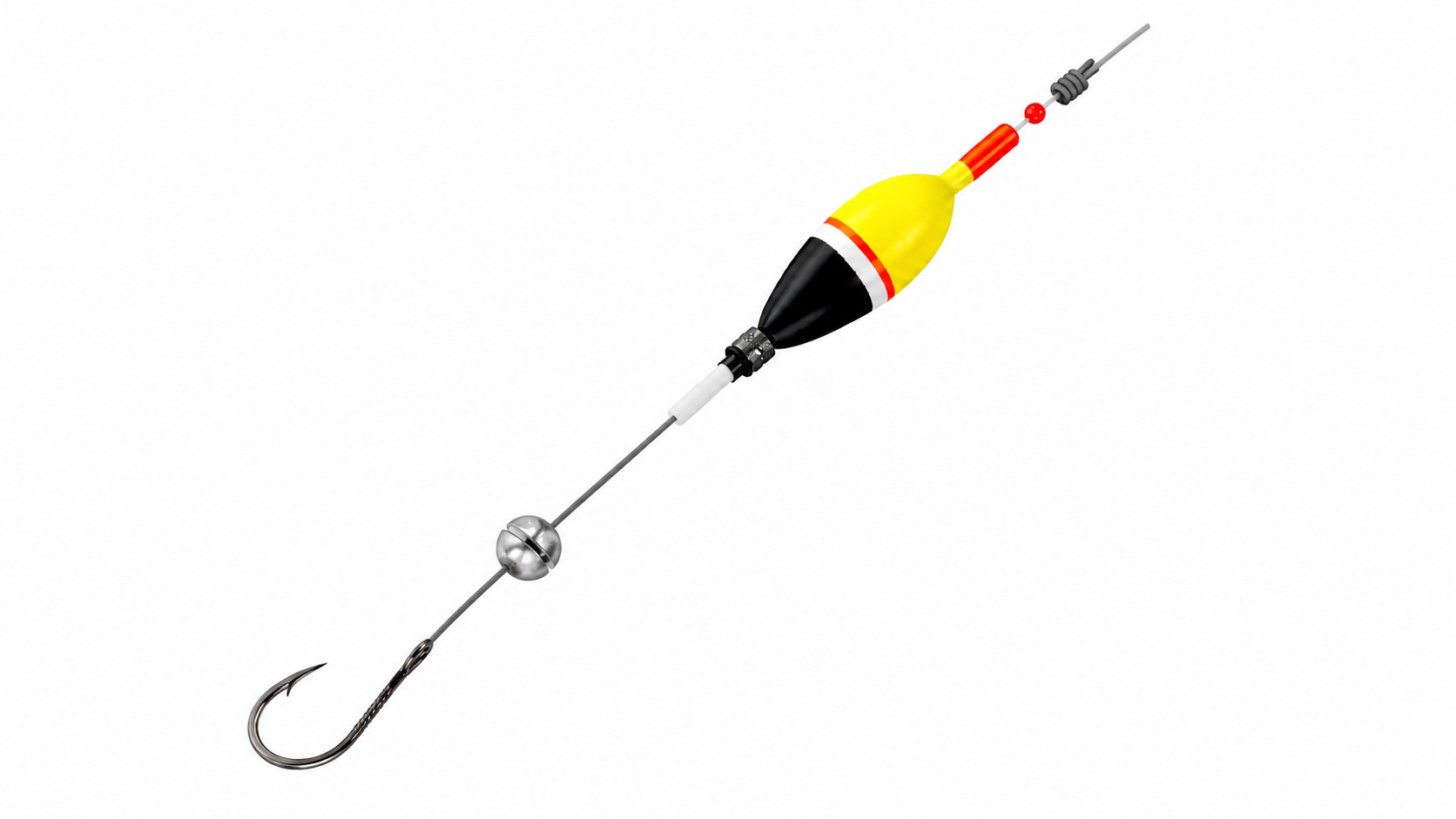
Slip float: A cylindrical or elongated float with a hollow center. The line runs freely through it, and a bobber stop tied above the float sets the depth. When you cast, the rig collapses — hook and weight fly with minimal resistance — and the line pays out through the float until the stop hits and the bait hangs at depth. You can fish 12 feet of water and cast the rig with a spinning rod like any other lure. This is the version serious crappie and walleye anglers use.
How to rig it
Fixed bobber (shallow water):
- Clip the bobber onto your mainline at the depth you want to fish — typically 18 inches to 4 feet above the hook.
- Tie a size 8–10 Aberdeen or baitholder hook to the end of the line using an improved clinch knot.
- Pinch a single small split shot 6–8 inches above the hook to keep the bait down.
- Add live bait.
Slip float rig (deeper water):
- Thread a bobber stop onto your mainline and slide it to the depth you want to fish. Tie it in place — most come pre-tied on a small loop you slide over the line.
- Thread a small plastic bead onto the line below the stop (the bead protects the knot from the float).
- Thread the slip float onto the line.
- Tie a hook directly to the mainline or add 12–18 inches of fluorocarbon leader below the float.
- Pinch a small split shot 6–8 inches above the hook.
The split shot is not optional on either rig. Without it, live bait swims upward and hangs near the float instead of at the target depth.
How to fish it
Cast the rig to your target and let it settle. Once the float goes vertical, your bait is at depth. Now you wait — but not passively. Watch the float constantly.
Strikes show in different ways depending on the species. Bluegill and panfish tap and fidget the float before committing. Crappie often slide up and eat, causing the float to go sideways or lay flat rather than dip. Bass inhale the bait and swim, pulling the float under hard and fast. In salt, a redfish picking up a live shrimp will frequently move the float laterally before taking it down.
In rivers: Do not anchor the float in place. Let it drift naturally downstream with the current, keeping your rod tip upstream to manage slack. Fish in moving water face into the current and hold in seams and slack pockets; a float drifting through those zones at the fish’s eye level is presenting bait exactly as the current would deliver it naturally.
Depth adjustment: If you are not getting bites, move the bobber stop or re-clip the float to change depth in one-foot increments until you find where the fish are holding. Most panfish sit just above the bottom. In summer, crappie suspend mid-column around structure. Adjust until the float starts moving.
When to use it
The bobber rig is most effective when fish are holding at a predictable, consistent depth rather than scattered through the water column. Specific situations where it outperforms other presentations:
Panfish over structure: Bluegill and crappie stacked under a dock, around brush piles, or near submerged timber are nearly always better targeted with a float than with any other method. The presentation is stationary, quiet, and holds at exactly the right depth.
Crappie in deeper water (slip float): In late spring and fall, crappie suspend 8–12 feet deep near timber or channel edges. A slip float with a 1/16 oz jig or small minnow is the single most effective way to reach them without snagging everything around the structure.
Trout in current: Rainbow trout and stocked pan-size trout hold in current seams. Drifting a small piece of nightcrawler or a waxworm under a fixed float through a run covers water and keeps the bait at their feeding depth.
Live shrimp for redfish inshore: In shallow salt flats and estuary grass edges, a live shrimp under a fixed float keeps the bait above the bottom vegetation and in the strike zone. Redfish and spotted seatrout hunting the shallows will eat a shrimp hanging just off the grass line without hesitation.
Winter panfishing: Even in cold water when fish are lethargic, a very small bait hung motionless under a float will draw strikes that a moving lure will not.
Size and bait by species
| Target | Hook | Bait | Depth Below Float |
|---|---|---|---|
| Bluegill / sunfish | #8–10 | Small worm piece, waxworm | 18–24 inches |
| Black crappie | 1/16–1/8 oz jig or #6 hook + minnow | Jig or small shiner | 2–4 feet |
| Largemouth bass | 1/0–2/0 | Whole nightcrawler, small shiner | 2–3 feet |
| Channel catfish | #4–6 | Nightcrawler, cut bait | Near bottom |
| Rainbow trout | #10–12 | Waxworm, single egg, worm piece | 1–3 feet |
| Redfish / seatrout (salt) | 1/0 circle | Live shrimp | 12–24 inches |
Gear setup
Rod: A 6 to 7-foot medium-light spinning rod covers nearly every bobber fishing situation. Longer rods help with reach around structure and give you more control when guiding the float through a drift in current.
Reel: A 2000–2500 size spinning reel. Nothing specialized required. Light drag, smooth bail, and a reasonable line capacity.
Line: 6–10 lb monofilament is traditional and works well — mono floats, which helps keep the float from being pulled sideways by a sinking line. If you use braid as a mainline, add a 24-inch monofilament or fluorocarbon leader below the float to reduce visibility near the hook. Braid also sinks, which can pull the float slightly off plumb.
Terminal: Round split shot in size BB or size 1 for most panfish applications. Larger shot (3/0) for heavier bait in current.
Brands worth knowing
Thill makes the most respected slip floats in North America — their Crappie Cork and Pencil Float series are found in nearly every serious panfish angler’s box. The balsa construction is sensitive enough to register light crappie bites that a cheap plastic float would absorb.
Eagle Claw and Betts produce reliable round clip-on bobbers in every size at low cost, and they are what you will find at any gas station or bait shop near the water — which is part of their value.
Lindy offers quality slip float rigs with pre-tied bobber stops that are especially useful for walleye presentations in deeper water.
For hooks, any sharp Aberdeen or baitholder hook in the right size matters more than the brand name. Check sharpness before you tie it on.