A note about links: If we include links to retail sites like Amazon or Bass Pro Shops, it's because they're relevant to the topic and, as anglers ourselves, we believe they're worth checking out. As an Amazon Associate we earn from qualifying purchases.
What it is
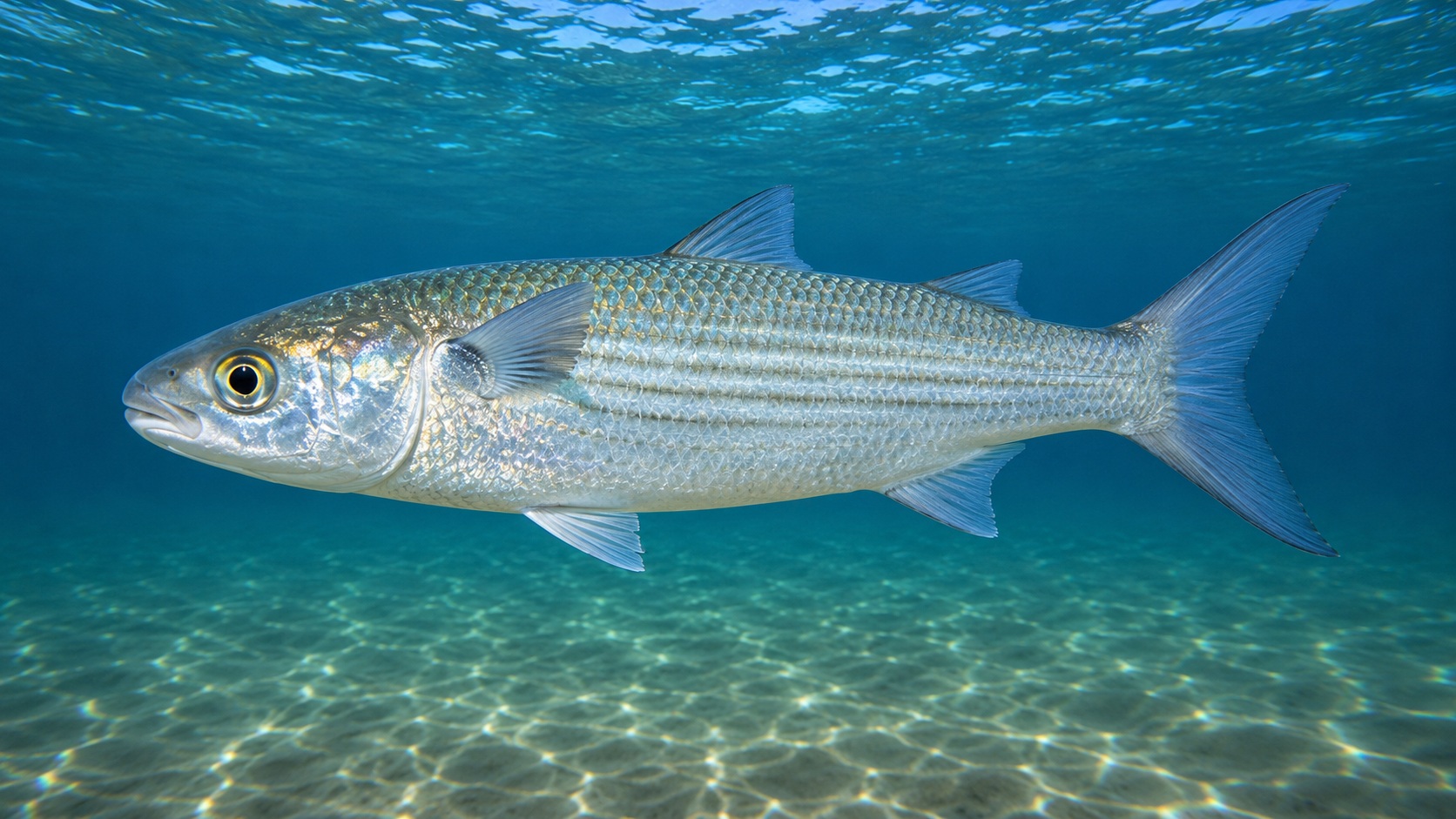
Mullet is one of the great saltwater baits, and the wonderful thing about it is that it works dead or alive. A live finger mullet — a small striped mullet 3 to 5 inches long — is a fluttering, flashing meal that big inshore predators are wired to chase. A chunk of cut mullet sitting on the bottom is a stinky, easy calorie that the same fish cannot ignore. You get two completely different presentations out of one baitfish, and both of them catch fish.
Mullet are the foundation of the inshore food web along the Southeast and Gulf coasts, so when you fish mullet you are matching the hatch in the most literal way possible. Live finger mullet, free-lined or fished under a popping cork, is dynamite on common snook, redfish, spotted seatrout, tarpon, and flounder. Cut mullet chunks on the bottom are a top bait for black drum, bull redfish, and sharks. And frozen mullet is a freezer staple for the days you cannot catch your own. It is a beginner bait in the best sense — the fish do most of the work for you.
How to rig and fish it
How you hook a live mullet decides where it swims, so pick the hook placement to match what you want the bait to do.
Through the lips or nose (for current): Run a circle hook through both lips, entering the bottom and exiting the top just behind the closed mouth and ahead of the eyes. This keeps the mullet streamlined so it swims naturally nose-first into current. It is the go-to for free-lining on the surface and the least harmful way to hook the fish — expect a high hook-up ratio. This is the rig for a free-line drifted to tarpon or snook.
In front of the dorsal (for a free-swimmer): Hook the mullet just above the lateral line and slightly ahead of the back dorsal fin. The fish instinctively swims away from the pinch of the hook, which sends it down and toward the structure where the predators are holding — perfect for fishing a bait near docks, bridges, and oyster bars.
For cut mullet, the principle is to keep the chunk hydrodynamic and the hook point clean. Scale the area where you will set the hook, then bury the point in the upper corner of the chunk so it sits naturally on the bottom. Fish it on a fish-finder rig or a knocker rig so a fish can pick up the bait and move off without feeling the weight — the line slides through the sinker and the fish never gets the warning that makes it drop the bait. A Carolina rig does the same job with a sliding egg sinker above the leader. In all of these, a 2/0 to 6/0 circle hook is the right tool: when the fish loads up, reel down tight and let the hook find the corner of the jaw instead of swinging on it.
When to use it
The fall mullet run is the headline event. Each fall, hundreds of thousands of mullet pour down the beaches and through the inlets of Florida’s east coast and the broader Southeast, and every predator in the system lines up to feed. A live or cut mullet fished in an inlet, along a beach trough, or off a pier during the run will draw snook, bluefish, jack crevalle, redfish, and tarpon. There is no better window to fish mullet.
Moving tides activate inshore fish year-round. Free-line a live finger mullet on an incoming or outgoing tide around grass edges, channel mouths, and oyster bars, and stay ready — the strikes are violent.
Cooler, off-color water favors cut mullet. When the bite slows and sight-fishing fails, a stinky chunk soaking on the bottom pulls fish in by scent from yards away. This is your bull-redfish and big-black-drum approach in deeper holes and the surf.
Forms and keeping it
Live finger mullet are the premium form. Catch them yourself with a cast net over a sandy flat or a creek mouth on a falling tide — mullet flick at the surface and give themselves away. Keep them alive in a round, aerated bait bucket or livewell; mullet burn oxygen fast and bruise against square corners, so a round well and a running aerator make the difference between lively bait at noon and a bucket of floaters. Change or refresh the water if it warms up.
Cut chunks are the simplest form to fish. Take a slim 8 to 9 inch mullet, scale it so the hook seats cleanly, then cut it across the body into roughly 1.5 inch chunks. Smaller mullet can be halved or fished whole; cut a bigger one into thirds, hooking the head section through the lips and the tail section through the cut end. A belly slit on the chunk releases extra scent. Bigger chunks also keep pinfish and catfish from stealing your bait — they simply cannot fit it. Cut fresh chunks as you go; fresher meat catches more.
Frozen mullet is the backup. It is convenient and always available at the tackle shop, but freezing breaks down the flesh, so thawed mullet turns soft and tears off the hook more easily. Use it for soaking cut bait on the bottom rather than anything that needs to look alive, and fish a fresh-caught or brined mullet whenever you can get one.
Gear and sourcing
A cast net is the single best investment for fishing mullet — catching your own live bait costs nothing and out-fishes anything from the store. A cast net in 3/8-inch mesh and a 6 to 8 foot radius is a versatile starting size for finger mullet.
A sharp bait knife makes clean chunks and steaks; a dull blade crushes the meat and dulls the scent trail.
For the hook, a box of circle hooks in 2/0 through 6/0 covers everything from school reds to tarpon, and circle hooks pin fish in the jaw for a cleaner, healthier release.
Finally, an aerated bait bucket — round, not square — keeps your finger mullet frisky all day, which is the whole point of fishing them live.