A note about links: If we include links to retail sites like Amazon or Bass Pro Shops, it's because they're relevant to the topic and, as anglers ourselves, we believe they're worth checking out. As an Amazon Associate we earn from qualifying purchases.
What it is
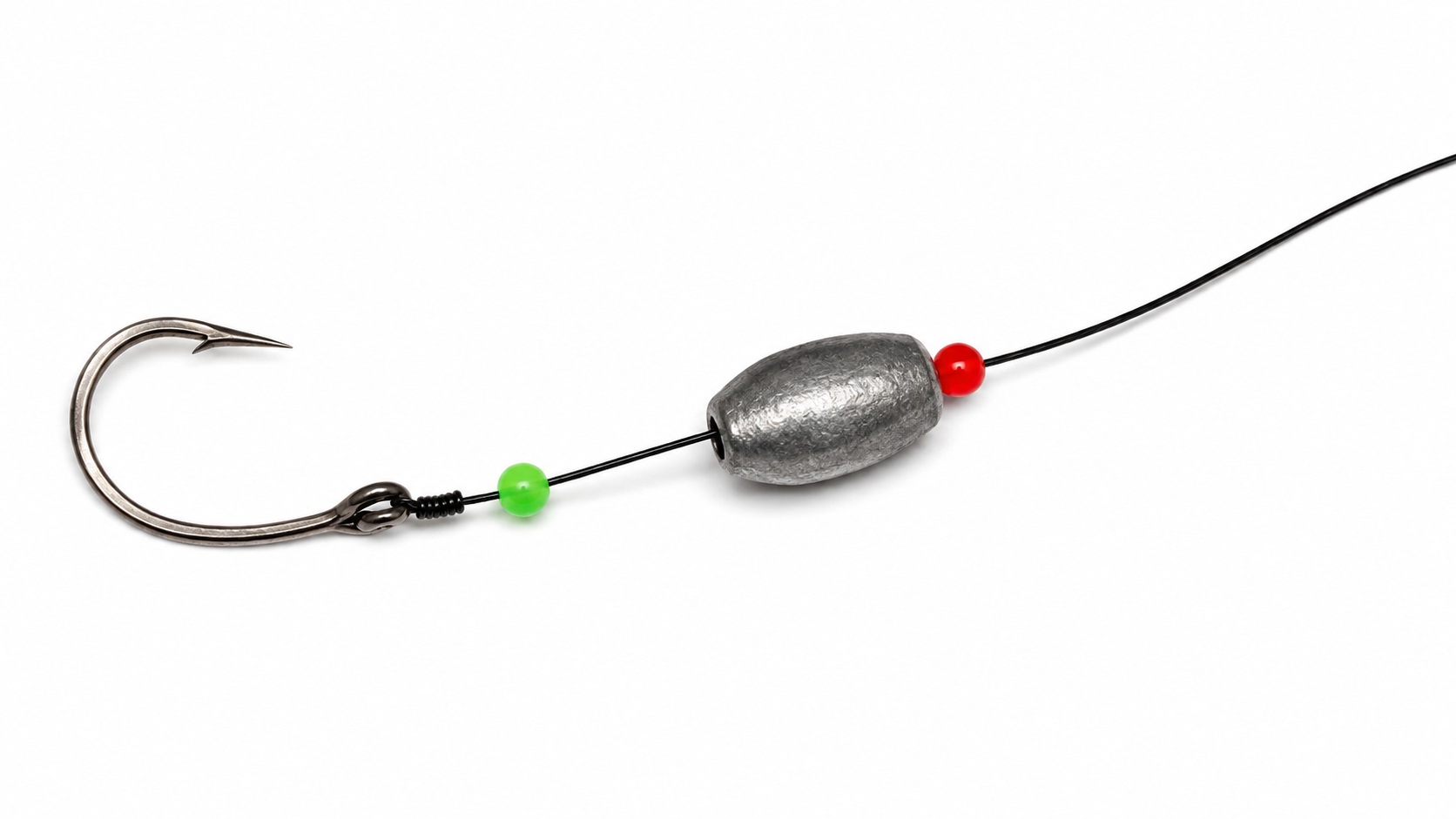
The knocker rig is a simple, no-nonsense structure rig built for one purpose: getting your bait right against vertical cover and keeping it there. The defining feature is the egg sinker position — instead of sitting up the line with a leader separating it from the hook, the sinker slides all the way down to rest directly against the hook eye. There is no gap, no leader, no offset.
That contact point is what makes the rig work. When you lower it down a piling or bridge column, the sinker and hook drop together as a unit. The bait stays pinned tight to the structure at whatever depth you set it, rather than swinging out on a leader and hanging in open water. It is also inherently snag-resistant because the sinker leads the way and deflects off barnacles and concrete rather than catching on them.
Anglers reach for the knocker rig when they are fishing sheepshead, mangrove snapper, black drum, or redfish holding against hard structure. It works from piers, jetties, bridges, and rocky shorelines anywhere in the Southeast and Gulf Coast where fish have cover to hide against.
How to rig it
The setup takes about two minutes and uses components you can find at any tackle shop.
- Thread an egg sinker onto your main line. Use 1/2 oz in shallow water (under 10 feet) or calm current, and step up to 1–2 oz in deeper water or stronger tidal flow.
- Tie your hook directly to the main line using a Palomar knot or an improved clinch knot. No leader, no swivel. The sinker rests against the hook eye when everything hangs vertical.
- That is the entire rig.
Hook size matters more here than in most rigs because you are targeting fish with very different mouths. For sheepshead and mangrove snapper, use a size #1 straight-shank or octopus hook. Their mouths are small and they are skilled at stripping bait, so a compact hook with a sharp point is the right tool. For black drum and larger targets, step up to a circle hook in the 1/0 to 2/0 range.
Keep extra hooks and sinkers pre-rigged in a small box. Structure fishing chews through terminal tackle.
How to fish it
Lower the rig straight down alongside the piling or column, or cast directly to the base of the structure and let it sink vertically. Once it settles, position your bait 5 to 10 feet off the bottom — not on the bottom. Sheepshead, snapper, and drum hold mid-water against structure, especially at tide changes. Sitting dead on the sand usually produces nothing.
Hold the rod with light tension and pay attention. Sheepshead in particular are notorious bait thieves. They can strip a fiddler crab clean off a hook without telegraphing anything obvious to the rod tip. Watch for any slight load, tick, or loss of tension and set the hook immediately. Do not wait for a traditional thump. With circle hooks for drum, let the fish load up and sweep the rod to the side rather than snapping it upward.
One technique that consistently produces fish: before you drop your first bait, scrape barnacles off the piling with a knife or hook. The shell fragments fall into the water column and act as a chum slick, drawing sheepshead and snapper up from the base of the structure toward your bait depth.
When to use it
The knocker rig fishes year-round in the Southeast and Gulf Coast because the fish it targets live on structure in all seasons. Sheepshead are particularly active in winter and early spring when they stage at bridges and jetties ahead of their spawn. Mangrove snapper hold at structure through summer. Black drum move into estuaries and inshore structure in the fall and winter months.
Tidal movement matters more than season. The hour before and after a tide change is almost always the most productive window at any structure. Fish use the current to push bait against pilings and rocks, and they position themselves to intercept it without burning extra energy.
The knocker rig also outperforms a carolina rig at vertical structure for one straightforward reason: a carolina rig uses a leader between the sinker and hook, which causes the bait to angle out from the piling or swing away in current. The knocker keeps the bait locked right at the face of the structure where the fish are stationed.
Size and weight selection
| Conditions | Sinker Weight | Hook Size |
|---|---|---|
| Shallow (under 10 ft), calm water | 1/2 oz | #1 straight-shank |
| Medium depth or light current | 3/4–1 oz | #1 or 1/0 circle |
| Deep water or strong tidal current | 1 1/2–2 oz | 1/0–2/0 circle |
Fiddler crabs are the top bait for sheepshead — hook them through the carapace from underneath so the legs remain free to move. Shrimp pieces and sand fleas work well for the full range of species.
Gear setup
A medium or medium-light spinning rod in the 7-foot range is the right choice for most knocker rig applications. You want enough sensitivity to detect a sheepshead’s subtle pick-up and enough backbone to swing the rod into a hook set against a fish holding against hard structure.
Spool with 20–30 lb braided line as your main line. Braid transmits the subtle pressure changes that signal a sheepshead is working your bait, which monofilament tends to absorb. Use 2500 to 3000 series spinning reels for most inshore structure work. If you are fishing from a pier or bridge in heavier current, step up to a 4000 series with more drag capacity for black drum and larger snapper.
No fluorocarbon leader is needed. The knocker rig fishes the main line directly to the hook, which keeps the presentation simple and the hardware minimal.
Brands worth knowing
For hooks, Gamakatsu’s octopus series in size #1 and #2 is a consistent performer for sheepshead and snapper. Owner’s straight-shank live bait hooks hold up well in salt and stay sharp after contact with barnacles and concrete. Eagle Claw circle hooks in the 1/0–2/0 range are widely available at pier shops and hardware stores along the coast, which matters when you are burning through terminal tackle at a productive bridge.
Egg sinkers for this rig are largely generic — any lead or tungsten egg in the right weight range works. Tungsten is denser so a 1 oz tungsten sinker is physically smaller than its lead equivalent, which can reduce snags slightly in tight structure. For most anglers fishing from shore or a pier, standard lead egg sinkers are fine and easy to replace.