A note about links: If we include links to retail sites like Amazon or Bass Pro Shops, it's because they're relevant to the topic and, as anglers ourselves, we believe they're worth checking out. As an Amazon Associate we earn from qualifying purchases.
What it is
Cut bait is exactly what it sounds like — pieces of fresh fish, cut into chunks, steaks, or strips, fished on the bottom for predators that hunt by smell. There is no built-in action here, and that is the point. A bucktail or a jig works because it moves; cut bait works because it bleeds. Every minute it sits on the bottom, a chunk of oily fish leaks scent and blood into the water, laying down a trail that a feeding fish follows straight to your hook.
That makes cut bait one of the most beginner-friendly baits there is. You do not have to work it, twitch it, or read a strike on the fall. You cast it out, set the rod in a holder, and wait for a fish to find the scent. What it asks of you instead is good bait and a smart bottom rig — and the willingness to cut fresh fish rather than reach for the freezer.
The fish that respond to it are the bottom-feeding, scent-tracking crowd. Channel catfish and hardhead catfish, redfish and black drum, bluefish, southern kingfish (whiting), sheepshead, and even spanish mackerel will all hunt down a piece of cut fish on the bottom. From a freshwater river to the open surf, the principle never changes: pick an oily fish, cut it fresh, and let the scent do the work.
How to rig and fish it
The key to cut bait is the right rig and an exposed hook point. You want a bottom rig that lets a fish pick the bait up and move off without feeling resistance, because a scent-feeder that feels a heavy weight will often drop the bait and leave.
For the surf and inshore bottom, the fish-finder rig is the standard — a sliding sinker on the mainline above a swivel, with 20 to 30 inches of leader and a single hook. The fish pulls line freely through the sliding weight and never feels the sinker. The knocker rig, where the weight rides right down against the hook, shines around rock and structure where you need to feel the bottom and pull fish up fast. The pompano rig — a multi-drop leader — lets you fan small strips across the surf for whiting, pompano, and black drum. In freshwater for catfish, the same sliding-sinker idea is just a carolina rig scaled up with cut shad.
Run a circle hook in the 2/0 to 8/0 range, sized to the bait and the fish. Hook the chunk once, through the skin, leaving the point fully exposed — scales and meat over the point cost you hooksets. With a circle hook, do not swing on the bite. When the rod loads up, reel down tight and let the hook slide to the corner of the jaw.
A bigger chunk on a bigger hook also screens out junk. A 3 to 4 inch piece of mullet on a 5/0 is too much for a small hardhead catfish to swallow but perfect for a slot redfish.
When to use it
Cut bait earns its keep any time fish are feeding on the bottom by scent rather than chasing bait by sight — which is most of the year, in most water. It is a four-season bait.
It is the first thing to reach for in dirty or stained water, after a rain or a blow, when fish cannot see a lure but can still smell a bleeding chunk from across a flat. It is the surf angler’s standby for bull redfish, black drum, and bluefish on a moving tide. And it is the freshwater catfish staple year-round, especially in rivers where current spreads the scent downstream to waiting fish. When the water is cold and fish are sluggish, a motionless, high-scent bait often out-fishes anything you have to work.
Forms and keeping it
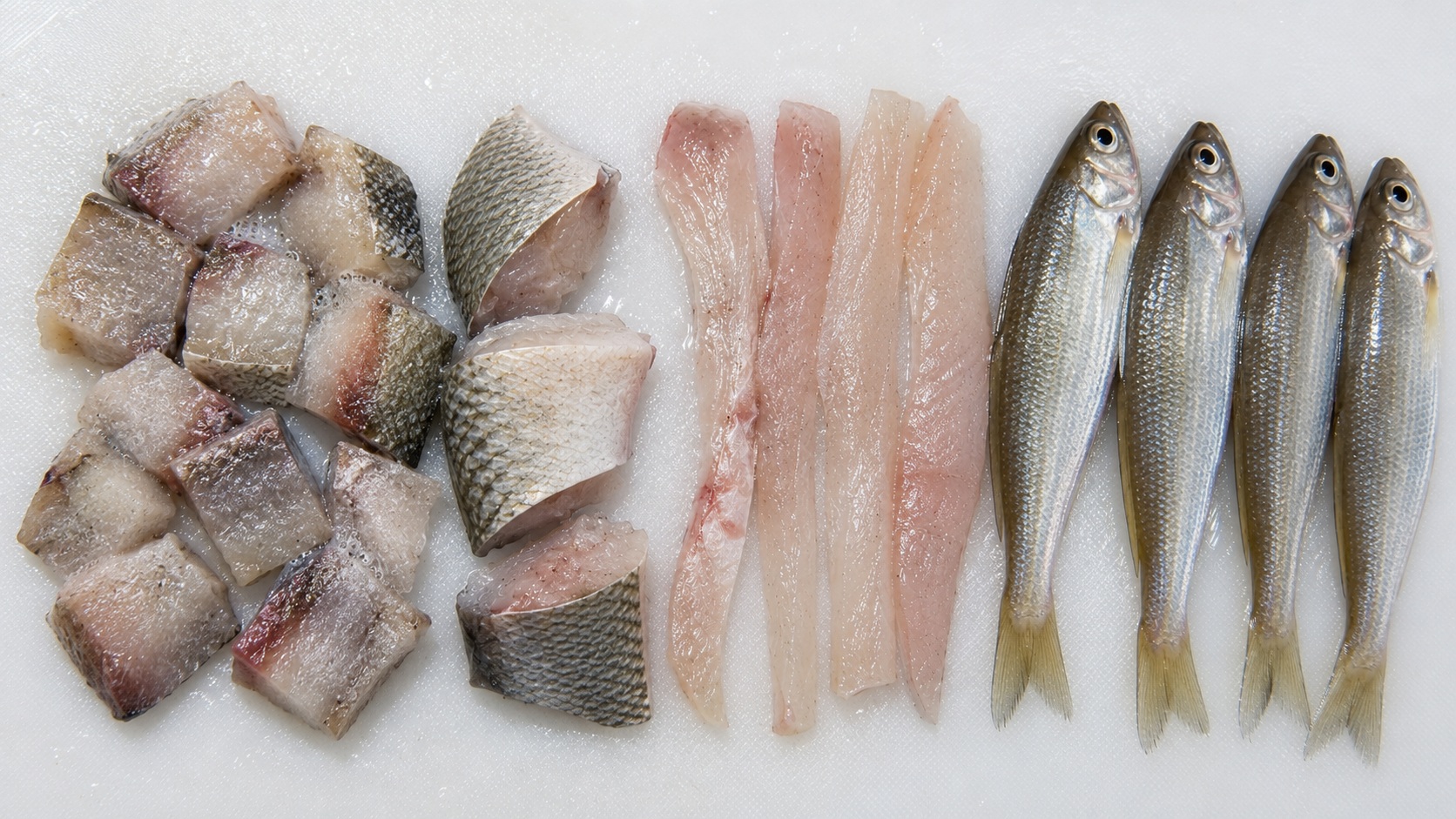
You can present cut bait three ways. Chunks are blocky pieces cut across the body — the workhorse for redfish, drum, and catfish, with plenty of blood and skin to hold the hook. Steaks are cross-sections cut through a larger fish, bone and all, for big drum and sharks. Fillet strips are tapered cuts of skin-on flesh that flutter slightly in current — the choice for whiting, pompano, and spanish mackerel, and ideal on a pompano rig.
Whichever you cut, leave the skin on. The skin is what keeps a soft chunk pinned to the hook through casts and current; without it, the meat washes off in minutes.
Choose oily, strong-smelling fish, because oil is scent. In salt and brackish water, mullet, menhaden (bunker), and ballyhoo are the classics, with ladyfish a deadly bonus when you have it. For freshwater catfish, cut shad, skipjack herring, and bluegill lead the list — but only use bluegill or other panfish where your state’s regulations allow it; check the rules before you cut one up.
Fresh almost always beats frozen. Fresh-cut bait is firmer, bleeds more, and puts off a cleaner, more natural scent that draws gamefish; old frozen bait tends to go mushy and pull in junk fish. If you must store bait, brining it — layering with salt and ice — keeps it tougher and on the hook better than freezing, which turns mullet to mush on the thaw. The best bait of all is the one you caught with a cast net an hour ago.
Gear and sourcing
You do not need much, but a few tools make cutting bait faster and cleaner.
- A sharp fillet/bait knife is the one essential — a dull blade tears bait instead of cutting it.
- A fish cutting board with clamp holds a slippery baitfish steady so you keep your fingers and cut even chunks.
- A pack of circle hooks in 2/0 through 8/0 covers everything from whiting strips to bull-red chunks.
- A cast net lets you catch your own fresh mullet and menhaden, which is always better than anything you buy.
- A simple bait cooler with ice and a bag of salt keeps your cut bait fresh and firm through a long session on the beach.