A note about links: If we include links to retail sites like Amazon or Bass Pro Shops, it's because they're relevant to the topic and, as anglers ourselves, we believe they're worth checking out. As an Amazon Associate we earn from qualifying purchases.
What it is
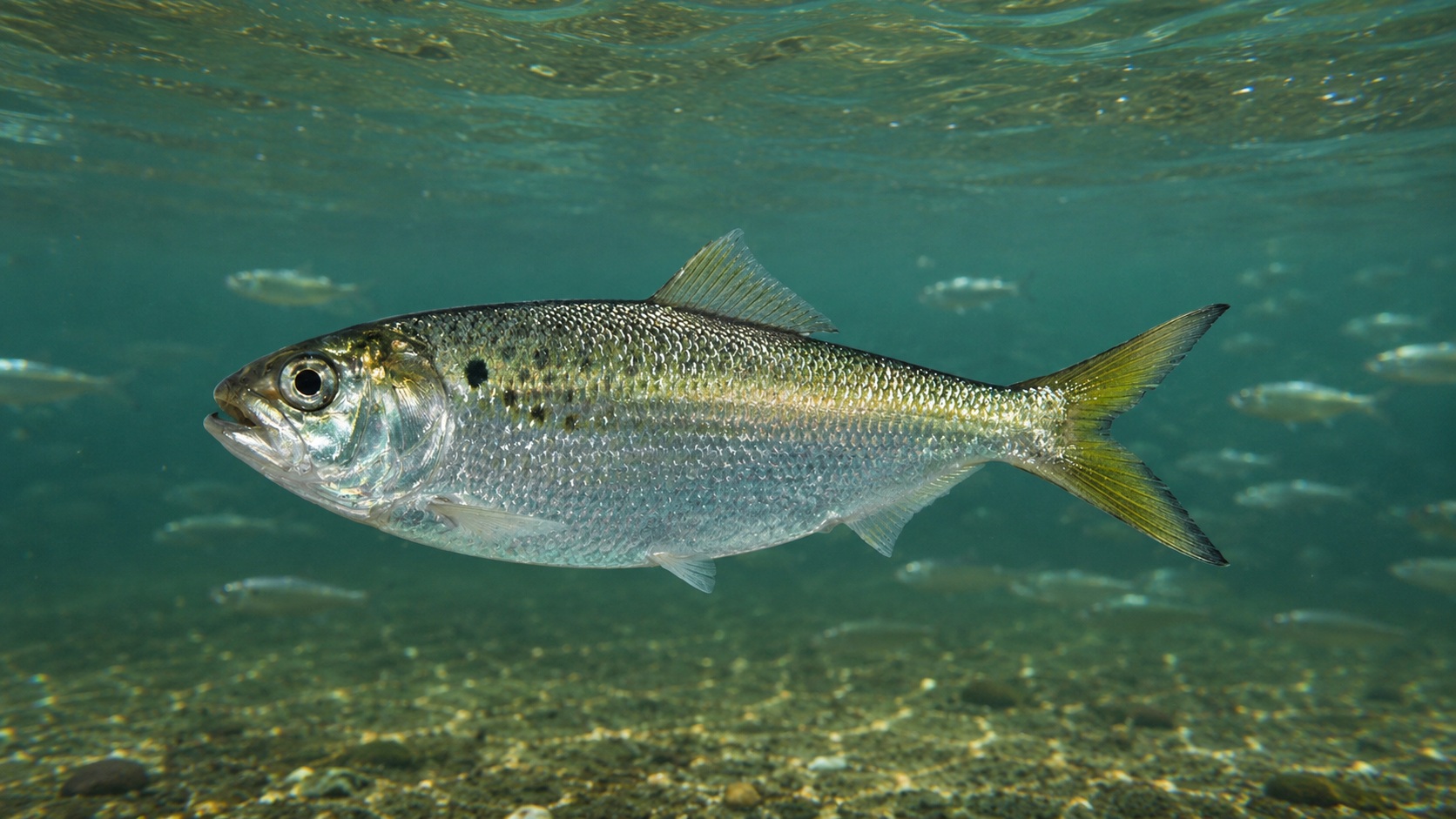
Bunker — Atlantic menhaden, called pogies in the South and mossbunker up North — is the single most important baitfish on the East Coast, and for trophy striped bass and bluefish it is hard to beat. It is a flat, silver, deep-bodied fish loaded with oil, and that oil is the whole point. A wounded or cut bunker leaks a greasy, fishy slick that drifts down-current and pulls predators in from a surprising distance. You are not just offering a meal — you are ringing a dinner bell.
When you find big bass and blues feeding heavily, they are very often feeding on bunker. Match the hatch and you put the odds in your favor. Down South, the same fish (sold and netted as pogies) does the same job for redfish, black drum, and cobia. There is a reason guides up and down the coast build whole trips around it.
You will fish bunker three ways: alive, as fresh chunks, and from frozen. Each has its moment.
How to rig and fish it
Live-lining a snagged bunker. This is the trophy-hunter’s move. First you find the school — look for nervous water, flipping fish, and dark patches on your sonar — then you snag one. Cast a weighted treble past the school and rip it back through with sharp sweeps of the rod until you feel it stick a fish (this is the “snag and drop”). Pull that bait in, transfer it to a circle hook through the nose or just ahead of the tail, and send it back out to swim freely. When a bass eats, do not swing — just lean into it and let the circle hook slide to the corner of the jaw. The Fisherman recommends waiting five to seven seconds before you come tight so the hook can find its hold.
Note one rule: in several states (New Jersey among them) you may snag bunker with a treble, but you must move it to a circle hook before targeting striped bass — live-lining straight off the snag is no longer legal. Check your state regs.
Chunking on the bottom. Cut a fresh bunker into pieces and soak them on a fish-finder rig — a sliding sinker on the mainline, a bead, a barrel swivel, then an 18 to 36 inch leader to a 6/0 to 8/0 circle hook. The sliding weight lets a bass pick up the chunk and move off without feeling resistance. For close-in structure where you want the bait pinned near the rocks, a knocker rig (sinker riding right down to the hook) keeps things tight. A scaled-up carolina rig works on the same sliding-sinker principle. Refresh your chunks every 15 to 20 minutes to keep the scent trail flowing.
Free-lining. When fish are up high in calm water or close to the boat, skip the weight entirely. Hook a live bunker on a bare circle hook and let it swim on a free-line rig — nothing looks more natural than an unweighted bait.
When to use it
Bunker shines spring through fall, whenever the schools are around. The spring run as bass move up the coast and the fall mullet-and-bunker blitz are the two peak windows — when big bunker schools get pushed against a beach or into an inlet, the bass and blues are right under them. Fish a moving tide near structure: inlet mouths, rips, bridge shadows, and bars where current sweeps bait. The head, with all its oil and organs, is the prized chunk — save it for your best rod. In the heat of summer, live-lining a frisky bunker at first light often out-fishes everything else.
Forms and keeping it
Live (snagged or netted). Snagging needs no net and little skill, but snagged baits bruise and bleed, so they tire faster — fish them sooner. A cast net gives you livelier, longer-lasting bait if you can throw one. Either way, keep them in a big round livewell with strong aeration; bunker are oxygen hogs and crowding kills them quickly.
Fresh chunk. A bunker on ice the day you catch it is gold — firm flesh, full oil, strong scent. Cut it into head, shoulder, body slabs, and belly strips. The head and shoulder hold the most oil and out-fish the tail pieces, which are best used as chum.
Frozen. When you can’t get fresh, frozen bunker still works — it is softer and bleeds out faster, so re-bait more often and pin it well on the hook. To stock your own, snag or cast-net a load in season, bag them in meal-size portions, and freeze flat. Thaw only what you’ll fish that trip; re-frozen bunker turns to mush.
Gear and sourcing
You catch your own bunker, so the “bait” cost is your hooks and a net.
- Weighted treble snag hooks — a 7/0 to 10/0 weighted treble is the standard tool for snagging bunker out of a school.
- Circle hooks — 6/0 to 10/0 inline circles are the right (and often legally required) choice for live bait and chunks; they hook the jaw corner and make release clean.
- Bait knife — a sharp, flexible blade makes quick, clean chunks and keeps the oil where you want it.
- Cast net — a 6 to 10 foot net loads your well with lively bait faster and gentler than snagging.
- Bunker snag rig leader — 40 to 60 lb fluorocarbon stands up to the abrasion of bass, blues, and structure.