A note about links: If we include links to retail sites like Amazon or Bass Pro Shops, it's because they're relevant to the topic and, as anglers ourselves, we believe they're worth checking out. As an Amazon Associate we earn from qualifying purchases.
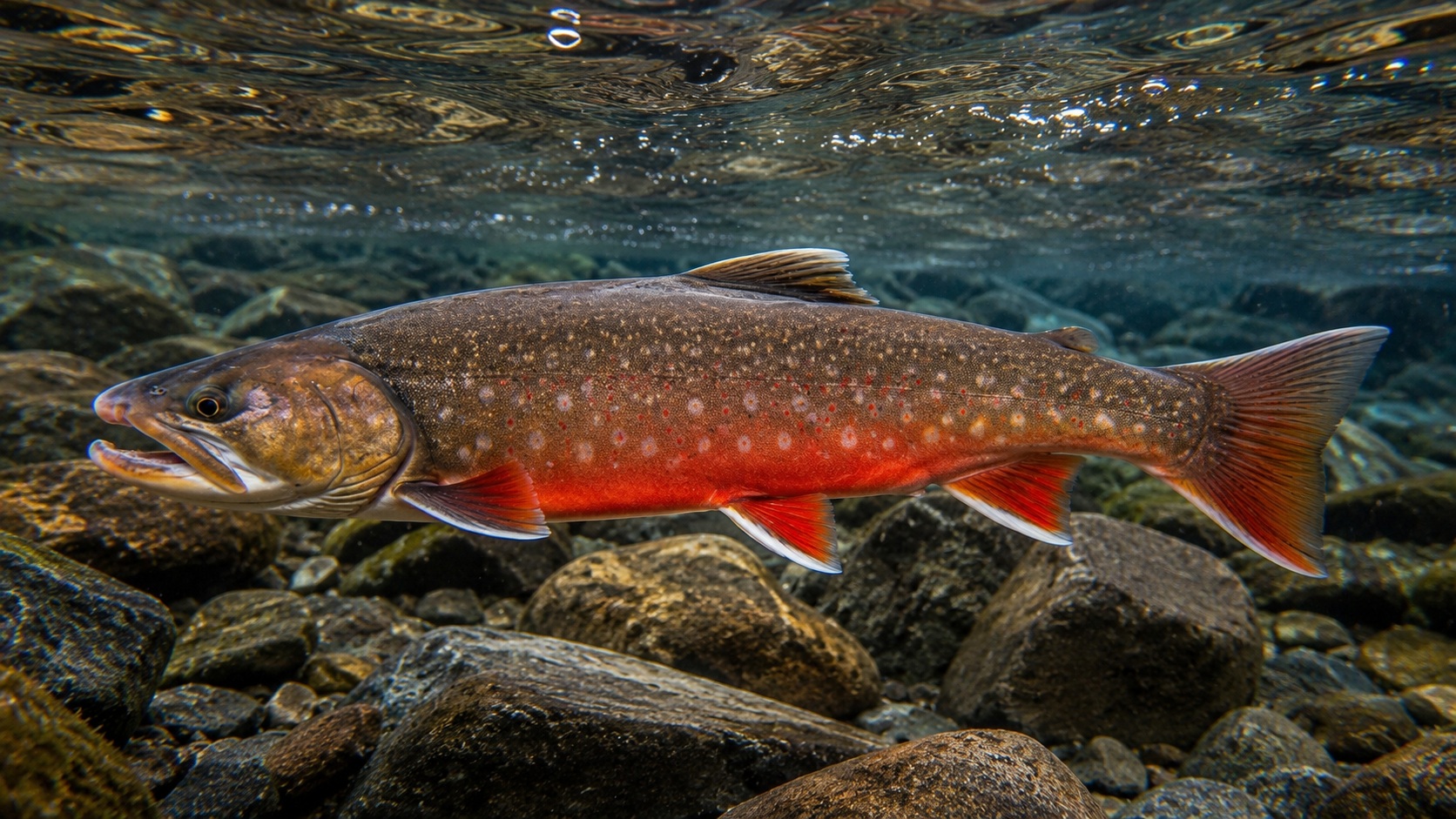
Few fish reward the effort of getting there the way Arctic char do. You board a float plane in Yellowknife or Iqaluit, land on a gravel strip beside a river nobody outside your outfitter has ever fished, and within an hour you are pulling 12-pound silver-and-pink char from a pool that has no road access and no cell signal. Sea-run fish arrive in July still carrying the chrome flash of the ocean, stacked at river mouths and surging upriver with the aggression of fresh-run salmon. By September the same fish have transformed into something almost unreal, males burning orange-red from jaw to tail, the most vivid color in all of freshwater. This is destination fishing at the edge of the map, and anglers who make the trip once tend to start planning the next one before they are home.
How to identify one
Arctic char belong to the char branch of the salmon family, sharing the genus Salvelinus with brook trout and lake trout. Sea-run fish are silver-sided with pale pink or cream spots on their flanks, the overall impression being of a bright, athletic fish somewhere between a large brook trout and a small Atlantic salmon. As fall approaches and fish move into spawning mode, males flush deep orange to crimson on the belly and sides, develop a hooked lower jaw called a kype, and become almost unrecognizable compared to their summer silver form. Landlocked populations are generally smaller and more subdued in color but follow the same basic pattern. The spots are always light-colored on a darker background, which distinguishes them from brown trout, which carry dark spots on a lighter field.
Where to find them
The Tree River in the Northwest Territories is the benchmark address for trophy Arctic char. The world record came from here, and the river still produces fish over 20 pounds every season. Nearby, the Coppermine River offers numbers rather than the same trophy potential, with anglers regularly encountering 50-fish days during peak run timing. In Nunavut, the Armshow River near Iqaluit and the rivers flowing into Kugaaruk are accessible through fly-in camps and produce consistent action for sea-run fish. Quebec’s Payne River, draining north into Ungava Bay, hosts organized camps that have introduced many anglers to their first Arctic char.
In Alaska, landlocked populations are the rule rather than the exception. Bristol Bay drainages and lakes in the Brooks Range hold the largest specimens, with some Bristol Bay lakes producing char to 15 pounds. The Noatak River in northwest Alaska carries sea-run fish, and the state record exceeded 19 pounds. Hatchery-stocked char are available in several Southcentral Alaska lakes near Anchorage, giving anglers a manageable introduction to the species before committing to a remote trip.
Iceland deserves its own mention. Practically every lake and river on the island holds char, accommodations are comfortable by any standard, and fishing is affordable compared to northern Canadian lodge packages. Icelandic char average smaller than their Canadian counterparts, but the accessibility and scenery make it a compelling option for anglers new to the species.
When to go
Sea-run fish arrive at river mouths in mid-June and push upriver through July. This early window is the most productive for numbers: fresh fish are aggressive, they have not seen many flies, and the runs are dense at predictable holding lies. The first three weeks of a river’s run often produce the best catch rates of the season.
August marks a transition. Fish that have been in fresh water for several weeks begin to show spawning color and become less aggressive toward large attractor patterns. Presentation and fly selection become more important. By September the fish are in full spawning dress and the rivers are at their most visually spectacular, but landing fish requires more patience and a switch toward smaller, more natural imitations. In Alaska, Bristol Bay char fishing is best from late May through early July when fish are feeding heavily on out-migrating salmon smolts.
Ice fishing for landlocked Arctic char is a legitimate and productive pursuit in Alaska and northern Canada. Char are active under ice unlike many species, and jigging through the ice over deep lake basins in late winter targets fish that have concentrated in the deepest, coldest water. Check local regulations carefully, as some Alaskan lake populations that support ice fisheries have conservative bag limits.
What to throw
For sea-run char on the fly, a 9-foot 8-weight rod is the workhorse setup. Rig it with a sinking-tip shooting head in the 200-300 grain range and a 6-8 foot leader of 15-pound fluorocarbon. During the early run, bright colors dominate: orange, red, pink, and chartreuse Woolly Buggers, Zonkers, Salmon Popsicles, and Squidro-style patterns in sizes 2 through 2/0. Swing these across current and strip them back with short, erratic pulses. As fish transition into spawning mode through August, tone down to whites, blacks, olives, and brown Zonkers or Intruder-style patterns, slowing the presentation and mending upstream to let the fly hang in the current.
Late-season fish that have become neutral to swung flies will often take egg patterns dead-drifted under a strike indicator or suspended below a foam hopper in a hopper-dropper rig. Orange and pink beads in sizes 8mm-10mm are effective for sight-fishing to visible char in clear low water. Two-handed Spey rods in 12-14 foot lengths are increasingly popular at rivers like Tree River for the line control they provide in variable currents.
For spinning gear, spoons in orange, silver, and gold in the half-ounce to one-ounce range cover most situations. Spinners and small swimbait-style lures work well in lakes and at river mouths. Use 10-15 pound monofilament or fluorocarbon on a medium-action rod. For ice fishing, small tungsten jigs in bright colors worked slowly over deep basins are the standard approach, with a gentle lift-drop cadence rather than aggressive jigging.
Regulations
Arctic char regulations vary significantly by jurisdiction, and regulations in remote northern areas are not always intuitive. Checking the specific rules for your destination before travel is essential.
Alaska: In most areas where Arctic char are present, the sport fishing daily bag limit is 2 fish per day. Because char in Alaska are lake-dwelling, slow-growing fish that can take 6-9 years to reach maturity, the Alaska Department of Fish and Game manages them conservatively. Some Bristol Bay lakes and Kenai Peninsula waters have more liberal limits, but always verify current rules in the Alaska Sport Fishing Regulations before your trip. The Alaska Department of Fish and Game publishes regulations by region at adfg.alaska.gov.
Labrador: The daily bag limit for Arctic char in Labrador is 2 fish, with a possession limit of 4 fish. A valid Newfoundland and Labrador angling license is required.
Nunavut and Northwest Territories: Regulations in these territories are area-specific and can change. The Tree River fishery and other prime NWT and Nunavut waters are typically accessed through licensed outfitters who operate under specific terms and conditions as part of their permits. Most reputable lodges practice catch-and-release for large fish and will brief arriving guests on current rules. The Department of Fisheries and Oceans Canada (DFO) is the governing authority; consult dfo-mpo.gc.ca for current Nunavut Fishery Regulations before booking.
Iceland and Norway: Char fishing in Iceland is managed by individual landowners and river associations; a rod permit from the specific water is required in addition to a national fishing card. Norwegian regulations vary by river and require a national fishing license plus a local fee.
Across all jurisdictions, barbless or single barbless hooks are either required or strongly encouraged for char waters. Many lodges and guides operate under mandatory catch-and-release conditions for fish above a certain size.
Handling and release
Arctic char are hardy fish by salmonid standards, but water temperatures in their home rivers are cold enough that fish can be held for a brief photo without the critical urgency that applies to species like steelhead in warm summer rivers. Keep the fish submerged until your camera is ready, lift it horizontally with both hands supporting the belly, and return it to the current within 15-20 seconds. Avoid squeezing the fish around the mid-section or letting it thrash on a dry surface. Sea-run char in full spawning color are especially valuable to the river’s reproductive success; a quick release of a spawning fish is worth far more than a grip-and-grin photo that stresses it for minutes. Wet your hands before handling to protect the slime coat, and if a fish is exhausted, hold it upright in a gentle current until it kicks free on its own.
On the Table
Arctic char ranks among the finest eating fish in cold freshwater, prized by anglers across the Arctic and sub-Arctic for its rich, buttery flesh and exceptional flavor. It is actively sought for the table wherever it is found.
Taste and texture: Arctic char has pink-to-deep-red flesh — closer to salmon than trout in color, though the hue varies with diet and population. The flavor is rich and slightly sweet, less assertive than salmon but more complex than rainbow trout, with a clean finish and no muddiness. The texture is moderately firm and flaky with a high fat content that keeps it moist through a range of cooking methods.
Best preparation methods:
- Pan-searing: The high fat content means char self-bastes during a hot sear, producing crispy skin and moist flesh without added oil. Finish flesh-side down briefly to avoid drying it out.
- Smoking: Cold- or hot-smoking suits char extremely well. The fat absorbs smoke evenly, and the result rivals smoked salmon in richness. Cold-smoked slices can be served with the same accompaniments as lox.
- Baking or roasting whole: Char holds together well under dry heat. A simple roast with aromatics lets the natural sweetness come forward without masking it.
- Ceviche or crudo (from very fresh fish only): The clean flavor and firm texture work well raw. Use only fish that has been properly iced from the moment of catch and handled cleanly throughout.
Handling for table quality: Arctic char caught in cold water can deteriorate quickly if not bled and iced immediately after the catch. Bleed the fish by cutting the gill arch right after landing, then submerge in an ice slurry. Because char fat oxidizes faster at warm temperatures, even short periods without ice will degrade the flavor noticeably. Fillet carefully, removing the lateral-line strip of darker flesh if a milder flavor is preferred, though this step is less critical with char than with stronger-flavored species.
Eating caveats: Arctic char from remote wilderness waters are generally clean and low in contaminants, but char from some landlocked lake systems in industrialized areas can carry elevated levels of persistent organic pollutants (PCBs and similar compounds) due to their fat content and position near the top of the food chain. Check local consumption advisories before keeping char from any system with known industrial history. No significant ciguatera or parasite concerns apply to this cold-water species, though proper cooking (internal temperature of 145 degrees F) eliminates any incidental parasite risk as a precaution.