A note about links: If we include links to retail sites like Amazon or Bass Pro Shops, it's because they're relevant to the topic and, as anglers ourselves, we believe they're worth checking out. As an Amazon Associate we earn from qualifying purchases.
What it is
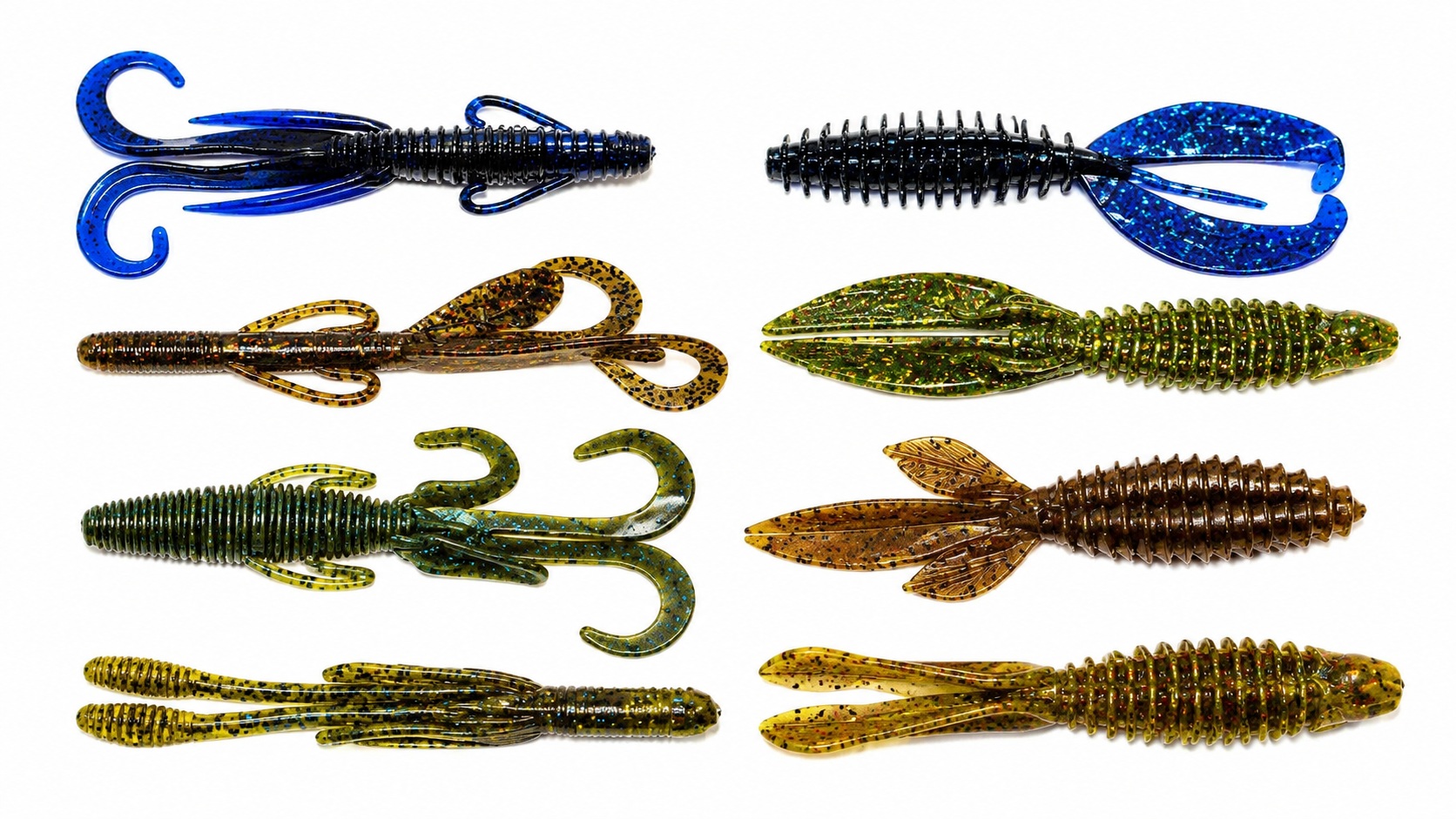
A creature bait is a bulky soft plastic designed to imitate a crawfish or some vague, meaty creature a bass can’t resist. The body is thick and compact, but the real action comes from the appendages — multiple legs, claws, paddles, and curled tails that flap, clack, and flutter on the fall. When the bait drops through the water column, all those moving parts push water and create vibration that draws strikes even in low visibility conditions.
Bass eat crawfish constantly, and crawfish live in the same places bass do — rocky banks, laydowns, dock pilings, grass mats, brush piles. A creature bait dropped into that same cover looks like a meal that’s already there. That’s the core logic behind why this bait is so effective. You’re not asking the fish to chase anything. You’re putting a realistic-looking meal in front of them and letting gravity do the work.
Largemouth bass are the primary target, but smallmouth bass — especially in rivers and rocky lakes — respond just as well to craw-imitating baits. The bait is simple to rig and simple to fish, which makes it a legitimate starting point for anglers learning how to work soft plastics.
How to rig it
The creature bait is most commonly rigged texas rig style — weedless, with the hook point buried in the body so it slides through grass, brush, and timber without hanging up.
Components:
- 3/0 to 4/0 EWG (Extra Wide Gap) hook — the wider gap handles the bait’s bulk
- 1/4 oz to 1 oz tungsten bullet weight, depending on depth and cover density
- 20–25 lb fluorocarbon or 40–65 lb braided line for flipping
To rig it, run the hook point in through the nose about 1/4 inch, exit the body, rotate the hook, and bury the point back into the body. The bait should hang straight with no twist. Add a toothpick to peg your weight against the nose if you’re punching through thick mats — a free-sliding weight will separate from the bait as it falls through the canopy.
For a carolina rig presentation, leave the hook unpegged. The weight sits on the mainline above a barrel swivel, with a 12–18 inch fluorocarbon leader to the hook. This setup lets the creature bait float and wave its appendages freely above the bottom, which works well over rocky flats and submerged points.
Creature baits also work as jig trailers. Pinch off the head and thread the body onto the jig hook to add bulk and claw action to a football jig or flipping jig.
How to fish it
For flipping and pitching, the presentation is straightforward. Swing or pitch the bait to a specific piece of cover — the base of a dock post, next to a laydown log, along a grass line edge — and let it fall on a semi-slack line. Watch your line as it drops. Most strikes happen on the fall, and the only way you’ll feel them is if you’re paying attention.
When the bait hits bottom, give it two or three small hops with your rod tip, let it settle again, and then move to the next target. You’re covering specific targets methodically, not blind-casting across open water. Every flip is intentional.
On a carolina rig, use a slow drag retrieve over hard bottom. Move the rig forward two feet, pause for two seconds, repeat. The creature bait trails behind the weight and kicks its appendages during the pause. Strikes usually come right as the bait settles.
When to use it
Pre-spawn is the most productive window. As water temperatures climb into the mid-50s and bass move shallow to feed before staging on beds, they push hard into bank cover — especially laydowns and brush. A heavy creature bait dropped on those fish in tight quarters is one of the most consistent pre-spawn patterns in bass fishing.
The bait also produces through summer when bass retreat to shade under docks, bridge pilings, and dense grass mats. It works in fall as bass regroup around the same shoreline cover before the cold sets in.
Don’t overlook rivers. Smallmouth bass in current systems relate heavily to rocky structure and wood, and a craw bait matched to local crawfish coloring will outfish a lot of other presentations in those conditions.
Color selection
Match the color of the bait to water clarity and the natural crawfish in your area. Most anglers need only two or three colors to cover the bulk of situations.
| Condition | Color |
|---|---|
| Clear water | Green pumpkin, watermelon red |
| Stained water | Green pumpkin black flake, june bug |
| Muddy / dark water | Black/blue, black/red |
| Pre-spawn (clear, cold) | Green pumpkin or natural craw |
Green pumpkin is the default. If you’re only fishing one color, fish that one.
Gear setup
Flipping and pitching requires a rod with enough backbone to move fish out of heavy cover. A 7’3” to 7’6” heavy power, fast action baitcasting rod paired with a high-speed reel (7.5:1 or faster) gives you the leverage to horse fish up from laydowns and the line pickup speed to set the hook on slack-line bites.
For line, 20–25 lb fluorocarbon handles most situations. In true heavy cover — matted grass, submerged brush — step up to 50–65 lb braid and tie directly to the hook.
On a carolina rig, drop to a medium-heavy rod and 15–17 lb fluorocarbon for better feel over open bottom.
Brands worth knowing
Zoom Brush Hog is the benchmark. It’s been in bass fishing for decades for a reason — the paddle tails and curled appendages produce on the fall, and it’s durable enough to land multiple fish before needing to swap. Available in virtually every color that matters.
Strike King Rage Bug has a distinct claw design that creates more displacement per inch than most. The claws clack together on the fall and produce action even with minimal rod input. A strong choice for slow, methodical flipping.
NetBait Paca Craw is a favorite among tournament anglers who prioritize craw realism. The profile is slimmer than a brush hog, which makes it easier to skip under docks and into tight spots.
Berkley Powerbait Crazy Legs Chigger Craw and Reaction Tackle creature baits offer solid performance at a lower price point — worth having on hand when you’re flipping through wood and expect to lose a few rigs.