A note about links: If we include links to retail sites like Amazon or Bass Pro Shops, it's because they're relevant to the topic and, as anglers ourselves, we believe they're worth checking out. As an Amazon Associate we earn from qualifying purchases.
What it is
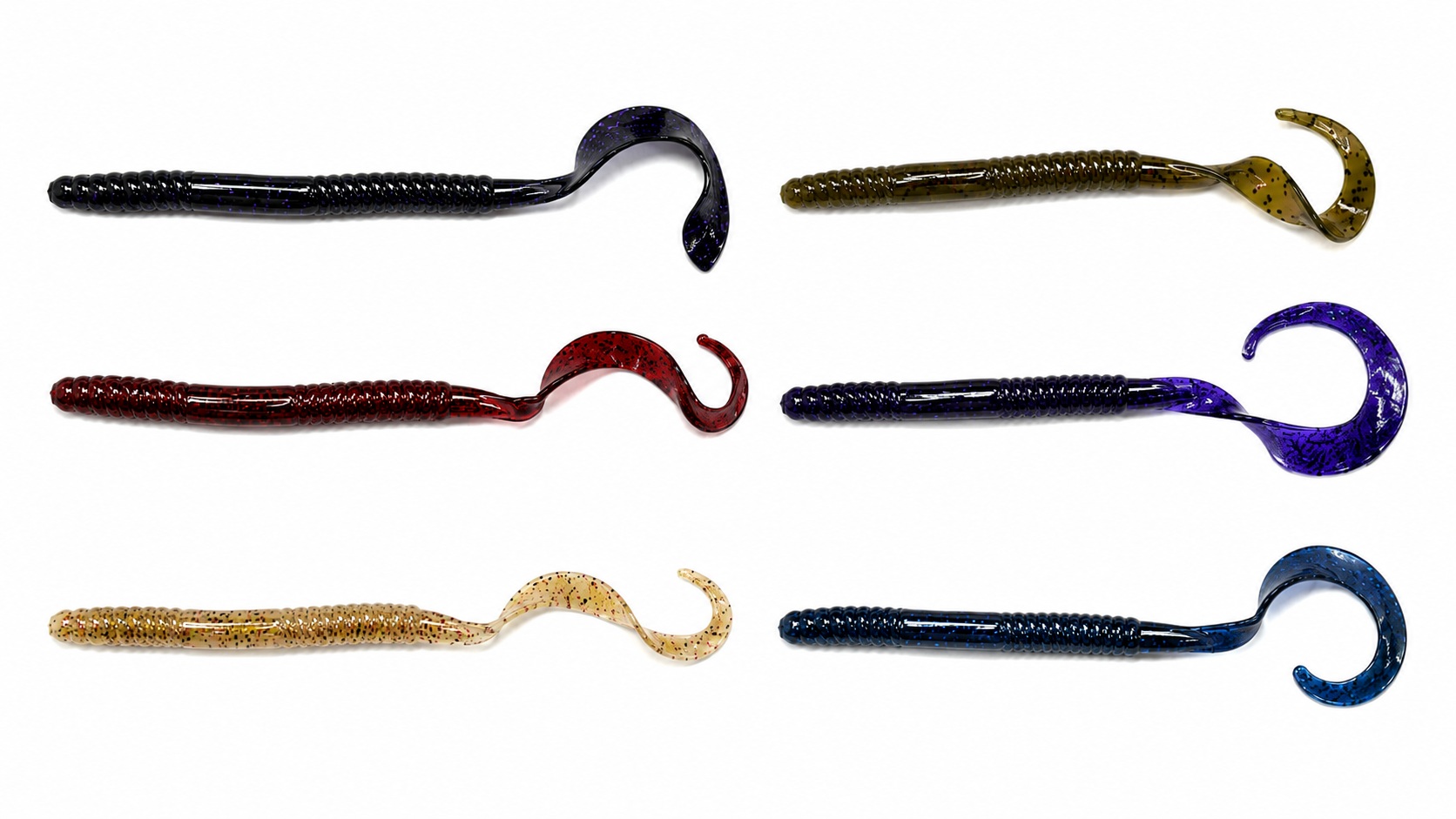
The ribbon-tail worm is one of the oldest and most reliable soft plastics in bass fishing. It gets its name from the flat, ribbon-like tail that curls and ripples on the fall and pulses side to side on the retrieve. That action is built in — the bait does the work even when you are barely moving it.
Most ribbon-tail worms run 7 to 10 inches long. That size is intentional. Largemouth bass in warm water are looking for a substantial meal, and a 7-inch or larger worm reads as a high-value target. The bait has a long history for a reason: it catches fish consistently across a wide range of conditions, it is easy to rig, and it forgives presentation errors better than many finesse baits.
Smallmouth bass will eat ribbon-tail worms too, though the larger sizes are primarily a largemouth tool. On rivers and highland reservoirs, scaling down to a 7-inch version on lighter tackle produces smallmouth regularly.
How to rig it
The standard setup is a texas rig, and that pairing makes the ribbon-tail worm nearly snag-free in thick cover.
Components:
- 4/0 or 5/0 EWG (extra wide gap) hook
- 1/4 oz to 1/2 oz bullet weight
- Soft plastic ribbon-tail worm, 7–10 inches
Thread the bullet weight onto your line, point forward, then tie on the EWG hook. Push the hook point into the nose of the worm about a quarter inch, bring it out the bottom, slide the worm up the shank, rotate the hook, and bury the point back into the body so it sits flat and straight. The point stays just below the surface of the plastic, making it weedless through grass, reeds, and pads.
Weight selection depends on depth and cover density. In shallow grass and pads — 3 to 6 feet — a 3/16 oz or 1/4 oz weight gives a slower, more natural fall. In thicker or deeper cover, step up to 3/8 oz or 1/2 oz to punch through and stay in contact with the bottom.
The ribbon-tail worm also works on a carolina rig when you want to cover open bottom or transition areas. In that setup, use an 18 to 24 inch fluorocarbon leader and a lighter hook — a 3/0 or 4/0 offset worm hook is sufficient since the weight rides separate from the bait.
How to fish it
Most ribbon-tail fishing is slow and deliberate. Pitch or flip the bait to a target — a mat edge, a pocket in the grass, a laydown — let it fall on a semi-slack line, and watch the line. Bass often hit on the fall, and you will feel or see the line jump or move sideways before you feel any weight.
After the fall, work the bait with subtle lifts and drops. Raise the rod tip a foot or two, let the bait fall back, and repeat. The tail pulses on every movement. You do not need an aggressive retrieve to generate action — the bait is effective with almost no movement at all, which makes it particularly good in summer when bass are sluggish and holding tight to structure.
For carolina rig presentations over flats and channel edges, slow drags along the bottom with occasional pauses work well. The worm trails behind the weight and undulates with the slightest rod movement.
When to use it
The ribbon-tail worm performs best in warm water — late spring through fall. Water temperatures from 65°F up into the low 80s are its wheelhouse. It shines in stained or off-color water where bass are relying more on vibration and movement than on sight.
Spring is productive around spawning areas. Bass on beds or in pre-spawn staging areas off points and transitions will eat a slow-moving ribbon-tail worm. In summer, fish the shade and heavy cover — grass mats, laydowns, dock pilings — during the heat of the day. Fall fishing with ribbon-tail worms works well as bass chase baitfish into shallow pockets and coves.
The bait is less effective in cold, clear water where finesse presentations tend to outperform. In those conditions, a stick worm or ned rig is a better choice.
Color selection
Color matters most in stained water. Match the light conditions and clarity.
| Condition | Recommended Colors |
|---|---|
| Stained or dark water | Junebug, black/blue, dark grape |
| Lightly stained | Red shad, watermelon red, green pumpkin |
| Clear water | Watermelon seed, green pumpkin, natural shad |
| Low light / overcast | Black/blue, junebug, dark purple |
Junebug — a dark purple with green flake — is the benchmark color for off-color Florida-style bass fishing. It has decades of proven results in murky lakes and canals. Red shad covers clearer conditions. When in doubt, watermelon red is a reliable all-around option.
Gear setup
A medium-heavy baitcasting rod in the 7 to 7’3” range is the standard choice for flipping and pitching ribbon-tail worms. Pair it with a baitcaster spooled with 15–20 lb fluorocarbon for most texas rig applications, or step up to 50–65 lb braided line when punching through heavy mats. A 7’6” medium-heavy rod works well for carolina rig presentations where longer casts and bottom contact are priorities.
If you are starting out and running spinning gear, a 7-foot medium-heavy spinning rod with 15–20 lb braid and a fluorocarbon leader handles most open-water ribbon-tail fishing without issue.
Brands worth knowing
Zoom Magnum II is the most referenced ribbon-tail worm in bass fishing. It is widely available, consistently soft and supple, and the tail action holds up through repeated catches. Available in most major colors.
Culprit Original is the other benchmark. The Culprit has been around since the 1970s and remains a go-to for tournament anglers fishing the South. It has a slightly thinner profile that some anglers prefer in lighter cover.
Strike King Rage Tail worms add extra material to the tail section for more aggressive throbbing action on the fall — worth trying in very stained water or when bass seem to be ignoring standard profiles.
Berkley PowerBait ribbon-tail options incorporate scent into the plastic, which can make a difference when bass are holding a bait briefly without committing. The Berkley Warpig is one option in this line.
Reaction Tackle offers solid ribbon-tail worms at a lower per-unit cost, which makes them a practical choice for flipping heavy cover where you expect to leave hooks behind.