A note about links: If we include links to retail sites like Amazon or Bass Pro Shops, it's because they're relevant to the topic and, as anglers ourselves, we believe they're worth checking out. As an Amazon Associate we earn from qualifying purchases.
What it is
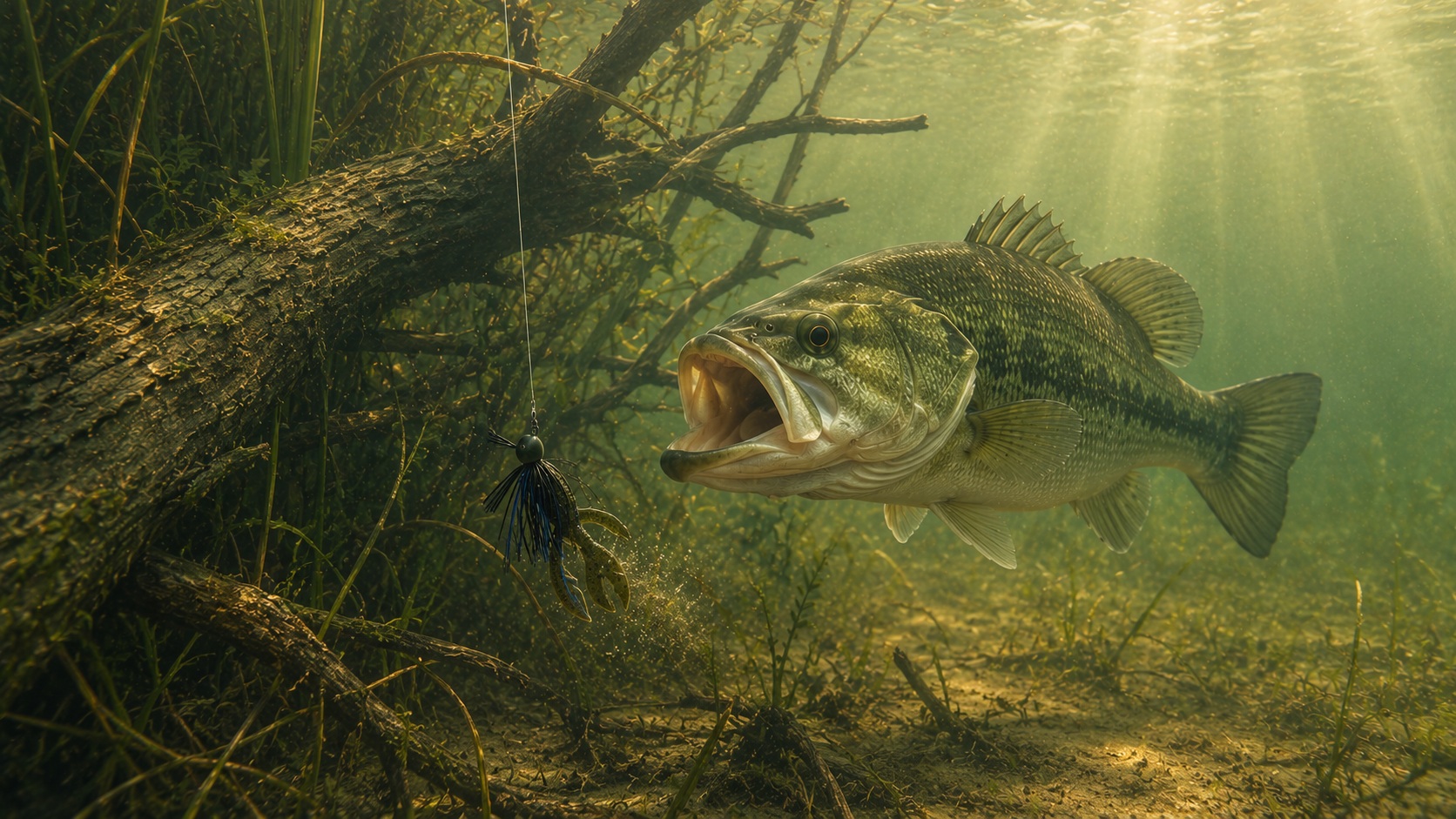
Flipping and pitching are two close-range presentations built around the same goal: putting a jig or soft plastic exactly where you want it, in the thickest cover available, with as little splash as possible. The targets are the places other anglers skip — the shaded back of a dock, a fallen laydown, a gap in a brush pile, or a thick grass mat. Big bass hold tight to that heavy cover, and getting a bait to them quietly and accurately is what these techniques are about.
The two are distinct but closely related. Flipping uses a fixed length of line — usually a rod’s length plus a little — swung in a controlled pendulum to drop the bait into close targets. You never reel between flips; you pull line off the reel by hand, feed it back, and repeat. It is fast, quiet, and deadly accurate at close range. Pitching is a low, underhand lob that covers slightly longer distances, letting the bait sail in on a flat trajectory and enter the water with a soft tick rather than a splash. Both keep the bait low and quiet, which matters when fish are buried in cover and easily spooked.
This is primarily a largemouth bass technique, and it shines when bass relate to heavy, shallow cover. The skills carry over to smallmouth around shoreline wood and rock, and a heavy flipping setup is well suited to muscling a northern pike out of weedy ambush spots. But make no mistake — flipping and pitching were born in the bass world, for prying the biggest fish in the lake out of where they feel safe.
How to do it
Flipping and pitching demand heavy gear. There is no finesse here — you are fighting fish out of cover that wants to wrap them up.
Gear up heavy. Reach for a 7-foot or longer heavy-power rod with a fast tip, paired with a strong baitcasting reel. Spool up with braid — 40 to 65 lb is standard — so you can drive a hook home and winch a bass out of grass or wood before it buries you.
Pick a compact, snag-resistant bait. A bass jig with a stout hook and a weed guard is the classic choice, often paired with a creature bait trailer. A Texas-rigged creature bait, a ribbon tail worm, or a stick worm with a pegged tungsten weight all flip and pitch cleanly through cover. Keep the profile compact so it slips through gaps instead of hanging up.
Master the entry. The whole point is a quiet, precise drop. For flipping, hold the bait in your free hand, swing the rod tip up to load it, and let it pendulum toward the target as you feed line. For pitching, let the bait hang a foot or two below the tip, then lob it underhand low to the water. Either way, feather the line as the bait lands so it enters with a soft tick, not a splash.
Watch the line on the fall. Most strikes come as the bait sinks. The bite is often nothing more than the line jumping, twitching, or stopping before it should. Stay in contact, watch where the line meets the water, and when it does anything strange, reel down and set hard.
Punch through the mat. When fish hold under thick matted grass, switch to punching — a heavy 1 to 1.5 ounce tungsten weight pegged tight to a streamlined creature bait. That weight crashes through the canopy into the open water beneath, where bass wait in the shade.
When to use it
Flipping and pitching earn their keep when bass are shallow and tucked into cover:
- Fish are holding tight to heavy cover. Laydowns, docks, brush, stumps, and grass concentrate bass, and these techniques put a bait right in the strike zone.
- It is the shallow-water seasons. Spring through fall, when bass move shallow to spawn, feed, and ambush, the heavy cover bite is on.
- The water is stained or dirty. Reduced visibility lets you get close and drop a bait inches from a fish without spooking it.
- You need precision over distance. When the target is the size of a dinner plate, accuracy beats casting range.
The flip side: in clear, open water or on deep structure, these short-range presentations leave too much water uncovered. There, a casting and retrieving approach or a finesse presentation serves you better.
Common mistakes
The biggest mistake is going too light. Anglers reach for the gear they own and get broken off the first time a good fish bottoms them in the grass — these techniques only work with heavy rods, braid, and stout hooks. The second is a sloppy, splashy entry that alerts every fish in the cover; practice until the bait lands with a tick. The third is missing the bite on the fall by not watching the line. And the fourth is rushing past the best targets — slow down, work each piece of cover from multiple angles, and make every pitch count.