A note about links: If we include links to retail sites like Amazon or Bass Pro Shops, it's because they're relevant to the topic and, as anglers ourselves, we believe they're worth checking out. As an Amazon Associate we earn from qualifying purchases.
What It Is
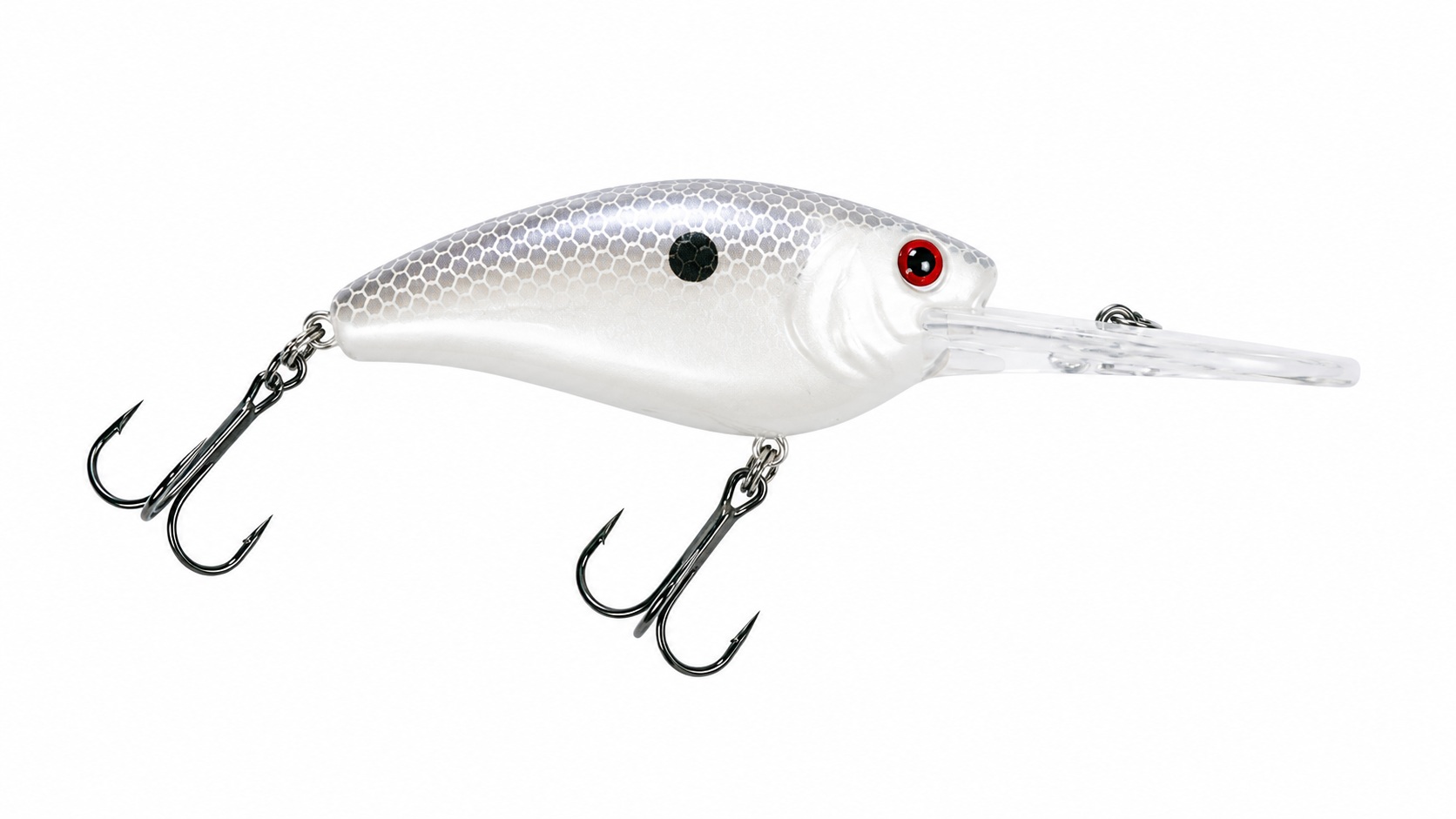
The deep-diving crankbait is a hard-bodied plug built around one defining feature: an oversized, angled lip that drives the lure down fast and keeps it there through the retrieve. Where a squarebill crankbait works the 1–4 foot range along banks and laydowns, the deep diver is purpose-built for open water and structure in the 8–20+ foot zone — the summer thermocline where bass, walleye, and striped bass stage and feed.
The bill is longer and set at a steeper angle than a standard crankbait. That geometry creates resistance against the water, translating forward motion into downward pressure. The deeper the target, the bigger the bill. A lure rated to 10 feet has noticeably less bill surface than one designed to reach 16 or 20 feet. The body itself is typically rounder and fatter than a squarebill, built to carry the momentum of a long cast while wobbling hard at depth.
Two treble hooks are standard, one near the belly and one near the tail, giving you solid coverage across fish that strike short.
The Setup
Depth is everything with this lure, and your gear choices determine whether you reach the fish or fish five feet above them.
Line: Use 10–12 lb fluorocarbon. Fluorocarbon sinks (mono floats), has low stretch, and its thinner diameter cuts through the water column more efficiently. On a lure rated to 16 feet, dropping from 10 lb to 17 lb line can cost you 3–4 feet of maximum depth — which often means the difference between scratching gravel and never touching bottom at all.
Rod: A 7-foot or longer medium-heavy rod with a moderate action is the standard choice. The length loads up on the cast, giving you the distance you need — and distance matters. These lures reach their rated depth only at the end of a long cast. A short 30-foot pitch barely scratches the surface of what the lure can do. A 60–70+ foot cast gives the lure the runway to dive down and level off before it passes through the strike zone. The moderate (not fast) tip is intentional: it bends into the fish on the hookset without tearing the hooks free, and it absorbs head shakes during the fight.
Reel: A quality baitcasting reel in the 6.3:1 or 7.1:1 range. Slower retrieve ratios help when slow-rolling in cold or post-front conditions; a faster gear ratio lets you burn the lure through active fish.
Connection: Tie direct with a Palomar or improved clinch knot. Avoid heavy snap swivels — they can impede the natural action and reduce maximum depth.
How to Fish It
The core retrieve is simple: cast as far as you can, point the rod tip at the water, and crank steadily until the lure reaches depth. Once it’s down, you want to feel it make contact with the bottom. That’s not incidental — it’s the whole point.
When a deep diver deflects off a rock, a gravel patch, or a submerged log, it kicks sideways unpredictably. That deflection is one of the most reliable strike triggers in bass fishing. Fish sitting on structure at 12 feet aren’t always chasing; sometimes it takes an erratic change in direction to get a reaction.
Vary the retrieve speed based on fish mood. In summer when bass are active and the water is warm, a steady medium-to-fast retrieve works. In early fall or on post-front days when fish are sluggish, slow down to a near-crawl — just fast enough to keep the lure diving and the hooks clear of bottom snags.
Pause occasionally. Some of the best strikes happen on the pause when the lure suspends or rises slightly, then gets hammered as you restart the retrieve.
When to Use It
Summer is prime time. When largemouth and smallmouth bass push offshore to main-lake structure — humps, submerged points, creek channel edges, rock piles in 10–20 feet of water — the deep diver reaches fish that most other presentations can’t touch efficiently.
Fall keeps it in rotation as fish stage on similar structure before moving to shallower wintering areas. Walleye in reservoir systems respond well to the same bottom-contact presentation, particularly over gravel flats and rocky transitions.
On big rivers with deep holes and current breaks, a deep diver worked upstream and allowed to deflect through the eddy can be surprisingly effective for both bass and walleye.
Color and Size Selection
| Condition | Color | Depth Rating |
|---|---|---|
| Clear water | Shad / chrome / ghost minnow | Match the hump depth |
| Stained water | Chartreuse / blue / firetiger | Go one size deeper |
| Rock bottom | Crawfish / brown-orange | Any |
| Low light / overcast | Sexy shad / black-back shad | Any |
Size correlates directly with target depth. A DT10 dives to 10 feet; a DT16 reaches 16. If you’re fishing a hump that tops out at 14 feet, use a lure rated slightly deeper so it stays in contact.
Brands worth knowing
Rapala DT Series (DT6, DT10, DT16) is the most dialed-in system available — the number in the name is the actual target depth, tested and reliable.
Strike King 6XD is a proven tournament favorite, particularly effective in Southern reservoirs.
Norman DD22 and Bomber Fat Free Shad have been staples for decades.
Mann’s 20+ Deep targets the deepest structure and works well in clear highland reservoirs.
Lucky Craft LC Series offers a premium balsa-feel in hard plastic with excellent action at all retrieve speeds.
When the fish are offshore and the electronics show them pinned to deep structure, the deep-diving crankbait is often the fastest way to work through water and locate active fish. Cover water, stay in contact with the bottom, and let the deflections do the work.