A note about links: If we include links to retail sites like Amazon or Bass Pro Shops, it's because they're relevant to the topic and, as anglers ourselves, we believe they're worth checking out. As an Amazon Associate we earn from qualifying purchases.
What it is
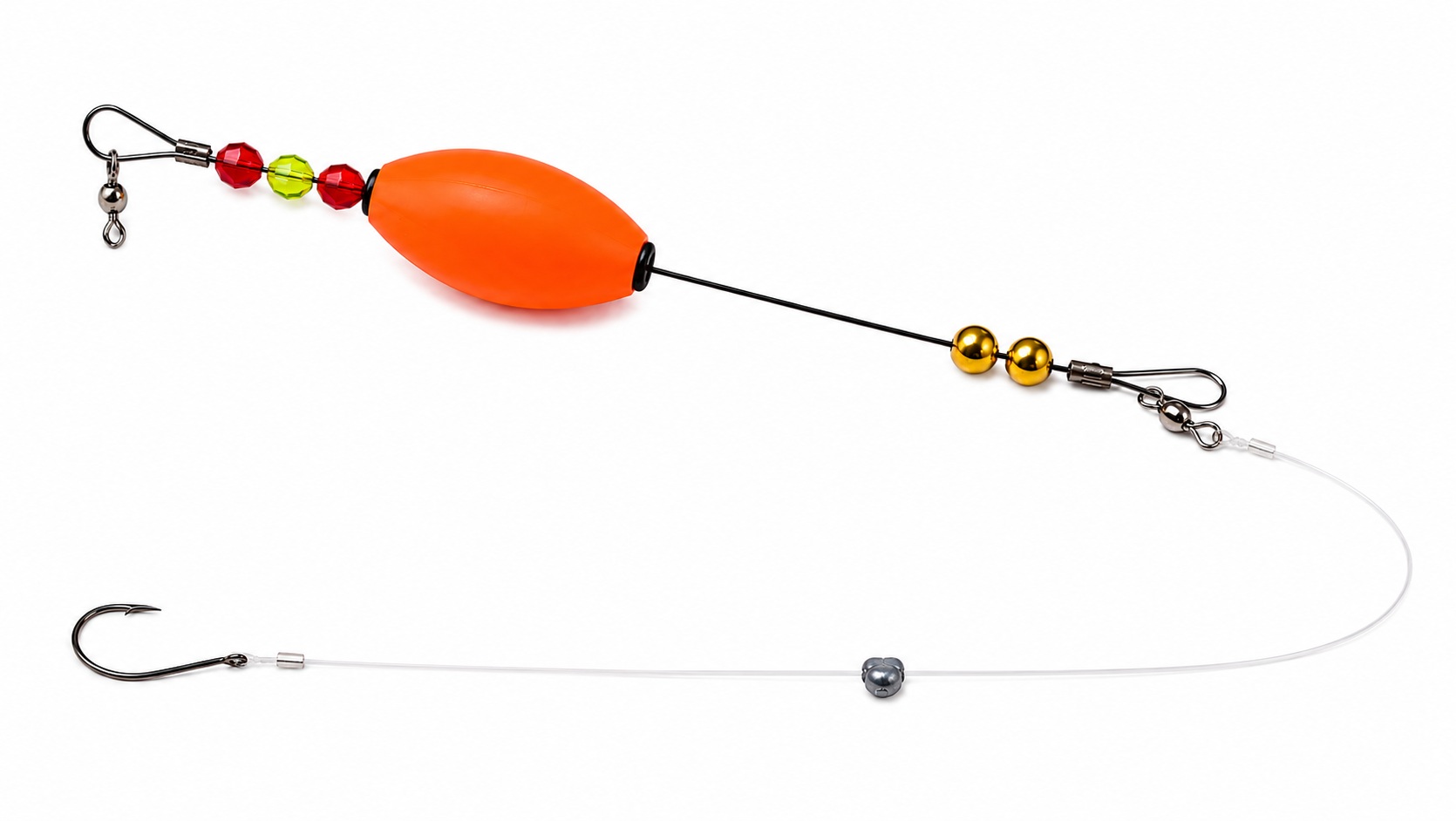
The popping cork is a float designed to make noise. Unlike a standard bobber that simply suspends a bait at depth, a popping cork has a concave or cupped top and, on most modern designs, a rattle chamber built into the body. A sharp downward pull of the rod tip drives the cupped face through the water surface, producing a loud chug that mimics the sound of feeding fish. That sound travels through shallow water, and inshore predators respond to it.
This rig is one of the most effective inshore tools on the Gulf Coast and Southeast for precisely the conditions that make other lures difficult: stained water, broad grass flats where fish are scattered, and situations where you need to draw fish to the bait rather than cast to fish you can already see. Spotted seatrout and redfish locate prey by sound as much as sight in these environments, and the popping cork gives them an acoustic target to home in on.
It is also one of the most approachable rigs for anglers new to inshore fishing. There is no complicated retrieve to learn. The system works.
How to rig it
The complete rig runs from the mainline down through the cork to a leader and jig head.
- Attach your mainline to the wire loop on top of the cork. Most popping corks have a wire running through the body with fixed loops at each end, the top loop ties to your main line, the bottom loop accepts the leader.
- Cut a fluorocarbon leader 18 to 36 inches long. Shorter leaders (18 inches) work when fish are holding tight to bottom in shallow water of two feet or less. Longer leaders (30 to 36 inches) are better in slightly deeper water or when fish are actively suspended.
- Tie the leader to the bottom wire loop of the cork, then tie the opposite end to a 1/8 to 1/4 oz jig head. A loop knot (non-slip mono loop) is the right choice here: it lets the jig swing and dart freely beneath the cork instead of being held stiff by a clinch knot.
- Thread your soft plastic onto the jig head. A soft plastic shrimp (3 to 4 inch) or a paddletail swimbait in the same size range are the standard choices.
Going with live bait: the cork doesn’t care what hangs beneath it. Instead of a jig head, tie on a plain or light circle hook and pin a live shrimp under it, the single most iconic Gulf Coast popping-cork presentation, or, in freshwater, a live minnow. The pop calls the fish; the kicking live bait closes the deal.
For the connection from mainline to cork, a Palomar knot is reliable and easy to tie in the field.
How to fish it
The retrieve is a pop-pause rhythm. The pause is where the fish bite.
Cast past your target area. Let the rig settle for a moment. Then give the rod tip a sharp downward jerk, not a long sweep, just a crisp snap, to drive the cork face through the surface. The cork pops, the rattle fires, and the jig beneath it surges upward slightly before swinging back down and settling. Now wait. Count two to four seconds. Most strikes happen during this pause, while the bait is dropping or hanging still beneath the cork.
Repeat the sequence: pop, pause, pop, pause. Work the cast all the way back to the boat before picking up and recasting. Fish will follow the sound and hit at any point in the drift.
When the cork dunks, dips below the surface and does not immediately return, resist the urge to snap back immediately. Reel tight until the line comes taut, then lift the rod into the fish. If you are using a circle hook, the rod sweep is not necessary; simply reel into the fish and the hook finds the corner of the mouth on its own.
Move across the flat systematically. If you pop through an area with no response in five or six casts, relocate. The rig is designed to call fish; if nothing answers, the fish are not there.
When to use it
The popping cork is most valuable in three specific scenarios:
Stained or discolored water. When visibility drops below a foot or two, fish that would track a lure by sight in clear water have to rely more on sound and lateral-line vibration. The cork’s noise gives them an acoustic reference point from a distance that a silent presentation cannot provide.
Scattered fish over large flats. On broad grass flats where fish are not concentrated, the pop-and-call approach covers water efficiently and pulls fish in from a wider area than a standard jig or swimbait retrieve.
Over submerged grass and oyster structure. The jig hangs suspended beneath the cork, never touching the bottom, which means it stays out of grass that would foul a bottom-bouncing presentation. This lets you fish over the top of submerged vegetation where trout and redfish actively feed.
The rig works in every season, though spring and summer, when trout and redfish are pushing onto flats in warmer water, see the highest strike rates. In winter, slow down the pop cadence and lengthen the pause. Cold-water fish are less aggressive but will still respond to the sound; they just need more time to commit.
A freshwater crossover
The popping cork started inshore, but the same noise-and-suspend idea has migrated to freshwater. Crappie and panfish anglers fish a smaller version, often sold as a “Cajun cork” or rattling cork, to call scattered fish in stained lakes and ponds, suspending a small marabou jig (1/16 to 1/8 oz) or a jig-and-minnow somewhere between 18 inches and a few feet down, then popping it to pull crappie in from a distance. Opinion among crappie anglers is genuinely split: some swear by the rattling cork in spring and stained water, while others prefer a quiet slip float so the noise doesn’t spook finicky fish. It’s a tool worth having, not a cure-all, try it when the fish are scattered or the water is off-color, and go quiet when they’re pressured.
Leader depth selection
| Water depth | Leader length | Notes |
|---|---|---|
| 1 to 2 ft | 18 inches | Keeps bait above bottom; avoids grass |
| 2 to 4 ft | 24 to 30 inches | Standard all-around setup |
| 4+ ft | 30 to 36 inches | Deeper suspension; match to fish’s holding depth |
If you are fishing a known depth and the bait seems to be dragging bottom between pops, shorten the leader. If the cork is pulling the jig up too high for where fish are holding, lengthen it.
Gear setup
A 7 to 7-foot-6-inch medium-light to medium spinning rod with a fast or extra-fast tip handles a popping cork cleanly. The rod needs enough backbone to drive the cork face into the water on the pop, but a soft enough tip to load on the cast without slinging the rig apart. Too heavy a rod and the pops become awkward; too light and you lose the snap that generates the sound.
A 2500 to 3000 series spinning reel loaded with 15 to 20 lb braided main line gives you sensitivity, casting distance, and the low stretch needed to drive the cork on the pop. Use 20 to 25 lb fluorocarbon for the leader between the mainline and the cork. Monofilament works but fluorocarbon holds knots better under the constant shock of repeated pops.
For hooks, a 2/0 to 3/0 circle hook rigged weedless on a light jig head is a sound setup if you plan to catch-and-release trout; circle hooks reduce deep hooking significantly. A standard 1/8 oz ball-head jig is also effective and is the default pairing for soft plastic shrimp and paddletail swimbaits under the cork.
Brands worth knowing
Cajun Thunder by TTF (Top Tier Fishing) is the most recognized popping cork in the Gulf and Southeast. The signature design uses a hard-plastic body with an internal rattle and a distinctive clacker bead that produces a sharp, loud report. The Cajun Thunder comes in a standard single version and a double-clacker variation for even more noise in rough or stained conditions. It is the benchmark other corks are measured against.
TTF also produces several quieter cork styles for clear-water situations where the full clacker noise can spook fish, the slimmer, cupped-face designs produce a softer surface disturbance without the rattle.
Betts makes affordable popping corks widely available in regional tackle shops across the Southeast. Good for beginners stocking up or fishing areas where snags will cost you rigs.
H&H Lure Company produces Gulf Coast staples including a classic popping cork that has been a mainstay in Louisiana inshore fishing for decades. Simple, loud, and proven over redfish in the marsh.
Calcutta offers a premium weighted cork with internal rattles and a machined wire frame that holds knots cleanly and does not corrode in saltwater.