A note about links: If we include links to retail sites like Amazon or Bass Pro Shops, it's because they're relevant to the topic and, as anglers ourselves, we believe they're worth checking out. As an Amazon Associate we earn from qualifying purchases.
What it is
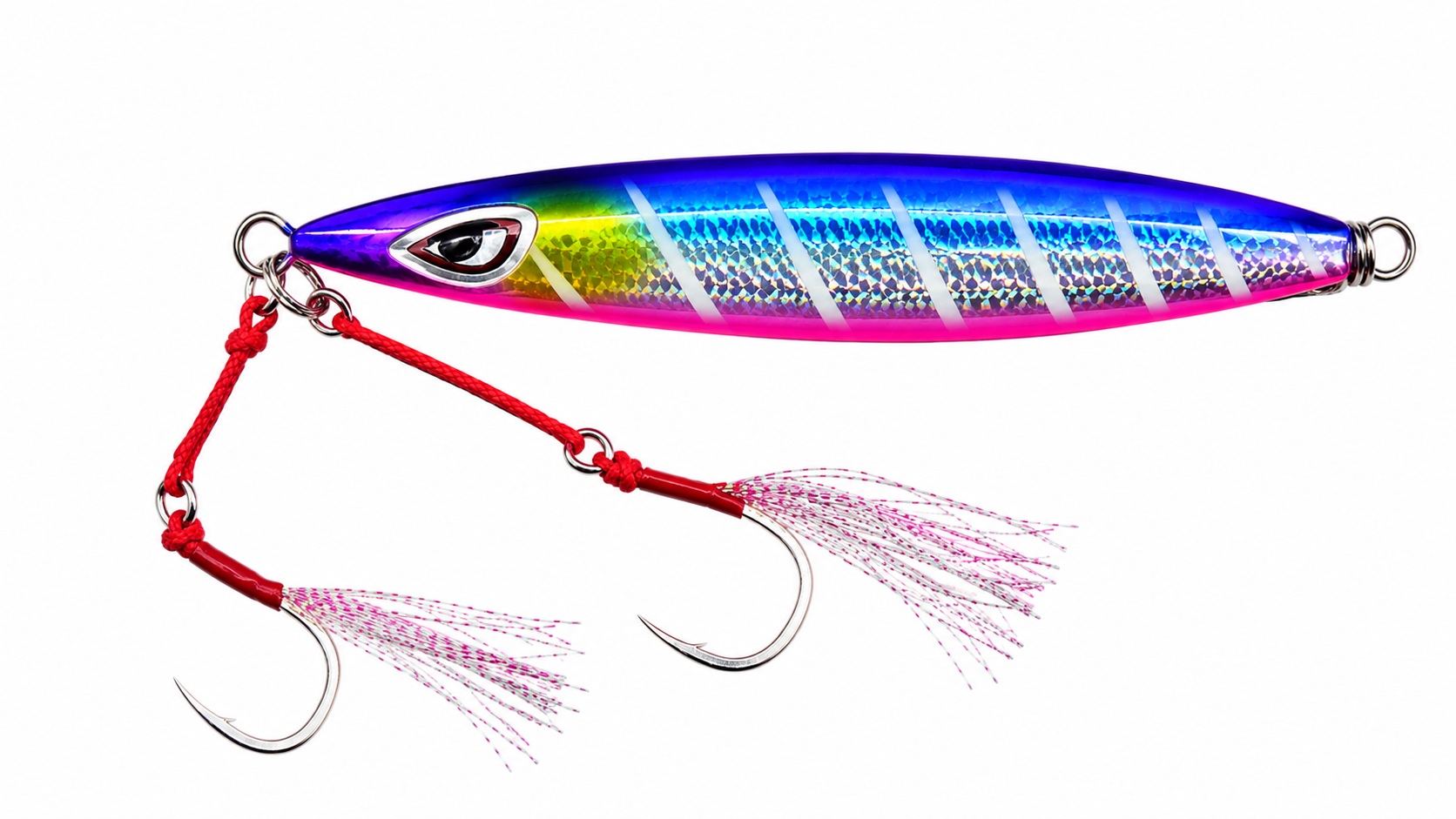
The slow pitch jig is a flat, asymmetric metal jig — usually 1 to 4 ounces — engineered to do almost nothing on the way up and everything on the way down. The shape is the design: one side is wider than the other, the profile is thin, and the weight is distributed so the jig sits at near-neutral buoyancy as it descends. When you drop it on a slack line, it does not fall straight. It flutters, spirals, and glides horizontally, imitating a wounded baitfish that has lost the ability to swim and is spiraling toward the bottom.
This is a Japanese technique — slow pitch jigging (SPJ) originated in Japan in the 1990s and was developed specifically to target deep-water bottom fish that ignored conventional speed jigs. It has spread through the saltwater offshore world because it works when almost nothing else does, especially on fish that are pressured or not actively feeding. The concept is the opposite of speed jigging: less speed, less aggression, and total reliance on a jig’s passive action during the fall.
The setup
Slow pitch jigging uses purpose-built tackle. Using the wrong gear is the most common mistake beginners make, and it matters more here than in most techniques because the rod itself is part of the cadence.
The rod: A slow pitch rod has a very fast, thin tip that loads easily, combined with a deeply parabolic mid-section that bends all the way down toward the reel seat on a solid fish. That tip provides the light, rhythmic lift needed for the technique; the parabolic body protects the assist hooks during the fight and loads slowly so the angler does not over-pitch the jig. Standard medium-heavy spinning or conventional rods do not replicate this action. Rod ratings are labeled by jig weight range — match the rod to the jig weights you plan to fish.
The reel: A low-gear or mid-gear spinning or conventional reel suited for the depth. Slow pitch does not require speed; it requires smooth line management and solid drag for bottom fish.
The line: PE (braid) in the 1.5 to 3 range — lighter than speed jigging. Thinner braid cuts current better in deep water and lets the jig fall naturally. A 40-60 lb fluorocarbon leader of 10-20 feet covers most situations.
Assist hooks: Single or double assist hooks rigged on semi-stiff assist cord, placed at the top of the jig and sometimes the bottom as well. Assist hooks flex away from the jig body so they do not impede the flutter action. Trebles are not used. Hook size matters — oversized hooks add drag and kill the action. Match hook size to the jig size.
Terminal: Keep it minimal. A light snap (no swivel) is acceptable; heavy snap swivels add mass that mutes the jig’s flutter on the fall. When in doubt, tie direct.
How to fish it
Drop to bottom, engage the reel, and take up any slack. From there, the retrieve is a half-crank of the reel combined with a short, slow lift of the rod tip — then immediately drop the rod tip and open the bail or disengage the reel to let the jig fall completely slack. That is one pitch.
The lift loads the rod very slightly and raises the jig a short distance in the water column. The instant you release tension, the jig enters its flutter phase — and that is where fish strike. The angler’s job on the fall is to feel for the line going slack (jig is falling normally) or loading up (fish ate it). Most strikes happen on the fall and feel like the line simply stops going slack or the rod loads without any obvious thump.
Cadence varies. A slow, long pause between pitches lets the jig fall farther and flutter longer — useful in deeper water (150-300 ft) or with less current. A shorter, rhythmic pitch-pitch-pitch with brief pauses covers the water column faster and works when fish are suspended above the bottom. Start slow and adjust until you find what the fish want that day.
Keep the jig near the bottom for gag grouper and red snapper. Let it rise higher in the water column for greater amberjack or pelagic fish like cobia and king mackerel.
When to use it
When fish are present but not biting: This is the core use case. Slow pitch jigging excels when sonar shows fish stacked on a reef or ledge but they will not hit live bait, cut bait, or conventional jigs. The dying-flutter presentation triggers a predatory reflex — fish cannot watch that spiral without reacting.
Deepwater reefs and ledges (60-300 ft): On the nearshore and offshore structure from the Space Coast out through the Gulf and up the Atlantic coast, slow pitch jigs reach depths that are hard to work with other presentations while still delivering an active, lifelike action.
Winter and cold fronts: Cold-water bottom fish slow down and are notoriously finicky. A slow pitch jig fished with long pauses and a patient cadence produces when everything else has stopped working.
Light current windows: Slack water around tide changes is ideal — less current means less line drift and a more vertical presentation, which gives the jig maximum flutter time on the fall.
Weight and color selection
| Depth / Condition | Jig Weight |
|---|---|
| 60-100 ft, light current | 1.5–2 oz |
| 100-200 ft or moderate current | 2.5–3 oz |
| 200-300 ft or strong current | 3.5–4 oz |
For color, match the local baitfish as a starting point. Pink/white and blue/silver cover most situations in clear offshore water. Chartreuse or UV-reactive finishes produce in stained water or on overcast days. Red and orange trigger strikes near bottom for grouper and snapper. Holographic or prismatic finishes in natural baitfish patterns (sardine, mackerel) are productive year-round.
Brands worth knowing
Shimano and Daiwa both produce dedicated slow pitch rods and reels as well as their own jig lines — Shimano’s Butterfly Slow Pitch series is one of the better-known entry points.
Nomad Design makes quality slow pitch jigs that fish well in Gulf and Atlantic conditions.
Knife Jig (made in the USA) offers a range of purpose-built slow pitch shapes at various weights.
Mustad and Williamson both carry solid assist hook setups compatible with standard slow pitch rigging. For rod selection specifically, brands like Zenith, Tailwalk, and Gomoku (Japanese imports) represent the high end of purpose-built SPJ rods if you decide to go deeper into the technique.