A note about links: If we include links to retail sites like Amazon or Bass Pro Shops, it's because they're relevant to the topic and, as anglers ourselves, we believe they're worth checking out. As an Amazon Associate we earn from qualifying purchases.
What it is
Live shrimp is the single most effective inshore saltwater bait in the South, and it is not close. The reason is simple: shrimp are the foundation of the inshore food web. Almost everything that swims the flats, the grass edges, the oyster bars, and the dock lines eats them daily. When a guide hands a beginner a rod and wants a fish in the boat fast, the hook on the end almost always carries a live shrimp.
That universal appeal is exactly what makes shrimp the perfect learning bait. You do not need to match a hatch or read a feeding pattern. Spotted seatrout, redfish, snook, flounder, sheepshead, mangrove snapper, black drum, tripletail, and pompano all eat shrimp without hesitation. Buy a few dozen from the bait shop, keep them lively, and you have a bait that catches nearly every inshore species in the region on the same trip.
How to rig and fish it
The first rule is where to put the hook. A shrimp has a small dark spot just behind its eyes, that is the brain, and running the hook through it kills the shrimp instantly. You want to avoid it every time.
Under the horn (for a cork): Slip the hook through the top of the head, just under the pointed horn and in front of that dark spot. This keeps the shrimp alive and swimming naturally beneath a float. It is the go-to method for a popping cork.
Through the tail (for casting and free-lining): Pinch off the tail fan and run the hook up through the base of the tail. This lets you cast farther, and the shrimp darts backward in a fleeing motion, the exact movement a predator keys on. Removing the tail fan also releases scent.
Once hooked, you have four classic presentations:
- Under a popping cork: The most productive way to fish shrimp over grass and sand. The cork suspends the bait off the bottom and its concave face spits and pops when you twitch the rod, mimicking feeding fish and calling predators in. This is the popping-cork rig, and it is the easiest path to a first inshore fish.
- Free-lined: Just a hook and the shrimp, no weight, drifted into structure. The free-line-rig gives the most natural presentation there is, perfect for spooky snook under docks.
- On a jig head or bucktail: Tip a bucktail-jig or jig head with a live shrimp to add weight, scent, and a little flash.
- On the bottom: A carolina-rig, fish-finder-rig, or knocker-rig pins shrimp near the floor for sheepshead, black drum, and snapper around pilings and oyster bottom.
Across all of these, lean on a circle hook. When a fish takes the shrimp, do not swing: reel down until the line comes tight and let the circle hook find the corner of the jaw on its own. Beginners hook far more fish this way.
When to use it
Effectively, always. Shrimp work every season and every tide because they are always part of the menu. That said, a few situations make them shine.
When you do not know the bite: New water, new species, slow day: shrimp is the great equalizer. If anything is feeding, a shrimp will tell you.
Cold water: In winter, when trout and reds turn lazy and refuse fast-moving lures, a live shrimp drifted slowly under a cork or dragged on the bottom keeps catching fish.
Moving tide near structure: Fish a shrimp along a falling tide that pulls bait off the grass and past an oyster bar or dock, and you are showing predators exactly what the current is already feeding them.
Forms and keeping it
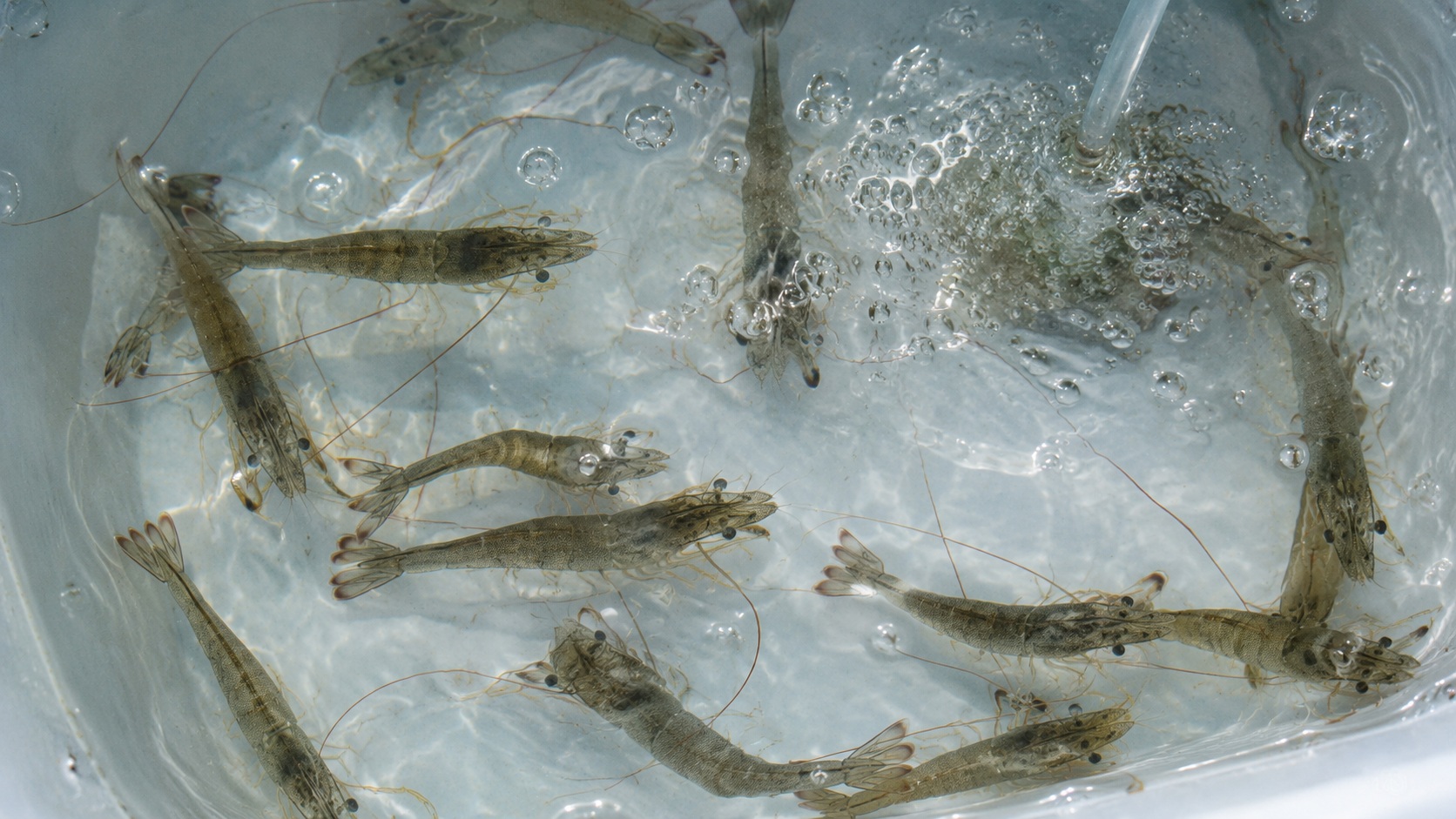
Live is the premium form and the most versatile. The catch is keeping them frisky, the three things that kill shrimp are heat, low oxygen, and overcrowding. Keep them in an aerated bait bucket with a battery bubbler, do not pack too many in, and keep the water cool. Drop a sealed frozen water bottle into the bucket on hot days, but never dump ice directly in: the freshwater shock will kill them. A flow-through bucket hung over the side works too, since it constantly refreshes oxygenated water.
Fresh-dead shrimp are shrimp that died in the bucket; do not throw them out. A fresh-dead shrimp on the bottom still out-fishes most artificial lures, because the scent is just as strong.
Frozen shrimp from the bait freezer are the budget, always-available option. They will not swim, so fish them on the bottom or under a cork where scent does the work. Sheepshead, black drum, and snapper eat frozen shrimp readily.
The honest truth every veteran knows: a dead shrimp soaked on the bottom still catches more inshore fish than most anglers catch on plastic. Shrimp simply works.
Gear and sourcing
You only need a handful of items to fish shrimp well.
- Circle hooks in 1/0 to 3/0: Owner Mutu Light circle hooks and Gamakatsu octopus circle hooks are the inshore standards, light wire so they do not weigh down a live shrimp.
- Popping corks: A weighted popping cork is the single best beginner upgrade for fishing shrimp over grass flats.
- Aerated bait bucket: A Frabill aerated bait bucket with a built-in bubbler keeps shrimp alive all day. Pair it with a spare Engel battery bait aerator so a dead battery never ends your trip.
- Cast net (optional): If you want to catch your own, a 6-foot cast net lets you gather live shrimp around dock lights and grass at no cost.
For most beginners, a dozen live shrimp from the local bait shop, a few circle hooks, a popping cork, and an aerated bucket is everything you need to catch fish on your first inshore trip.